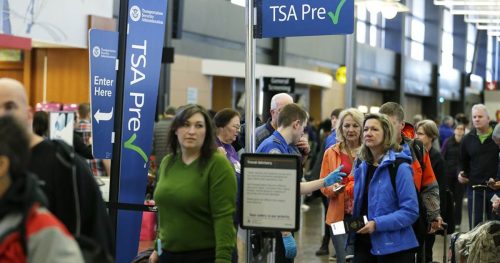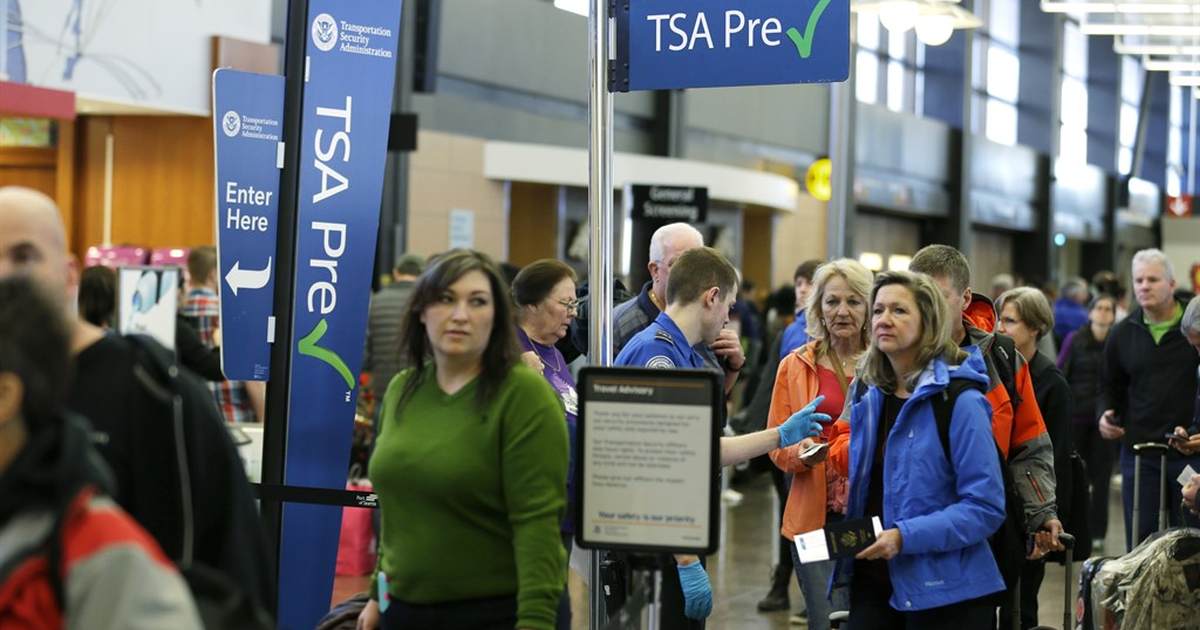
The Department of Homeland Security has suspended TSA PreCheck lanes and curtailed several nonessential operations, shifting resources to life-saving emergency response as a partial government shutdown takes effect.
The closure of TSA PreCheck began early Sunday and marks a visible change at airports across the country as DHS reallocates staff and cuts perks to preserve core security functions. Officials say the move aims to protect immediate public safety and border operations while funding remains unavailable. Travelers should expect longer lines and fewer special accommodations at many entry points.
TSA PreCheck lanes will be closed and all courtesy escorts, including those for members of Congress, are being suspended so personnel can be reassigned to essential screening duties. DHS has put Federal Emergency Management Agency operations into emergency mode and limited work to life-saving response efforts only. The agency says non-disaster activities are being paused to concentrate on immediate threats to life, public health, and safety.
DHS Secretary Kristi Noem said that government shutdowns have consequences.
“This is the third time that Democrat politicians have shut down this department during the 119th Congress,” Secretary Kristi Noem said in a statement. “Shutdowns have real-world consequences, not just for the men and women of DHS and their families who go without a paycheck, but it endangers our national security.
The American people depend on this department every day, and we are making tough but necessary workforce and resource decisions to mitigate the damage inflicted by these politicians. TSA and CBP are prioritizing the general traveling population at our airports and ports of entry and suspending courtesy and special privilege escorts. FEMA will halt all non-disaster related response to prioritize disasters. This is particularly important given this weekend another significant winter storm is forecast to impact the Mid-Atlantic and Northeast United States.”
FEMA has formally entered emergency operating status and is trimming operations back to a bare minimum focused on immediate danger and life-safety missions. That means most long-term recovery work, planning, and administrative processing are on hold until funding is restored. The intent is to keep boots on the ground where lives are directly at risk while nonurgent tasks wait for appropriations.
- Public Assistance for ongoing or legacy disasters will not move forward; FEMA will only carry out Public Assistance activities that address new or recent disasters requiring immediate emergency action to protect lives or prevent catastrophic damage.
- All non-emergency recovery work is paused, including project formulation, long-term recovery efforts, planning, and administrative processing that does not address an imminent threat.
- Non-disaster-related activities are halted so the limited personnel and resources available can be redirected to urgent response operations where people are in danger now.
- New initiatives, discretionary programs, pilot efforts, and policy development are suspended until funding is restored and normal operations can safely resume.
- Travel, deployments, and operational support are restricted to those strictly necessary to respond to active disasters and life-safety emergencies, limiting routine movement and exercises.
Officers who normally process Global Entry travelers will be reassigned to process the broader pool of arriving passengers, slowing trusted-traveler lines while keeping regular processing moving. CBP will also suspend requests for port courtesies for members of Congress at all ports of entry, including escorts and tours, so personnel can focus on essential border security tasks. Those changes reflect a prioritization of core mission work over privileges and discretionary services.
The timing is notable because another significant winter storm was forecast for the Mid-Atlantic and Northeast, increasing the pressure on FEMA and local responders. With limited staff and funding, agencies say they must concentrate on immediate threats, which could leave some administrative and recovery needs in limbo until Congress restores appropriations. Officials stress that full recovery and assistance operations will resume once funding is restored.
The shutdown’s impact stretches beyond travelers and federal workers to families and communities that rely on planned recovery and assistance programs. Delays in nonurgent work slow rebuilding and planning efforts that help communities bounce back from past disasters. For now, federal attention is narrowed to the most urgent, life-saving missions while lawmakers sort out funding.
Expect longer wait times at airports, fewer courtesy services, and limited FEMA activity outside active disaster zones until the funding picture changes. DHS says these are temporary, targeted measures meant to preserve the nation’s immediate security and disaster response capacity under constrained circumstances. The department will restore normal services as soon as funds are available and staffing levels return to normal.