A failed attack at Temple Israel in West Bloomfield left the attacker dead and exposed family ties to Hezbollah, while federal records show the suspect had lived in the United States as a naturalized citizen since 2011.
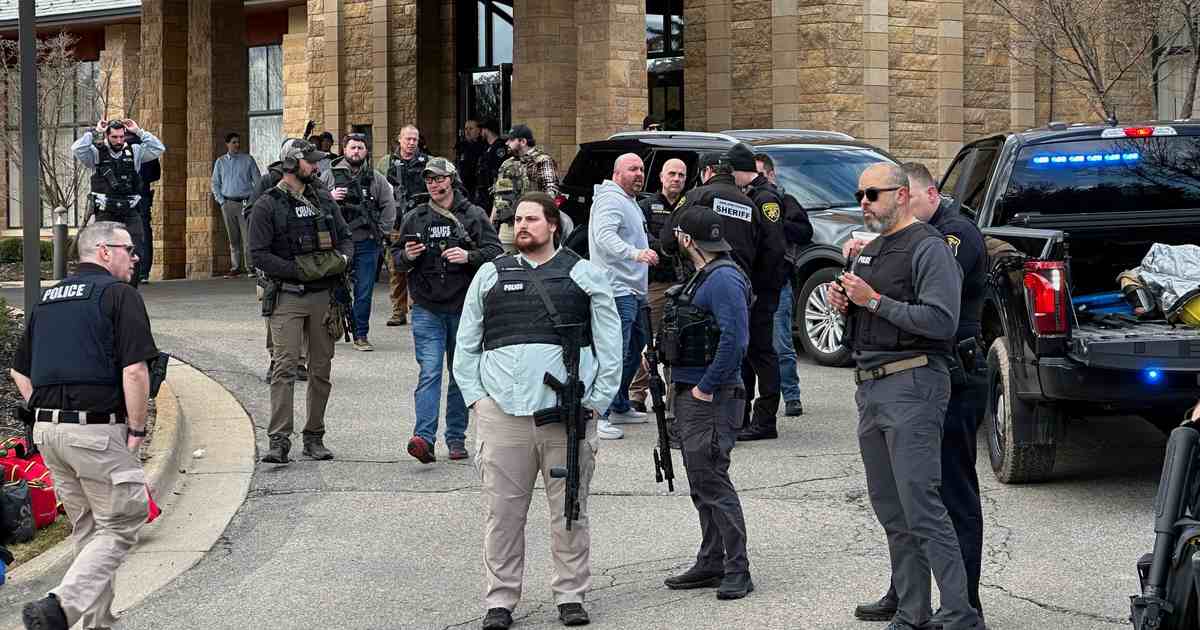
“Many times, the apple doesn’t fall far from the tree.” That blunt observation fits a violent episode that unfolded on Thursday at Temple Israel Synagogue in West Bloomfield Township, Michigan. A man drove a Ford F-150 loaded with fireworks and accelerants into the building in what investigators say was an attempt to slaughter about 140 children attending an event. His truck became lodged in the synagogue; after exchanging gunfire with two armed security guards he died of a self-inflicted wound to the head.
The quick response by the synagogue’s security teams kept the scene from becoming a massacre, and the attacker was the only casualty. Federal authorities identified the suspect as Ayman Mohamad Ghazali, a 41-year-old naturalized U.S. citizen originally from Lebanon who lived in Dearborn Heights, according to U.S. Immigration and Customs Enforcement. Records show he entered the United States in 2011 on an IR1 immigrant visa as the spouse of a U.S. citizen and later obtained citizenship under the Obama administration. Those facts raise sharp questions about vetting, radicalization, and whether family ties should factor into threat assessments.
The initial narrative pushed by some in the media and by the city’s mayor framed the act as revenge tied to casualties in Lebanon, with a suggestion of understandable grief. That framing ignored critical context. Israel Defense Forces confirmed that Ghazali’s dead brother, Ibrahim Muhammad Ghazali, was a Hezbollah commander who managed weapons operations that launched hundreds of rockets toward Israeli civilians.
That confirmation changes how this incident should be understood. An attacker whose closest relative held a command role in a designated terrorist organization is not simply a lone actor driven only by personal loss. Patterns of militant involvement can run through families and networks, and intelligence and law enforcement communities treat those patterns seriously. The presence of such a direct link to Hezbollah heightens the national security implications of what otherwise might be described as a local crime.
The New York Times described the Michigan terrorist as a “quiet restaurant worker.” That tidy label fails to capture the fuller picture now coming into focus. Quiet on the surface and dangerous underneath is a pattern we’ve seen before: someone who blends in while harboring or inheriting violent intent. Media shorthand can obscure the seriousness of the connections investigators now say exist.
Beyond the press coverage, the procedural facts matter. Naturalization and immigrant-entry records show this man entered as the spouse of a U.S. citizen and became a citizen during the Obama administration, a detail opponents of current vetting practices will point to. Republicans tracking national security will focus on whether the vetting protocols used at the time were robust enough to catch ties to foreign terrorist groups, and whether changes since then have addressed those gaps.
The episode also spotlights the hard reality that soft targets like houses of worship remain attractive to attackers seeking mass casualties. In this case, trained security personnel stopped a tragedy in its tracks, and that fact deserves emphasis without turning it into an excuse to downplay the ideological and organizational backdrop. Law enforcement and Jewish communities were prepared; that preparation saved lives.
❗️INTELLIGENCE REVEALS: BROTHER OF TERRORIST BEHIND U.S. SYNAGOGUE ATTACK WAS A HEZBOLLAH TERRORIST
Hezbollah commander Ibrahim Muhammad Ghazali was responsible for managing weapons operations within a specialized branch of the Badr Unit. The unit is responsible for launching…
— Israel Defense Forces (@IDF) March 15, 2026
At the same time, political and media responses matter because they shape public understanding. Excusing or minimizing violence because of claimed grief for relatives abroad risks normalizing terrorism and providing a rhetorical shield for attackers. Authorities and commentators owe the public careful reporting and clear language about violent intent, organizational links, and the need to protect communities.
The facts in this case now include a confirmed Hezbollah connection, a naturalization timeline, and the specifics of the attack method. Those elements together deserve rigorous scrutiny by federal investigators, by local officials responsible for public safety, and by the media who report on these events. Strong, clear-eyed reporting and secure communities are the right responses when violence and foreign terror ties intersect.
Editor’s Note: Do you enjoy Townhall’s conservative reporting that takes on the radical Left and woke media? Support our work so that we can continue to bring you the truth.