The Oscars acceptance moment from an anti-gun documentary and a mother’s plea sparked a debate about empathy and policy, with Second Amendment advocates arguing that sorrow does not suddenly make disarmament a workable safety plan.
The Oscars have become a platform for political messages, and this year an anti-gun documentary used that stage to press for change. A mother of a Uvalde victim spoke during the acceptance and delivered a line meant to move the country: “She finishes by saying that if everyone saw the empty bedrooms, the country would be different.” Those words cut deep, and they deserve to be taken seriously as an expression of grief.
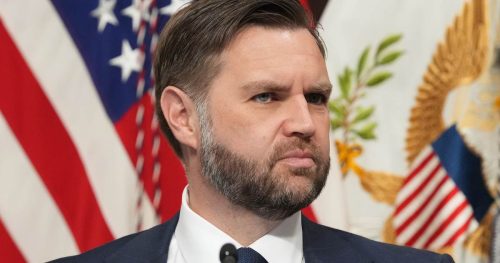
What followed on social media and in commentary illustrated why many conservatives push back against simple policy prescriptions. Second Amendment attorney Kostas Moros responded directly, laying out a different way to see safety and prevention. His words captured a core disagreement over whether disarmament is actually protective or merely symbolic.
Moros framed the issue straightforwardly: disarming law-abiding people does not make the truly dangerous less dangerous, and it often makes victims more vulnerable. That tension explains a lot of the polarized reaction to scenes like the Oscars speech. People who oppose widespread gun restrictions are not heartless; they are skeptical of solutions that leave people defenseless.
Mom of 9-year-old Jackie, who was killed in Uvalde during a school shooting, spoke at the Oscars after "All the Empty Rooms" won for best short doc.
She talked about how gun violence impacts kids in America and that Jackie is more than a headline.https://t.co/R14HEn36lh pic.twitter.com/h8M7LdBWcp
— ABC7 Eyewitness News (@ABC7) March 16, 2026
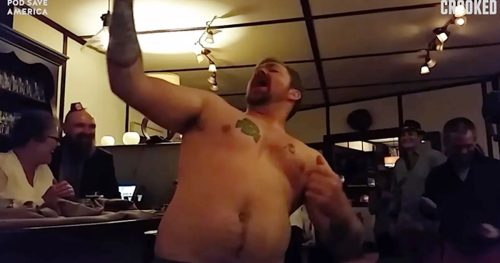
The skepticism comes from experience and history, not from a failure to imagine loss. For many conservatives, the memory of shootings like Cafe Racer in Seattle is personal and raw. Years ago a close friend of mine was killed there, executed by a person who snapped over something trivial, and that loss taught me that monsters sometimes strike where they can do the most harm.
Empathy is not the issue. We feel the grief those empty bedrooms imply because we’ve seen what unpreparedness looks like. Old Dominion University showed how outcomes depend on who confronts the attacker, not on whether there was a policy proposal on paper. That campus avoided a massacre in large part because armed, capable people engaged the killer, and that reality shapes how many Americans think about preventing slaughter.
Gun control advocates often assume opponents just need to feel the tragedy harder to change their minds. That underestimates how deeply people weigh practical results against emotional appeals. The objection is not to grief but to policies that would make innocent people sitting in schools, churches, or cafes easier targets.
Most mass killers do not follow the law or acquire weapons through legal channels, and that makes broad bans blunt instruments. Criminals who want to kill will find weapons somehow, and when they cannot they still use knives, vehicles, or arson. Effective safety strategies, in this view, focus on hardening targets and enabling timely defense rather than reducing the supply for those who already ignore the rules.
That’s just not correct. I have a child of my own, do you think I’m OK with the idea of an armed lunatic in her school? Of course not.
The disconnect is we reject your premise. Making good people helpless through disarmament does not equate to safety. Instead, we should meaningfully secure our schools and other truly sensitive places.
That passage from Moros is important because it makes two points at once: he shares the fear parents feel, and he rejects the idea that disarmament equals protection. When someone says they do not want armed lunatics anywhere near their children, they are expressing a desire for safety, not an endorsement of vulnerability. The debate is over which policies genuinely deliver that safety.
Republican-leaning critics argue that focusing solely on prohibitions ignores enforcement, prevention, and the human element in emergencies. Strengthening security, training staff, and enabling lawful defensive options are practical measures many see as realistic. Those approaches aim to reduce casualties by changing the conditions an attacker faces rather than relying on a legal bar that an attacker can simply ignore.
There is also the plain fact that laws have limits when confronted with people who do not respect them. History offers cases where restrictions slowed criminals and others where rules did nothing to stop a determined killer. Policymakers should be honest about those limits while still trying to reduce harm where possible.
Grief can motivate better choices, but grief without a clear, feasible path to safety can lead to symbolic gestures that fail when they matter most. That is the core of conservative caution on gun policy: prioritize measures that demonstrably prevent violence and protect the vulnerable. It is a practical, problem-solving stance built out of hard experience, not an absence of compassion.
Public discussions about tragedy should center on solutions that work in the real world, not on pressuring opponents to feel more. Honest debate means listening to sorrow and then testing ideas against reality and historical evidence. When the goal is fewer dead in classrooms and public spaces, people who live under the risk want policies that reduce threats, not promises that look good on stage.