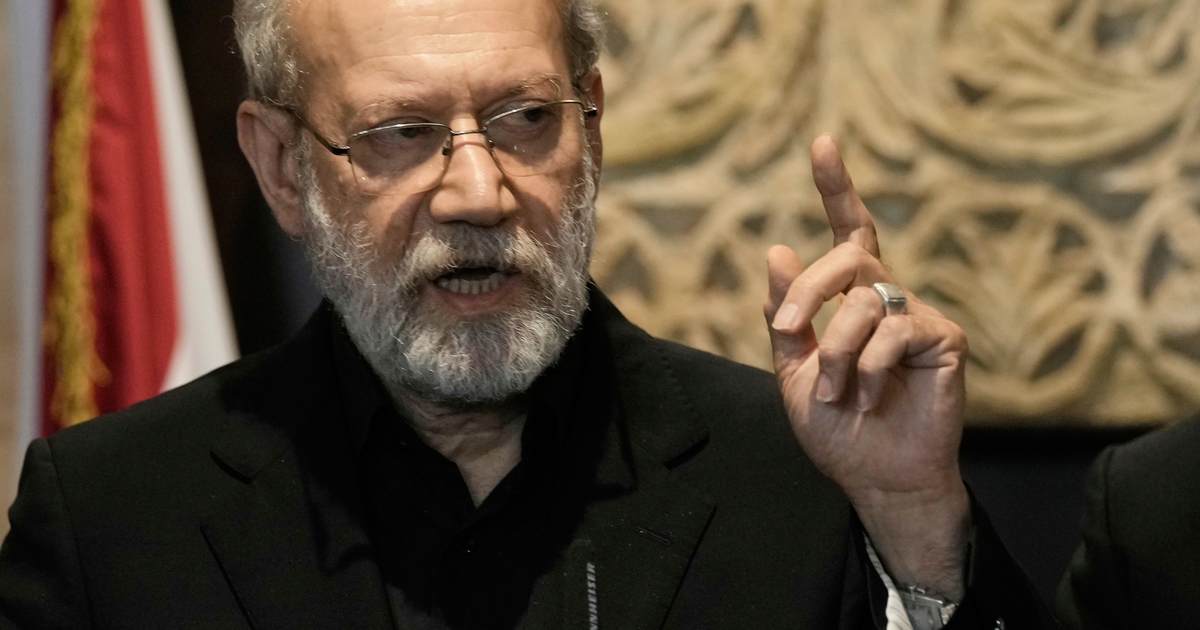
Israeli airstrikes overnight killed two senior Iranian commanders, including Ali Larijani and General Gholamreza Soleimani, in a strike that ratchets up pressure on Tehran and follows weeks of coordinated operations by U.S. and Israeli forces.
Two senior Iranian figures died in the attack: Ali Larijani, who led Iran’s Supreme National Security Council, and General Gholamreza Soleimani, who commanded the Islamic Revolutionary Guard Corps’ Basij forces. Their deaths mark a sharp escalation after sustained pressure on the regime from allied operations. Washington and Jerusalem appear to be signaling that no one implicated in repression or terror networks is beyond reach.
Both losses will reverberate inside Iran’s security apparatus and across the region. Larijani was a high-profile political figure as well as a security official, and Soleimani ran the Basij’s suppression operations at a time of internal unrest. The strikes make clear that Iran’s command and control can be targeted where it lives and plans.
🚨 BREAKING: Iran has just been embarrassed again on the world stage, with the regime's security chief Ali Larijani being KlLLED in an overnight strike
This same hardliner Islamist THREATENED President Trump 5 days ago, vowing to make him "sorry"
Bye, terrorist 👋🏻🔥 pic.twitter.com/rRj8vW4lRm
— Eric Daugherty (@EricLDaugh) March 17, 2026
Larijani was killed only days after he slammed Operation Epic Fury and President Trump, claiming the military operation was running out of steam. He had publicly mocked U.S. and allied efforts even as Tehran’s networks felt mounting blows. This gap between rhetoric and reality left him exposed to retaliation that now looks decisive.
“It’s clear they’re running out of steam,” Larijani said in an interview, “Trump’s problem is that he doesn’t understand that the Iranian nation is mature and determined.” His words were defiant; the strike that followed was final. In politically charged moments like these, talk and action often collide.
As for Soleimani, the Israeli Defense Force (IDF) released a statement upon his death. “Guided by precise intelligence from Military Intelligence, the Air Force conducted a targeted strike yesterday in the heart of Tehran, eliminating Gholam Reza Soleimani, commander of the Basij unit over the past six years,” the IDF wrote on X. “The Basij forces constitute part of the armed forces of the Iranian terror regime. Amid the internal protests in Iran, and particularly in recent times with their escalation, the Basij forces under Soleimani’s command led key suppression operations involving severe violence, widespread arrests, and the use of force against civilian protesters.” “Soleimani’s elimination adds to the dozens of senior commanders from the armed forces of the Iranian terror regime who have been eliminated throughout the operation, and it represents another severe blow to the regime’s security command and control systems,” they added.
These strikes are part of a wider campaign that has already inflicted heavy losses on Tehran’s leadership and networks. This comes as over 50 senior Iranian officials, including Ayatollah Khamenei, were killed in just over two weeks of joint military operations by the United States and Israel. Those figures underline how intense and coordinated the effort has been.
The political implications are immediate. Republican-leaning analysts and officials will argue that decisive action against terror-state infrastructure and its enablers is necessary to deter future attacks and protect regional partners. This incident will also feed debates at home about the steadfastness of U.S. alliances and the value of projecting power to keep adversaries off balance.
Operationally, removing two senior figures disrupts Tehran’s ability to coordinate repression and external aggression, at least temporarily. Command structures are resilient, but leadership decapitation creates intelligence and logistical gaps that allies can exploit. From a Republican viewpoint, striking hard and fast when you have the opportunity saves lives and protects American interests.
There is risk, of course: escalation and retaliation are real possibilities, and allies will be watching for Iran’s next moves. The response will matter more than the strike itself if Tehran chooses to lash out at partners, proxies, or U.S. forces. That makes clear communication and sustained pressure essential in the days ahead.
Domestic politics will also play out. Larijani’s taunts about Operation Epic Fury and President Trump will now be judged against the finality of his death. For Republicans who prioritize strength and deterrence, the strike will be touted as proof that firm action gets results and that allies like Israel can be trusted to act decisively with U.S. backing.
The coming hours and weeks will tell whether this operation deters further Iranian aggression or accelerates a wider confrontation. For now, U.S. and Israeli leaders have demonstrated a willingness to target those they say are responsible for terror and internal repression, and that posture will shape the next phase of regional strategy and political debate.