A city that soft-pedals violent crime but punishes ordinary behavior is creating a predictable mess.
On a New York subway, a 55-year-old man was bumped and then punched by 21-year-old Nassadir Tate, and the older man later died. Tate walked away with a ticket and an order to appear in court on April 1, a response that feels shockingly light given the outcome. That disconnect — minimal accountability for violence — is the thread running through recent headlines and policy moves in the city.
Look at how prosecutors handled Daniel Penny after he intervened when Jordan Neely was threatening riders: Penny was charged and then acquitted, while critics point to the medical examiner’s findings that Neely had “drug K2 in his system and of other health issues,” including Sickle Cell trait. Contrast that with repeated leniency toward career offenders and you see a pattern that undermines public confidence. The system’s choices send a message about which cases merit real consequences and which do not.
Consider Damon Johnson, arrested again after setting a homeless man on fire, who reportedly has 131 prior arrests. Or Jose Alba, the bodega worker arrested on second-degree murder charges after defending himself, jailed on $250,000 bail and later having charges dropped. These episodes feed the belief that violent offenders glide through the system while everyday people face harsh treatment for lesser infractions.
Manhattan DA Alvin Bragg’s office has a record of aggressive and selective prosecutions in high-profile cases and routine reductions or dismissals in others. There are examples where felony charges get knocked down to misdemeanors or cases get dismissed because a certificate of readiness wasn’t filed, a failure called “accidentally” in some reports. That fueling of perceived double standards corrodes trust in prosecutors and law enforcement priorities.
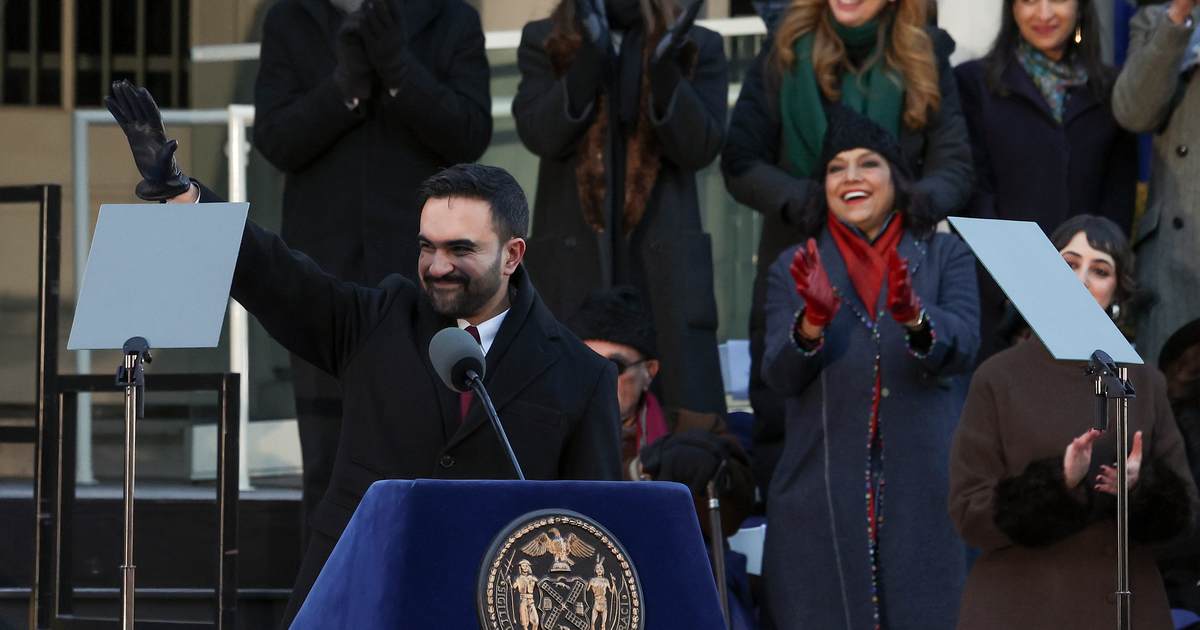
Against that backdrop, city leaders are rolling out broad traffic measures: Mayor Zohran Mamdani has announced lowering speed limits to 15 mph around all school zones by 2029 and pushing a 20 mph citywide goal. The move invokes Sammy’s Law to authorize limits below state minimums, a policy change aimed at street safety but timed amid doubts about enforcement. The disconnect between policing serious violent crime and enforcing minor public-safety rules raises real questions about priorities.
The speed limit will be lowered to 15 mph around all the city’s thousands of schools by 2029, Mayor Zohran Mamdani announced Monday – as insiders quietly revealed the slow-as-dirt zones will be enforced 24/7.
The mayor will invoke Sammy’s Law – a 2024 measure allowing city officials to set speed limits below the state minimum – in his executive action to lower the speed limits and fulfill a goal long-sought by street safety advocates.
Mamdani also said he wants to lower the speed limit citywide to 20 mph, although he contended doing so would require action from the City Council – a stance that drew finger-pointing from Speaker Julie Menin.
Sammy’s Law itself has a long backstory: Samuel “Sammy” Cohen-Eckstein was killed in 2013, a tragedy that eventually pushed lawmakers to change limits, but it took 11 years to pass the measure. A law passed after a public outcry is not the same as consistent, fair enforcement across neighborhoods and demographics. When the system enforces traffic rules selectively, the outcome feels political rather than protective.
Mayor Zohran Mamdani will lower speed limits to 15 mph in school zones. Read today's cover here: https://t.co/eO9Cvp77P3 pic.twitter.com/ZY9LdRehsu
— New York Post (@nypost) March 17, 2026
The likely scenarios are predictable: selective enforcement, fines scaled or waived in ways that track political priorities, or widespread non-enforcement because authorities are stretched thin. Cities like San Francisco have debated income-based fines; the optics of different penalties for different people only deepen resentments. Either fines become a new revenue stream aimed at easy targets or they amount to theater while serious crimes go unanswered.
We already see the drift: task forces and special units get created, then quietly dismantled when they become politically inconvenient or when resources are diverted. Milwaukee’s street-takeover task force was shuttered partly for those reasons, and other cities have similarly shuffled tactics. That pattern undercuts any claim that officials are honestly prioritizing public safety over optics.
Reducing drivers’ speeds is a reasonable safety goal on its own, but in a city that routinely lets violent repeat offenders roam free, it reads as performative. A policy that hits ordinary citizens with fines while notorious criminals face light consequences does more to punish law-abiding behavior than to deter violence. New Yorkers deserve laws that are enforced fairly and consistently.
The larger point is political: when elected officials favor optics over outcomes, the public pays the price. Criminals who don’t fear consequences will keep committing violence, and ordinary people will be squeezed by new rules designed more for headlines than results. Expect more of the same: fewer consequences for violence, more penalties for normal people trying to live their lives, and plenty of politicians congratulating themselves for “doing something.”
That dynamic isn’t unique to traffic laws; it repeats itself in debates over guns and sentencing and over which cases draw prosecutorial fire. Unless accountability becomes the central objective — not the performative substitute — public safety will continue to drift. New Yorkers need a justice system that protects victims, holds dangerous offenders accountable, and applies rules evenly across the city.