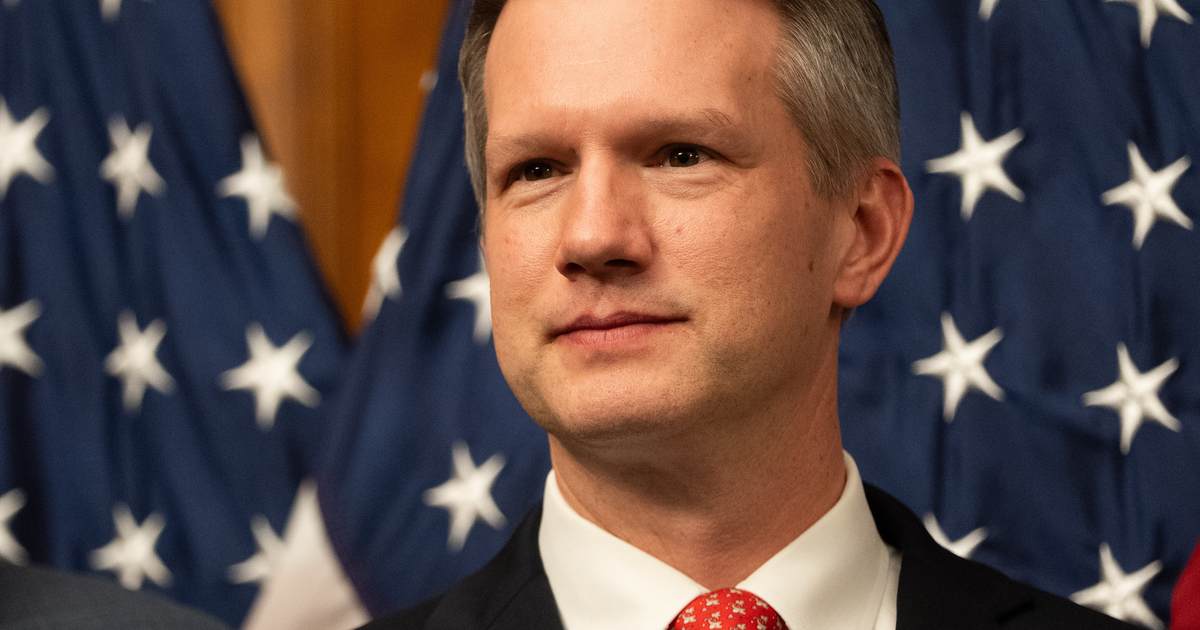
Rep. Riley Moore fought back against the New York Times after the paper labeled his comments about violence against Nigerian Christians as “falsely claimed,” with the exchange unfolding in the wake of a deadly Palm Sunday attack.
The day after a brutal attack that left 12 Christians dead at Palm Sunday services in the Nigerian Archdiocese of Jos, national attention turned to the reaction from U.S. politicians and the way the story was being covered. The New York Times pushed back against Rep. Riley Moore’s characterization of the violence, saying he “falsely claimed” there is a genocide against Christians in that part of Africa. That framing sparked immediate pushback from Moore and allies who argue the paper is downplaying a clear pattern of targeted killings.
Moore did not hold back in his response to the absurd comment from the Times, posting to social media: “How many more Christians need to be slaughtered by Muslims, particularly on holy days, before the failing New York Times acknowledges that Christians in Nigeria are being massacred for their faith in our Lord and Savior? It’s pretty obvious if you aren’t trying to pass your radical political agenda off as news.” That direct call-out used strong language to force attention back onto the victims and the ongoing violence. Supporters say his point was simple: stop spinning or minimizing attacks when people are being killed for their faith.
This is disgusting. A new low, even for the @NYTimes. It’s been barely a day since Jos was rocked by this horrific attack by radical Islamic terrorists against peaceful Christians, and the Times couldn’t bother to ask for comment before running this anti-Christian hit.
Here’s… pic.twitter.com/pSWMzNt7HS
— Rep. Riley M. Moore (@RepRileyMoore) March 30, 2026
Local reporting and international observers described the most recent strike as a chaotic, murderous ambush. In the latest attack, “gunmen assailants stormed the area and opened fire on unsuspecting civilians before fleeing the scene,” according to EWTN. Witnesses and community leaders in the region have repeatedly raised alarm about rising attacks on Christian communities, especially around religious holidays when worshippers are most vulnerable.
The story has drawn reactions from figures across the globe, including religious leaders and former political leaders who have publicly addressed the targeting of Christians in Nigeria. Pope Leo XIV and President Donald Trump have both spoken out about the targeting of Christians in Nigeria. On Christmas Day in 2025, Trump launched targeted strikes against ISIS assets in the country, a move that underscored the seriousness with which some officials view the threat.
From a Republican vantage point, the skirmish with the New York Times is emblematic of a larger media problem: outlets too quick to label political opponents as misinformers instead of interrogating the facts of attacks and the suffering of victims. Conservative voices argue the paper’s “falsely claimed” verdict was premature, given the documented pattern of violence and the personal accounts coming out of affected communities. When reporting frames victims and those defending them as the ones making false claims, it risks silencing the people who actually need protection.
There’s also a policy angle that gets short shrift in daily headlines: if attacks are coordinated, targeted, or part of a long-running pattern against a religious group, then terminology matters because it shapes responses. Calling a string of killings isolated incidents rather than an organized campaign limits political will and practical action to stop them. Moore and like-minded officials argue that truthful coverage should lead to concrete policy discussions, whether diplomatic pressure, targeted counterterrorism measures, or strengthened protections for at-risk communities.
Beyond labels and political theater, families in Nigeria are burying loved ones and communities are trying to stay safe on the days they gather to worship. That human cost is hard to quantify and even harder to justify rhetorical hair-splitting over. For many Americans watching from afar, the immediate reaction is outrage and a demand that institutions, both journalistic and governmental, stop treating suffering as an afterthought when it doesn’t fit a preferred narrative.
Whether the New York Times intended it or not, the piece that labeled Moore’s comments “falsely claimed” reopened a national debate about media priorities and the obligation to cover persecution without partisan preconception. Politicians on the right see a pattern of defensive press coverage that seeks to protect ideological framing at the expense of victims. As the story continues to develop, the core questions remain political and moral: who gets believed, and how will the international community respond when worshippers are attacked on holy days?