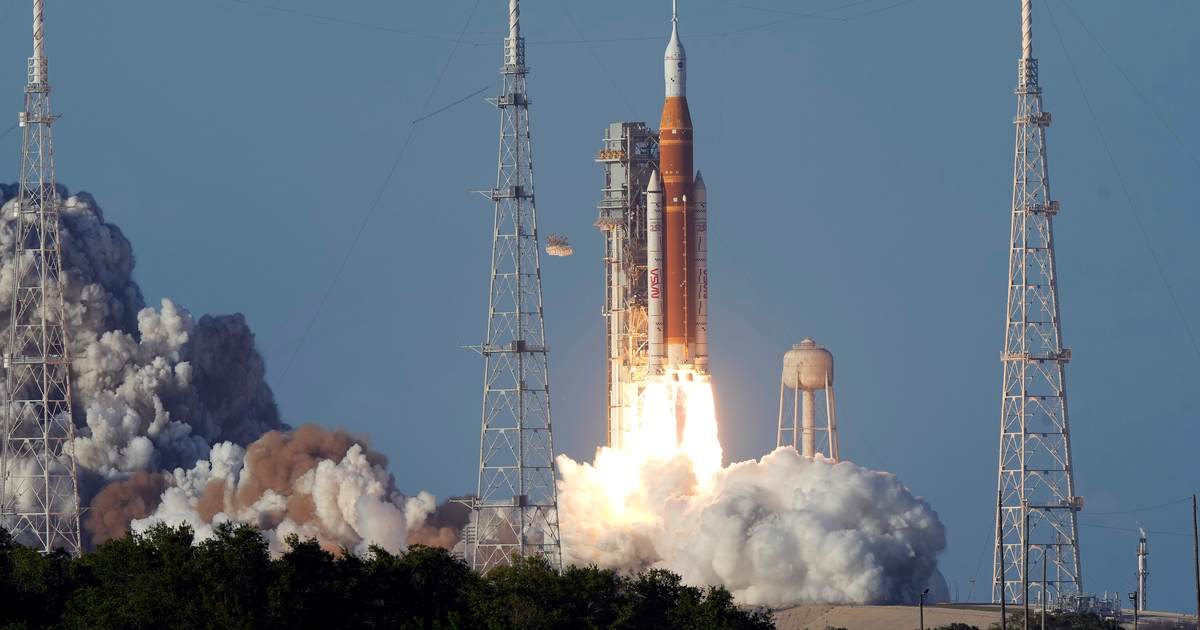
Artemis II launched under a live, celebratory spotlight, and when someone suggested the mission might be illegal, the legal objection didn’t hold up under simple scrutiny.
Artemis II is on its way to the Moon and millions watched the countdown and liftoff live last night. Mission Control ran through a final go/no-go checklist before launch, and the crew set out on what NASA describes as a roughly 10-day mission. The sequence felt like a throwback: careful procedure, technical confidence, and a shared national moment.
Space remains one of the rare arenas that brings people together across differences, even as public attention has wandered in recent years. That makes the collective pause around a Moon mission notable, a reminder that big achievements still capture wide interest. Watching the launch rekindled that simple, cross-partisan awe for many viewers.
The Artemis Moon base project is legally dubious https://t.co/V4VqabaX5G
— The Verge (@verge) April 1, 2026
Predictably, a handful of commentators tried to turn the mood toward skepticism, poking holes in the mission for dramatic effect. One writer framed the trip as if it might run afoul of international law, and the claim started circulating in social posts and articles. That prompted others to examine the legal basis rather than let a quip stand as fact.
The gist from closer looks at the legal framework is straightforward: Artemis aims to return humans to the Moon and to lay groundwork for sustained presence and habitation. Plans for lunar infrastructure and resource use are part of that long-term vision, not a stealth plot to claim sovereign territory. The consensus among legal observers is that extraction and activity on the Moon do not translate to national ownership.
The Outer Space Treaty (OST) doesn’t ban resource extraction.
Art I: “free for exploration and USE”.
Art II: no “national appropriation”.
Extraction ≠ owning the Moon.
The 1979 Moon Agreement tried a stricter ban but failed. No major space powers joined.
That community note nailed the basic point: the existing treaty regime was drafted to stop nations from planting flags and claiming territory, not to stop private firms or national programs from responsibly using extraterrestrial resources. The failed 1979 Moon Agreement underscores how little appetite there was internationally for stricter limits. In practice, countries and companies are moving forward under existing agreements and norms while policymakers debate specifics.
It’s disappointing when a historic, technical achievement gets bogged down in procedural or legal theater instead of being celebrated for its engineering and exploratory gains. Plenty of people tuned in to see liftoff and trajectory, not to parse op-eds about hypothetical legal land grabs. Those who wanted to dampen the moment lost that contest with spectacle and science.
In the words of Les Grossman:
Moments like a crewed lunar mission cut through ordinary news cycles; a college softball game paused, and fans turned to the sky to watch. The Florida Gators softball team literally stopped play to follow the launch, a small scene that shows how public events can intersect with sport and daily life. Simple scenes like that make the technical achievement feel communal.
Beyond the headlines and the social-media sniping, Artemis II represents a deliberate, staged step toward more sustained lunar activity, testing systems and procedures for longer missions ahead. Engineers and mission managers will use the data and experience from this flight to refine approaches to habitation, resource handling, and crew operations. Those practical lessons are what will matter for the next phase of returning humans to the Moon.
Critics will keep circulating provocative takes, and that’s part of how public debate plays out in the modern information era. But legal claims need to stand up to treaty text and precedent, and in this case the short legal reading does not support an outright ban on the types of activity Artemis envisions. The mission moves forward under established frameworks while broader policy discussion continues.
Watching a launch remains, at its core, about people and capability: trained professionals executing complex procedures, hardware performing under extreme conditions, and a public getting a shared reminder of what sustained investment in science and engineering can do. That combination of human skill and technical achievement is why these moments still land with viewers, no matter the side conversations that follow.