Supreme Court sparred over ICE enforcement as Justice Sonia Sotomayor publicly questioned Justice Brett Kavanaugh’s ability to grasp hourly-wage realities, and the exchange reflects a larger dispute about immigration policy, judicial perspective, and how personal background shapes rulings.
At a public event this week, Justice Sonia Sotomayor criticized Justice Brett Kavanaugh for what she portrayed as a lack of empathy rooted in his upbringing. Her remarks came after the court allowed ICE to continue enforcement actions in the Los Angeles area, a decision that split the justices along ideological lines. The moment shows how tensions on the bench can spill into public debate.
Kavanaugh wrote a concurring opinion in the case, arguing that many of the stops were brief and that most migrants “promptly go free.” Sotomayor seized on his language to suggest he could not relate to people who work hourly jobs, linking his perspective to his parents’ salaried professions. That line of attack frames legal disagreement as personal shortcoming rather than a debate over law and constitutional authority.
The heart of the dispute is straightforward: who gets to decide the limits of immigration enforcement and when courts should step in. Conservatives, including Kavanaugh, emphasize deference to executive discretion on immigration and public safety. Liberals, including Sotomayor, warn about racial profiling and heavy-handed tactics that can harm communities and violate civil liberties.
Sotomayor’s comments mix legal critique with cultural judgment, and that approach risks shrinking judicial debate into identity-based taunts. Courts live on precedent, statutory text, and constitutional interpretation, not on who went to prep school or who held a particular job. Reducing disagreements to upbringing invites political theater instead of legal argument.
The practical question is what enforcement looks like on the ground and whether it respects constitutional protections. Kavanaugh’s view that many stops were brief reflects a factual assessment that can be tested against evidence and affidavits in the record. Sotomayor responded with a blistering dissent focused on the human cost and the risk of targeting Latinos who speak Spanish or appear to work low-wage jobs.
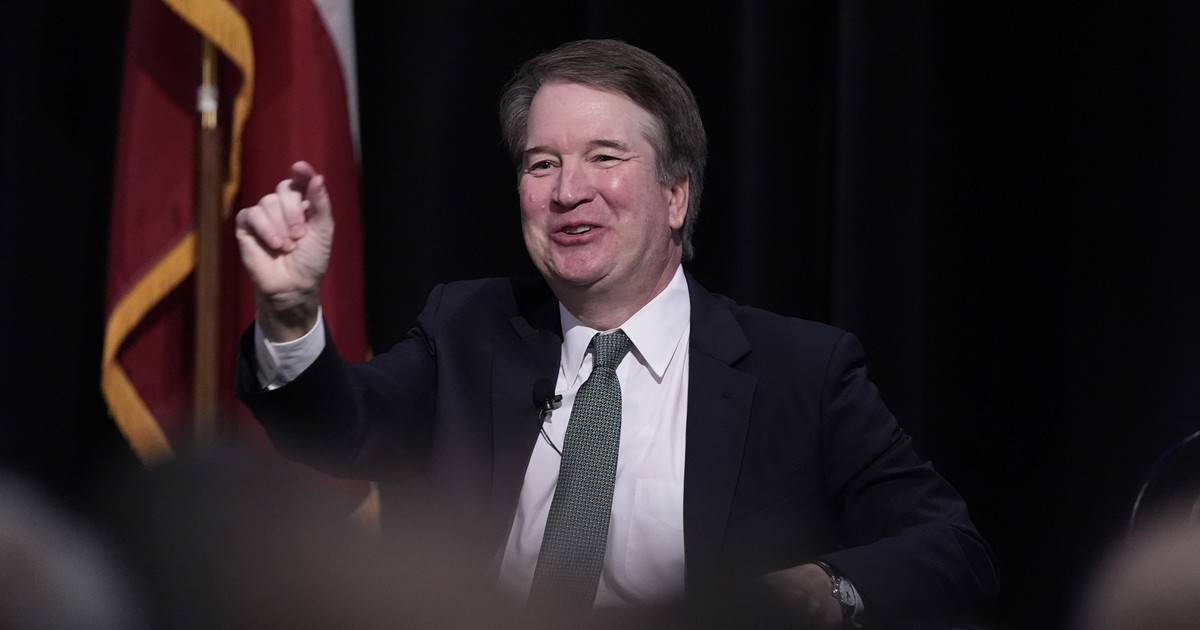
Supreme Court Justice Sonia Sotomayor took a swipe at colleague Brett Kavanaugh over his stance on ICE raids, claiming he’s out of touch and couldn’t possibly know anyone who “works by the hour” because of his prep school upbringing.
The liberal justice publicly criticized Kavanaugh, a conservative, over his prior concurring opinion that essentially lifted limits on the Trump administration’s sweeping immigration raids in Los Angeles last year.
Kavanaugh had argued that any stops were “typically brief,” and that most migrants “promptly go free.”
Sotomayor assumed Kavanaugh couldn’t relate to the migrants because his parents held salaried jobs.
“I had a colleague in that case who wrote, you know, these are only temporary stops,” Sotomayor said at a University of Kansas School of Law event on Tuesday, referring to Kavanaugh, who was not there to defend himself.
“This is from a man whose parents were professionals. And probably doesn’t really know any person who works by the hour.”
[…]
At the time, Sotomayor and the court’s two other liberal justices issued a blistering dissent, writing: “We should not have to live in a country where the government can seize anyone who looks Latino, speaks Spanish, and appears to work a low wage job.”
From a conservative perspective, the key point is simple: the president has substantial authority over immigration enforcement, and courts should be cautious about second-guessing operational decisions. That does not mean abuses should be ignored, but it does mean the balance of power matters. Judicial restraint is a consistent conservative principle in these disputes.
There is also a fairness argument about Sotomayor’s tactic. Calling out a colleague’s background to dismiss his legal reasoning feels like an attempt to shut down debate by framing it as inherently biased. Conservatives see that as a shortcut that substitutes moral condemnation for the work of legal analysis. Winning arguments should rely on law and facts, not personal insinuation.
Legal fights over immigration are inevitably fraught because they touch on national sovereignty, public safety, and individual rights at once. That complexity requires judges to ground their conclusions in statute and precedent while remaining mindful of real-world consequences. Conservatives will argue that Kavanaugh’s focus on deference reflects that balance, while liberals will emphasize the risk of harm to vulnerable communities.
Public remarks from the bench, even indirect ones, raise the stakes because they shape public perception of the court’s neutrality. When a justice uses personal characterizations to rebut another justice, it feeds a narrative that the court is political theater rather than an impartial arbiter. That trend worries anyone who values an independent and credible judiciary.
At bottom, the dispute over ICE raids and the exchange between Sotomayor and Kavanaugh is a snapshot of larger ideological divides. One side stresses enforcement authority and order, the other stresses civil liberties and the potential for discriminatory enforcement. The public will sort through those arguments, and the law will be the ultimate test.
Regardless of where you land, this flashpoint is a reminder that Supreme Court disputes often mix law, policy, and personality. Conservative readers will see Kavanaugh’s posture as sober and grounded in institutional deference, while critics will view Sotomayor’s outburst as a necessary call-out on perceived injustice. The debate will continue where it always does: in opinions, dissents, and the facts that judges choose to credit.