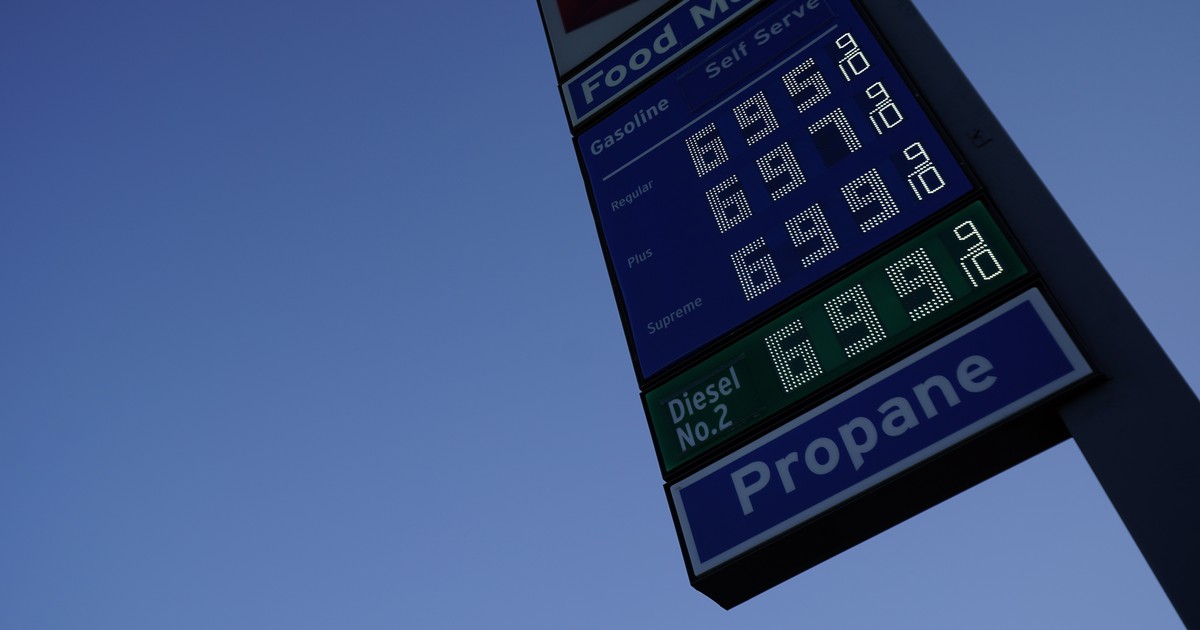
California drivers are paying more to state coffers at the pump than oil companies are pocketing in per‑gallon profits, and that reality is reshaping the argument about who really benefits from high gas prices.
Talk about gas prices in California has become a political brawl, and Democrats in Sacramento are squarely in the crosshairs. Critics from the U.S. Oil and Gas Association and others say blaming Iran, President Trump, or corporate greed misses the real story behind some of the nation’s highest prices. The debate has turned on who takes home the lion’s share when drivers fill up.
Governor Gavin Newsom’s Press Office escalated the rhetoric on X with the line “While America suffers, Chevron profits.” The post included a nod to a Reuters projection that Chevron could net between $1.6 billion and $2.2 billion in the first quarter of 2026, which made for an easy political target. That projection is a headline-grabbing number, but it doesn’t tell the whole per-gallon story consumers see at the pump.
Social media quickly pushed back, and a sharp community note punctured the governor’s framing by pointing to state-level math and official data. The note said, “The State of California collects more in taxes per gallon of gasoline than refineries such as Chevron, Shell, or Valero collect in profit per gallon,” the note read. “From CA’s own state energy website, on average, the state of California collects about $0.71 per gallon of gas; meanwhile, the average profit a company like Chevron rakes in is typically under $0.20 per gallon, depending on the quarter. And that figure is before taxes.”
The raw numbers are blunt: roughly $0.71 per gallon flowing to state coffers on average versus profit margins for major refiners that often register under $0.20 per gallon. When you walk into a station and see a price, a sizable chunk of that sticker is state taxes and fees before the company sees profit. Those per-gallon tax figures add up fast across millions of sales and explain why pump prices in California have a higher tax component than in many other states.
While America suffers, Chevron profits. pic.twitter.com/npcRlNH8Hm
— Governor Newsom Press Office (@GovPressOffice) April 9, 2026
The political spin from the left tends to simplify the dynamic into a villain-and-victim story where corporations are always the bad guys. That narrative ignores how policy choices, tax structures, and regulatory decisions can raise costs well beyond what market margins justify. When the government layers on fees and taxes, the immediate effect lands on consumers at the pump, and those costs stick regardless of quarterly oil company earnings.
This is a point Republican critics have been making: it’s easy to lecture corporations about greed when state governments are collecting more per gallon than refiners make in profit. The public debate should focus on who actually sets the price elements that are stable and recurring, and which actors are responsible for the predictable components of what a driver pays. Voters deserve clarity about whether policy or private-sector pricing is the main culprit.
The story also highlights the difference between headline corporate profits and unit economics tied directly to consumer purchases. Chevron’s multi-billion-dollar quarterly results get attention because the numbers are big, but those totals come from complex global operations, not a simple markup per gallon at a local station. Conversely, taxes charged per gallon are transparent and applied at every fill-up, so they are more visible to the average consumer and easier to blame for sticker shock.
Beyond the accounting, there’s a policy debate about accountability and service. Critics argue that government can be wasteful, slow, and unresponsive in ways a competitive business is not, while defenders claim taxes fund necessary infrastructure and environmental programs. The tension between those views fuels the larger argument over whether taxpayers are getting value for the money that flows out of their wallets every time they refuel.
Republican voices emphasize consumer choice as the corrective: in a market, people can vote with their dollars, seek better prices, or change behavior when a business fails to deliver. Government, by contrast, can raise taxes with little immediate consequence to incumbents until voters decide otherwise. That difference matters when talking about persistent, across-the-board costs like per-gallon taxes.
The exchange between Newsom’s office and the social media fact-checkers stripped away some of the fog around the arguments and forced a conversation about where the money goes. Whether you blame corporate margins or tax policy, the numbers show a clear fact: at the pump in California, the state takes a hefty cut per gallon. That fact reframes the usual political talking points and shifts scrutiny back onto policy choices in Sacramento rather than only onto corporate balance sheets.