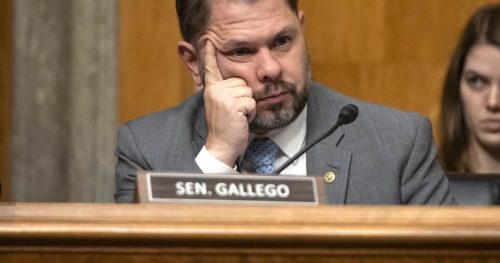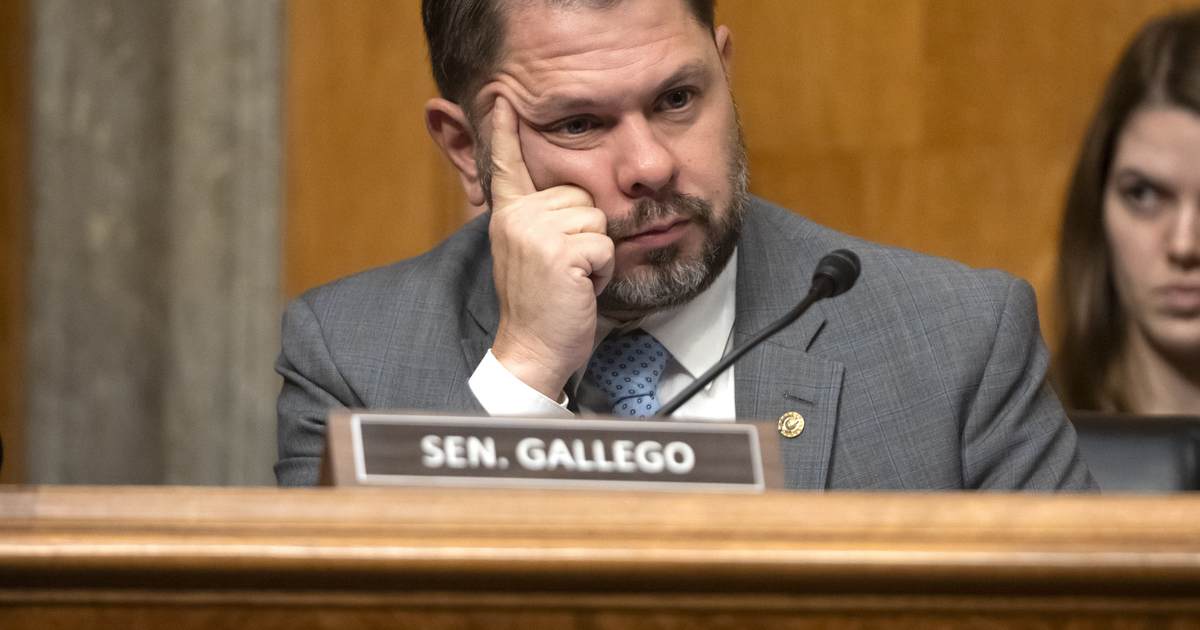
Sen. Ruben Gallego is under new pressure after the collapse of Eric Swalwell’s career, with fresh allegations and political fallout making his position look shaky to opponents and observers alike.
Eric Swalwell’s rapid fall from political prominence has rattled colleagues who were once close to him, and Sen. Ruben Gallego finds himself in the crosshairs because of that proximity. Swalwell dropped out of the California gubernatorial race and resigned amid multiple allegations of rape and sexual misconduct, a collapse that left allies scrambling. The wave of revelations has forced a lot of Democrats to answer tough questions about what they knew and when they knew it.
When Gallego spoke at a press conference recently, his answers did not calm people down. He admitted to knowing about some of Swalwell’s reportedly flirtatious behavior with reporters, which undercut earlier claims that he had no knowledge. That moment looked like damage control gone sideways, and critics seized on the inconsistency to press for clearer answers about judgment and association.
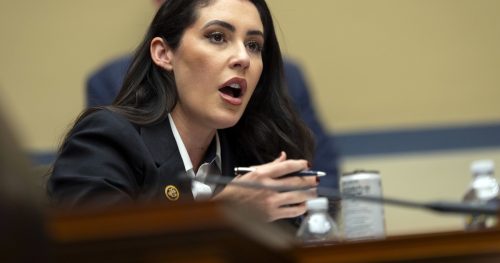
Those tensions are not happening in a vacuum; accusations are spreading in ways that implicate other figures and raise broader questions about culture and oversight in Washington. Rep. Anna Pauline Luna (R-FL) publicly suggested there’s a senator with baggage similar to Swalwell’s, naming a target in a conversation about potential trafficking and misconduct. The charge is explosive and, whether it proves out or not, it has already shifted the political calculus for Senate Democrats who want to keep scandal at arm’s length.
🚨 OMG. Democrat Sen. Ruben Gallego CONFIRMS HE KNEW RUMORS about Eric Swalwell for YEARS, and he froze up!
Look how flustered he's getting.
"It was flirty…we've heard that throughout."
Q: You heard these rumors for years?
GALLEGO: "Him being flirty."
Q: That wasn't issue… https://t.co/J8NobidgZb pic.twitter.com/PNbiJE4BHN
— Eric Daugherty (@EricLDaugh) April 14, 2026
Gallego’s critics point to a pattern they say shows poor judgment, and they’re using every stumble to paint a picture of a senator who tolerated, or at least ignored, troubling behavior in his circle. Opponents call him “the troll,” a nickname they say comes from reported online and in-person antics that raised eyebrows. That kind of label sticks in modern politics, and Republicans are quick to turn it into a talking point about character and fitness for office.
From a Republican standpoint, this is about accountability and consistency. If top Democrats promised to cleanse their ranks of bad actors and then defended or downplayed those actors, voters will notice the double standard. The party that champions moral crusades against opponents looks weak when its own leaders have unanswered questions hovering over them.
There’s also a strategic element: every high-profile fall leaves a political vacuum and new vulnerabilities. Figures who once relied on alliances find themselves isolated when scandals break, and rivals pounce to define the narrative. For Gallego, the choice is stark—either seriously address the rumors and associations or let critics set the terms of the debate.
Beyond rhetoric, the situation could have real consequences for committee assignments, fundraising, and local support back home in Arizona. State and national donors don’t like uncertainty, and an embattled senator is a harder sell at fundraising events. That makes damage control a practical necessity, not just a matter of reputation.
Republicans watching this play out see an opportunity to push for transparency and to remind voters about standards across the board. If Democrats want to lecture about corruption and moral failings, consistency demands they scrutinize their allies with the same vigor. Otherwise the message rings hollow and voters tune out the outraged posture.
The stakes are clear: political careers survive on credibility, and when that erodes, opponents smell blood. Gallego’s next moves will be closely watched by both his supporters and his critics, and the broader Democratic brand will suffer if questions about behavior and judgment are not answered decisively. The fallout from Swalwell’s downfall is still unfolding, and for some Democrats, it’s becoming an ugly reckoning.