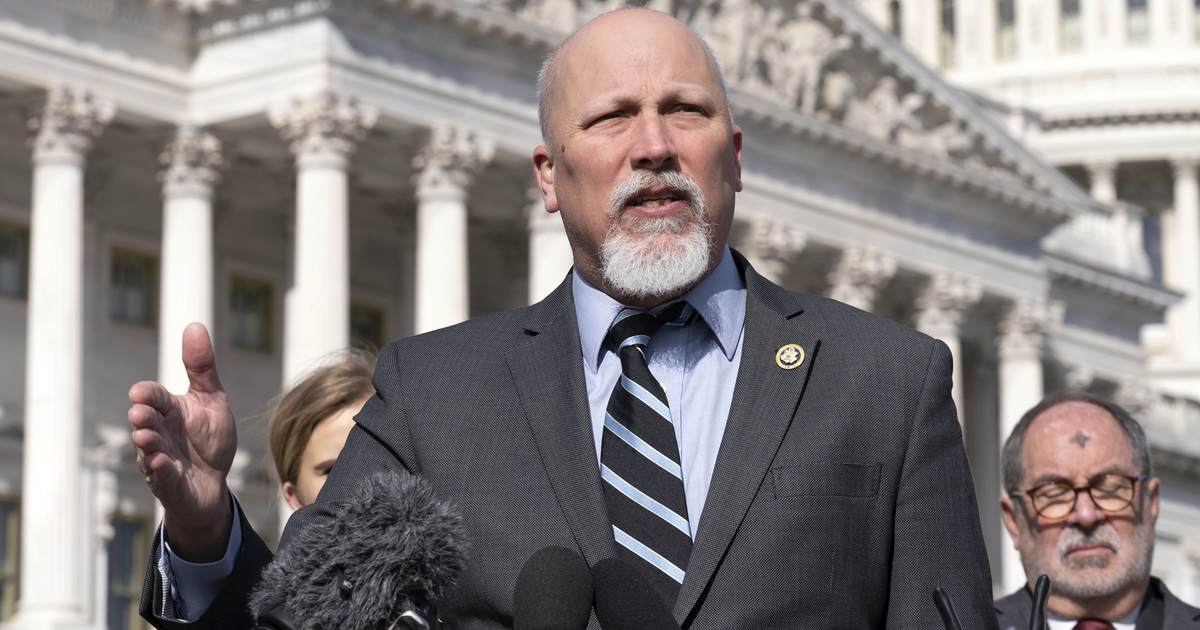
Rep. Chip Roy (TX-21) has unveiled the Mamdani Act, a bill aimed at keeping immigrants tied to communist, socialist, or radical Islamist movements out of the United States and creating new grounds for deportation for those who advocate such ideologies.
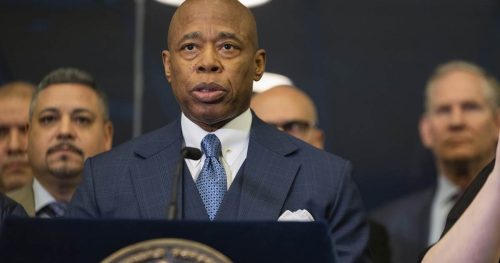
Rep. Roy named the proposal the Mamdani Act after New York City Mayor Zohran Mamdani and says the measure is designed to stop the importation of hostile political ideologies. The legislation targets people who are or have been members of, affiliated with, or advocates for communist, socialist, Chinese communist, Marxist, or Islamic fundamentalist parties and organizations.
The draft text, which was made available publicly and discussed widely, would amend current immigration law to bar admission and naturalization for aliens tied to those groups. Supporters frame the change as a correction to decades of policy that, in their view, allowed ideological adversaries to enter or root themselves in the country.
According to the bill text, Roy would amend existing immigration law to prohibit the admission and naturalization of any alien who is or was a member of, affiliated with, or advocates or advocated for a Chinese communist party, communist party, socialist party, Islamic fundamentalist party, or any other totalitarian party (or subdivision or affiliate thereof), domestic or foreign.
The legislation would also apply to any alien who is or was affiliated with, or who advocates or advocated for, any organization that advocates socialism, communism, Chinese communism, Marxism, or Islamic fundamentalism.
The bill would also create new grounds for deportation. Under the legislation, an alien could be removed from the United States if he has engaged, is engaged, or at any time after admission engages in advocacy for communism, Chinese communism, socialism, Marxism, or Islamic fundamentalism; writes, distributes, circulates, prints, displays, possesses, or publishes any written, electronic, or printed matter that advocates those ideologies or that is on behalf of or advocates for such parties; or is, has been, or becomes a member of or affiliated with such parties or organizations.
If enacted, the measure would not only deny visas and naturalization to people tied to listed ideologies but would also create explicit removal authority for those who, after admission, engage in advocacy or organizational ties. That language is broad by design, covering written, electronic, and printed advocacy as well as formal membership or affiliation. The approach aims to make ideology itself a legally actionable basis for removal in ways current statutes do not clearly permit.
🚨NEW: Rep. Roy introduces MAMDANI Act to denaturalize and deport Marxists and Islamic fundamentalists.
Roy told @BreitbartNews: "By targeting the Red-Green Alliance, this legislation deploys new tools to fight back against the Marxist and Islamist advance that has devastated…
— Rep. Chip Roy Press Office (@RepChipRoy) April 20, 2026
“Why do we continue to import people who hate us?” Roy said in a statement to Breitbart News. “Not just for the last six years, but for the last 60 years, our immigration system has been cynically used to disadvantage Americans workers’ competitiveness in favor of mass-importing the third world.”
The congressman argues that the influx of immigrants has had real-world economic and cultural effects, contending it “has not just led to higher crime and lower wages, but also the promulgation of hostile ideologies fundamentally opposed to American values.” He also framed the bill as a response to developments overseas, saying, “By targeting the Red-Green Alliance, this legislation deploys new tools to fight back against the Marxist and Islamist advance that has devastated Europe and has now arrived on our doorstep, especially in my home state of Texas.”
Roy has been outspoken about the incompatibility of radical Islam and sharia law with the Constitution, and he helped to launch the “Sharia Free America Caucus” in December to promote legislative options like barring foreigners who adhere to sharia law from entry and seeking designation of groups like the Muslim Brotherhood as terrorists. That caucus work reflects a broader Republican argument that immigration policy must account for ideology as well as criminality.
The bill raises immediate questions about how courts would interpret advocacy and affiliation, and how immigration officials would apply the standards in practice. Opponents are likely to challenge definitions and enforcement mechanisms, arguing that political beliefs and speech have constitutional protections and that immigration law changes must be narrowly tailored to withstand legal scrutiny.
Supporters counter that sovereign nations already deny admission to activists of totalitarian movements, and that the Mamdani Act simply codifies a commonsense guardrail to protect national security and cultural cohesion. In conservative circles, the pitch is straightforward: immigration policy should favor citizens’ economic interests and shield the country from organized ideological threats that have had devastating consequences in other nations.
Implementation challenges aside, the bill sets a clear test for where Republicans intend to take immigration policy: a focus on ideology and national identity rather than broader amnesty or unrestricted flows. For lawmakers in border states like Texas, where political and demographic shifts are already a heated issue, Roy’s proposal is both a policy statement and a campaign-ready stance on national sovereignty and cultural defense.