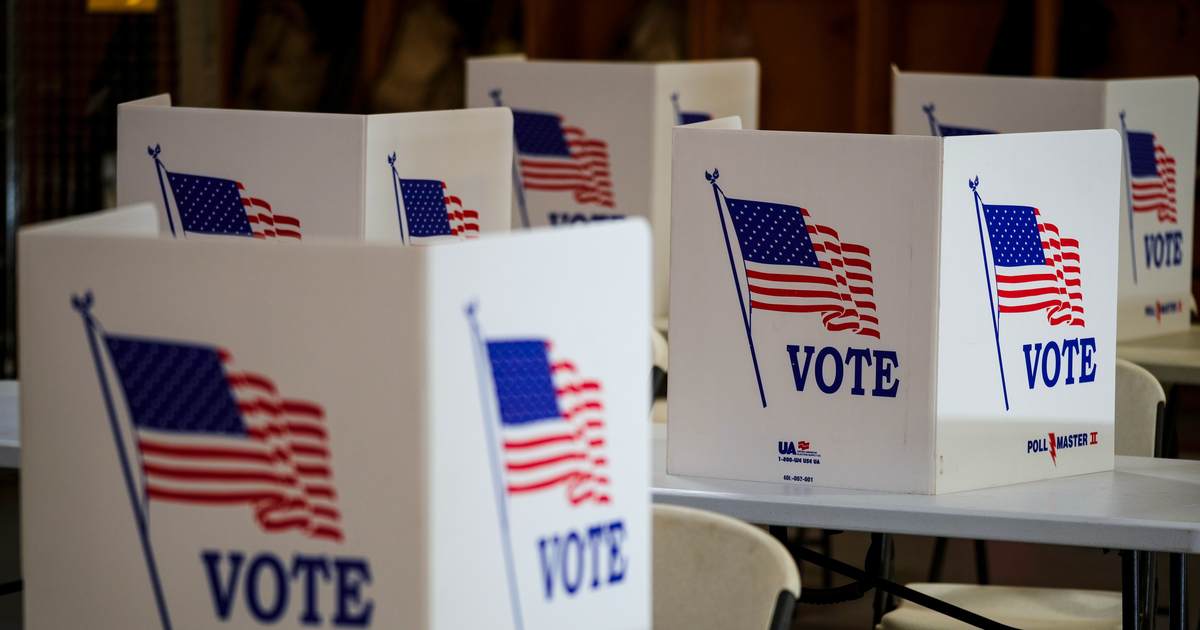
Virginia voters approved a referendum that locks in a heavily gerrymandered congressional map, consolidating Democratic control and leaving Republicans with just a lone seat in the state, a move critics say was packaged with misleading language about fairness and temporary fixes.
The referendum’s passage marks a sharp shift in Virginia’s political map, one that will shape who represents the state in Congress and how federal power is allocated. Voters were presented with language promising fairness, but the outcome hands a sizable structural advantage to one party and shrinks Republican representation to a single seat.
The amendment’s text repeatedly leaned on words meant to reassure, claiming the changes would be implemented “temporarily” and framed as a correction to restore “fairness” in midterm elections. That phrasing softened the true impact on district lines and voter influence, obscuring how boundaries were redrawn to favor one party. Critics say the wording was designed to steer undecided voters toward accepting what is, in effect, a long-term power grab.
Loudoun ED was YES+ 13.7. If this type of ED holds across NoVA there is not path for NO. If the rest of NoVA lags in ED, then NO has the slightest of hopes if YES totally tanks in Black areas.
This is pretty much over.
— Zachary Donnini (@ZacharyDonnini) April 21, 2026
The practical result is a set of districts engineered to entrench Democratic majorities and dilute conservative votes across key regions. Maps like these can transform close contests into near-certainties, shifting competitive terrain into predictable outcomes and making it harder for challengers to gain traction. With fewer competitive districts, the incentives for voter engagement and robust campaigning change substantially.
Across the country, similar strategies have appeared in blue states that aim to lock in federal representation for years to come. The pattern is clear: take a narrative about correcting unfairness and use it to redraw lines in a way that cements one party’s control. That reality fuels the frustration among conservatives who feel their votes no longer carry equal weight in affected states.
Portsmouth and Norfolk are now almost fully reported and YES is overperforming our vote goals by 7 points in the two counties.
— VoteHub (@VoteHub) April 21, 2026
There’s also a political inside game at work, where some Republicans have chosen restraint over retaliation. “Principled” GOP legislators in states like Indiana have refused to fight fire with fire, and are willfully allowing Congress to fall to the Democrats. That posture has consequences, because it hands the opposition the strategic upper hand without forcing a public debate about competing approaches to representation.
Beyond the immediate partisan tilt, the new map will influence policy fights in Washington by skewing which voices get seats and which get sidelined. When districts are engineered to favor a party, the result is a Congress with fewer swing members and more extreme incentives at both ends of the aisle. That feeds polarization and reduces the kind of compromise that once produced stable governance.
Legal challenges are likely to follow, though courts have often struggled to police partisan gerrymandering without clear standards. Expect litigation over intent and equal protection claims, but also recognize that judicial remedies can be slow and inconsistent. Meanwhile, the map takes effect and voters feel its impact in the next cycles, which is precisely why the timing of these changes matters so much.
The referendum is the latest in a string of successful moves by the state’s left-leaning political apparatus to reshape representation ahead of the 2026 cycle, and it raises immediate questions about fairness and democratic norms. Opponents note the irony of invoking reparative language while deploying a map that will likely lock in one-party control for many elections to come. We will see how temporary this “temporary” measure is.
The consequences extend beyond ballot lines to public confidence in elections and in elected officials, because when the rules look tilted, turnout and faith in the system can decline. Republican leaders and grassroots activists will now face choices about legal fights, legislative responses, and messaging strategies as they navigate a landscape where one state’s power is effectively concentrated by design. The political fallout in Virginia will be watched closely as other states assess whether similar tactics can be replicated or challenged.