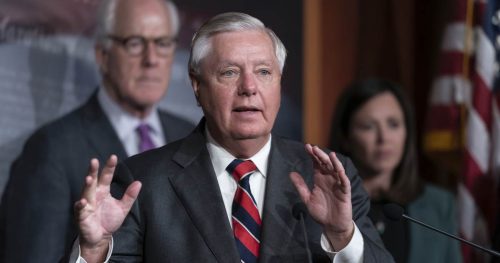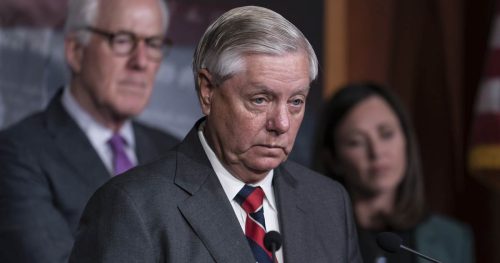
Sen. Chris Murphy’s recent behavior toward Iran, his past private meetings with Tehran’s officials, and his public statements raise questions about judgment, consistency, and where his priorities lie.
Sen. Chris Murphy (D-CT) spent a recent episode publicly appearing to cheer for Iran and then dismissed the reaction as “sarcasm.” That explanation landed flat for many conservatives who see a pattern rather than an isolated misstep, and they’re right to be skeptical.
Murphy wears the confidence of a long-tenured incumbent and acts like Connecticut voters will keep him in Washington forever. That swagger makes it easier for him to shrug off scrutiny when his actions clash with national security priorities.
A reminder of what I exclusively reported in 2020. You later admitted my reporting was correct. pic.twitter.com/XMqGfBTFnA
— Mollie (@MZHemingway) April 21, 2026
Sen. Chris Murphy of Connecticut and other Democratic senators had a secret meeting with Iranian Foreign Minister Mohammad Javad Zarif during the Munich Security Conference last week, according to a source briefed by the French delegation to the conference. Murphy’s office did not respond to repeated requests for comment by press time.
Such a meeting would mean Murphy had done the type of secret coordination with foreign leaders to potentially undermine the U.S. government that he accused Trump officials of doing as they prepared for Trump’s administration. In February 2017, Murphy demanded investigations of National Security Advisor Mike Flynn because he had a phone call with his counterpart-to-be in Russia.
“Any effort to undermine our nation’s foreign policy – even during a transition period – may be illegal and must be taken seriously,” Murphy said in 2017 after anonymous leaks of Flynn’s phone call with Russian ambassador Sergey Kisylak were published. He also strongly criticized the open letter some Republican senators sent Iranian leaders during the Obama administration’s campaign for a nuclear agreement.
Reporting tied Murphy to a private meeting with Iran’s foreign minister in Munich back in 2020, a meeting he initially stonewalled on before acknowledging it. That admission didn’t calm concerns because just two years later he argued publicly that the Islamic Revolutionary Guard Corps should be removed from the list of designated terrorist organizations.
That stance matters. The IRGC runs much of Iran’s external aggression and supports proxies across the Middle East, and arguing for a lighter legal treatment of that group looks like a strategic capitulation, not a sober reassessment of risk.
When a senator who once demanded investigations into others’ foreign contacts turns to private conversations with Tehran and public pleas that ease pressure on the regime, it’s not just poor optics; it’s a pattern. For Republicans watching, Murphy’s record reads as inconsistent at best and dangerously naive at worst.
His repeated defenses—sarcasm, misstatements, or selective memory—don’t erase the substance of his actions. What matters are the meetings, the public positions, and the consequences those choices could have for U.S. leverage in the region.
Connecticut voters have returned Murphy to the Senate multiple times despite these warning signs, which shows how entrenched incumbency can shield a lawmaker from accountability. That reality doesn’t change the fact that national security should be treated with more seriousness than spin or flippant explanations.
Republicans arguing for transparency and tougher scrutiny aren’t simply scoring political points; they’re pushing for consistent standards. If a senator condemns clandestine contacts by opponents, the same standard must apply when private diplomacy appears to favor an adversarial regime.
The broader takeaway is simple and direct: elected officials owe clear answers when their actions involve hostile foreign powers, and they should be judged by the record rather than the talk. Murphy’s recent conduct deserves scrutiny, not shrugging, because the stakes are too high to treat this as a punchline.