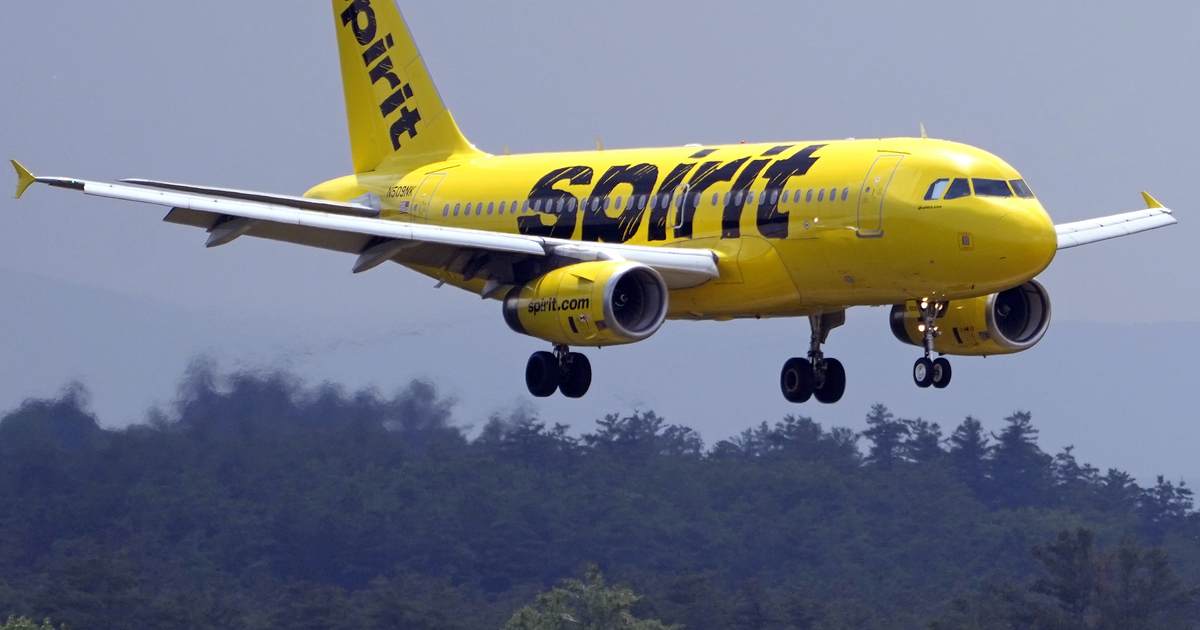
The debate over a possible government rescue of Spirit Airlines has put free market principles against a short-term job-saving instinct, with critics warning that a bailout would set a dangerous precedent and reward poor management.
Kevin O’Leary reacted sharply to talk that President Trump might use $500 million in taxpayer money to rescue Spirit Airlines, calling the idea a mistake. His view taps into a long-standing Republican instinct: government should avoid picking business winners and losers.
O’Leary said government interference distorts competition and ultimately punishes consumers by raising prices and lowering quality. He argued that allowing failing companies to exit the market is part of what keeps capitalism lean and dynamic.
He pushed back on rescue logic by insisting the private sector, not taxpayers, should handle corporate failure.
“The Trump administration is discussing a $500 million rescue deal, aka bailout, for Spirit Airlines, and the government would own 90 percent of the airline,” News Nation’s Katie Pavlich said. “A lot of Republicans in town in Washington, D.C. are upset about this, saying it’s picking winners and losers.”
Kevin O’Leary just says the Trump administration’s consideration of a $500 million bailout for Spirit Airlines is a very bad idea.
“You want to let them die — That’s what keeps America great.”
O’LEARY: “Bad idea, really bad idea. Bad precedent.”
“All of these rescue bailout… pic.twitter.com/CVRzxakVXK
— Overton (@overton_news) April 24, 2026
“I personally think that the airline should die if they can’t keep up, especially when you basically have to swipe your credit card to get the landing gear out before you hit the tarmac. What do you think about this potential bailout?”
O’Leary answered without sugarcoating it, warning that repeated bailouts create perverse incentives. “Bad idea. Really bad idea. Bad precedent,” O’Leary said. “All of these rescue bailout programs to failing companies. Capitalism works because the losers die, the protein goes to the bottom of the ocean. It’s acquired by private equity firms, lenders, or other strategic buyers. But it’s bad management, and you don’t want to support bad management. You want to let them die. That’s how the private system works. The best rise to the top, and the loser dogs go out of business. That’s what keeps America great. That’s why it works. That’s why it’s the number one economy on earth. That’s why everybody wants to be an entrepreneur, to try and set themselves free.”
Legal scholar Jonathan Turley joined the skepticism, pointing to a classic warning about expansive government ownership. “The suggestion that the government should buy out and own 90 percent of Spirit Airlines reminds me of something Milton Friedman said,” Turley wrote. “‘If you put the federal government in charge of the Sahara Desert, in 5 years there’d be a shortage of sand.'”
Still, the politics are messy. President Trump said his team is looking at options to help the roughly 18,000 Spirit employees who would be affected by a collapse. “We’re looking at helping them,” he told reporters at the White House. “We have 18,000 people that live in this country that are great people and great employees. We’re thinking about doing it, helping them out, meaning bailing them out or buying it.”
“I think we just buy it. We’d be getting it virtually debt-free. They have some good aircraft, some good assets. And when the price of oil goes down, we’ll sell it for a profit. I’d love to be able to save those jobs. I’d love to be able to save an airline. You know, we I like having a lot of airlines. So it’s competitive. So we are looking at Spirit. It’s in a bankruptcy. It’s in bankruptcy court. And we’re looking if we could get it for the right price, I’d do it to save the jobs. And we have somebody that wants to run it, do a good job, smart person. And if they run it properly and if prices come down, all of a sudden it’s a valuable asset. And they have some very good slots, too, which are pretty valuable.”
Arguments for government action focus on immediate pain: lost wages, disrupted communities, and the political cost of mass layoffs. Those are real costs, and they weigh heavily when leaders consider whether to step in and protect jobs.
The counterargument is about long-term incentives and fairness: rescuing one failing company with taxpayer dollars signals that private managers can rely on public backstops. Over time that undermines competition and encourages risky behavior.
Critics point to past bailouts that left taxpayers holding the bill while executives and investors were insulated from failure. They worry a Spirit rescue would be another example of government favoring corporate interests over ordinary citizens who ultimately pay the cost.
In this debate, the core tension is clear: preserve a healthy market that punishes mistakes and rewards innovation, or use public money to blunt the short-term fallout of corporate failures. The choice will shape expectations about when the government should step into private markets.