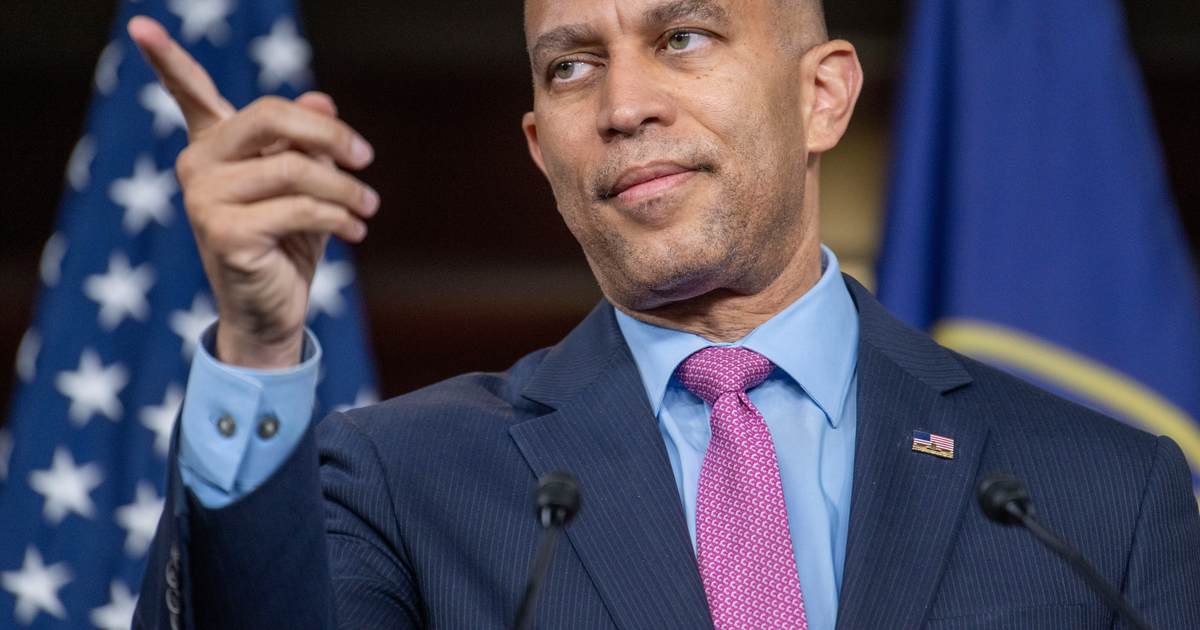
Hakeem Jeffries said impeaching President Trump would not be a priority if Democrats retake the House, and that stance lands amid fresh fears about political violence tied to radicalized individuals and a media culture that often excuses or downplays motive.
The recent arrest of a man connected to an attempted attack at a major Washington event has put political violence back on the front page, and public frustration is building. The suspect reportedly confessed to authorities, and the episode has sparked criticism of how the media and some politicians frame motives and responsibility. Instead of taking a sober look at what fuels these incidents, too many on the left shrug and avoid blame.
That avoidance plays right into arguments from conservatives who say a breakdown in public discourse is real and dangerous. When prominent Democrats refuse to name or confront the rhetoric that can animate extremists, it lets the problem fester. Voters watching this are left wondering whether leaders truly grasp the stakes of their words and the climate they help create.
House Minority Leader Hakeem Jeffries recently told a major Sunday program that impeachment of President Trump would not be top of the list if Democrats regain control of the House in the next midterm. That declaration surprised people on both sides, because impeachment talk has been a persistent theme in some Democratic circles. The statement landed at a strange moment, given heightened tensions and a high-profile attempted attack in the capital area.
House Minority Leader Hakeem Jeffries (D-N.Y.) on Sunday said Democrats will not focus on impeaching President Trump if they regain a majority in the lower chamber after midterm elections.
When asked if impeachment was a top priority, Jeffries said “of course not” during an appearance on “Fox News Sunday.”
In January, the president told House Republicans he will be impeached if the party does not win the midterms.
Earlier this year and months into the war, talk emerged of potentially removing Trump, but efforts have largely been stalled.
Democrats subdued their push after acknowledging they don’t have the votes to get it done.
Jeffries’ answer reads as tone-deaf to many Democrats who have loudly demanded accountability, while also annoying Republicans who say partisan promises should match action. From a conservative perspective, the bigger issue is consistency and credibility. Voters expect leaders to be direct about priorities and to avoid mixed signals that undercut confidence in governance and public safety.
What frustrates republicans most is the double standard: when violence targets conservative figures, the left sometimes rushes to blame rhetoric from the right, but when attacks or threats come from the left, the response is often muted. That inconsistency feeds cynicism and makes honest conversation about prevention nearly impossible. People want fair standards, not selective outrage.
There is also a policy angle here. If Democrats won the House and truly made impeachment a lower priority, it would change how resources and attention are spent in Congress. Republicans argue that serious oversight and accountability should not be treated as political theater or a bargaining chip. Instead, those responsibilities should reflect the severity of alleged misconduct, not the partisan calendar.
Beyond policy, leaders in both parties carry responsibility for calming — or stirring — the public. Plain talk about consequences, law enforcement needs, and mental health interventions would be useful, but they rarely get airtime when politics is the headline. Conservatives want a return to steady leadership that acknowledges danger without weaponizing tragedy, and that holds extremists of any political stripe to account.
At the end of the day, voters will judge who is serious about safety, stability, and accountability. Words matter. Actions matter more. If elected officials want to restore trust, they should stop reflexively defending activists or deflecting blame and start pursuing clear, consistent policies that protect citizens and punish violence whenever it arises.