A would-be assassin breached security at the White House Correspondents’ Association Dinner, allegedly targeting President Trump and other officials, sparking questions about motive, media framing, and the adequacy of protection for top leaders.
Cole Allen, 31, of Torrance, California, is accused of trying to assassinate President Trump and other government officials at the White House Correspondents’ Association Dinner on Saturday. The details in his writings and his own statements to police make his intent clear, and his manifesto contains a chilling line that leaves little room for doubt. “I am no longer willing to permit a pedophile, rapist, and traitor to coat my hands with his crimes,” Allen wrote. That admission, paired with his actions, frames this as a deliberate attempt rather than a random act of violence.
President Trump was inside the ballroom alongside Vice President JD Vance and other high-ranking officials when Allen managed to sprint past checkpoints outside the event. Security teams exchanged gunfire with the suspect before he was detained, and though he was not struck, officers recovered multiple firearms and knives from him. Those facts point to a dangerous breach in perimeter control and a close call that could have had a far worse outcome.
Allen reportedly told investigators early Sunday that his targets were Trump officials, reinforcing what his written manifesto spelled out more bluntly. His confession makes the motive and the selection of targets explicit, removing much of the uncertainty some in the media and political class attempt to manufacture. When the suspect states his aims plainly, the job of reporters and leaders is to report and respond, not to obfuscate.
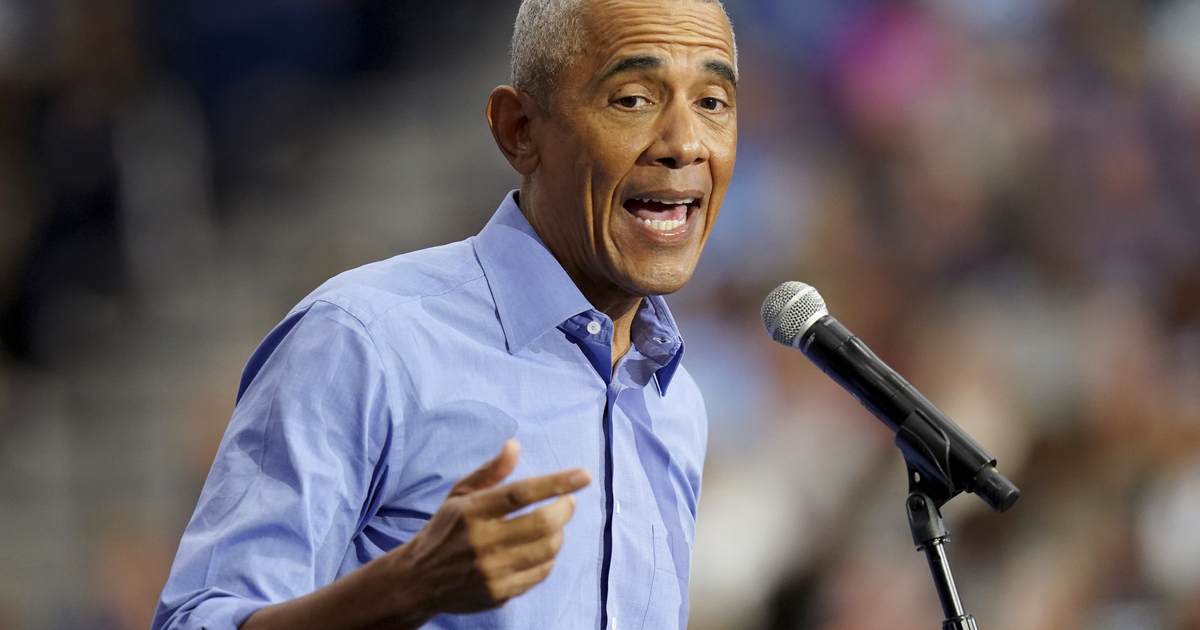
Instead, some former presidents and media figures have offered cautious statements that treat motive as a mystery. Consider this exact statement from Barack Obama:
Although we don’t yet have the details about the motives behind last night’s shooting at the White House Correspondents Dinner, it’s incumbent upon all us to reject the idea that violence has any place in our democracy. It’s also a sobering reminder of the courage and sacrifice that U.S. Secret Service Agents show every day. I’m grateful to them – and thankful that the agent who was shot is going to be okay.
That message thanks the Secret Service and expresses relief that the agent is expected to recover, which is appropriate. But treating motive as some open mystery when the suspect has written and confessed otherwise rings hollow. From a Republican perspective, that kind of equivocation looks more like a political dodge than a sober acknowledgment of the facts on the ground.
The incident raises concrete and immediate questions about how someone armed with multiple weapons could get so close to a high-value target at a high-profile event. Republican lawmakers and security officials should press for a clear accounting: how the perimeter failed, whether protocols were followed, and what fixes will be implemented to prevent a repeat. This is not about scoring political points; it is about ensuring that those entrusted with protecting leaders can do so effectively.
Meanwhile, media narratives matter. When coverage tilts toward uncertainty despite a suspect’s own words, it shapes public perception and can blunt accountability. Republicans will rightly demand hard answers and visible corrections to security gaps, and they will call out any instances where leaders or outlets seem to minimize the clarity of the suspect’s confessed motive. The stakes are too high for polite ambiguity.
You are a disgusting liar https://t.co/p7o0YiIqBY
— Libs of TikTok (@libsoftiktok) April 26, 2026