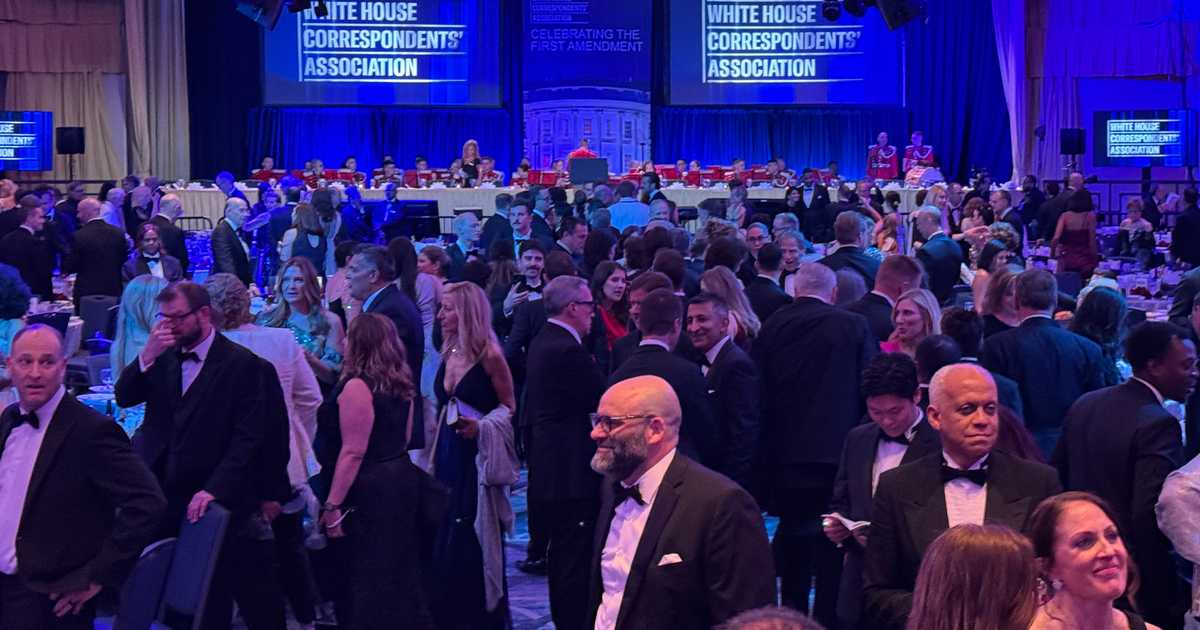
A near-breach at the White House Correspondents’ Association dinner exposed weak outer security and forced an evacuation, even as the Secret Service stopped an armed attacker before he could reach the ballroom.
Cole Allen, 31, sprinted past multiple exterior checkpoints at a hotel hosting the White House Correspondents’ Association dinner and nearly reached the event’s main ballroom. According to reporting, he had a manifesto and admitted to police that he intended to kill Trump officials and the president. Law enforcement stopped him before he entered the ballroom, but high-profile guests were evacuated and the evening ended in chaos.
Allen was already staying at the hotel, having traveled from Torrance, California, by train and checked in on Friday, which gave him immediate proximity to the event. That fact — a guest moving freely through shared hotel spaces during a major gathering of the president and other officials — is central to understanding how the incident unfolded. It raises questions about perimeter control at venues that host national leaders and their line of succession.
The first exterior security for me was on the street outside of the hotel. I flashed my ticket and was waved through in one second. My name was not checked against any list, I showed no ID, I was not patted down and did not go through a metal detector. I probably could have shown a ticket from a prior year or a fake one as they barely looked at it. (I don’t know who that exterior security was, they were guys in suits).
My thoughts on the security at the WHCD last night.
The first exterior security for me was on the street outside of the hotel. I flashed my ticket and was waved through in one second. My name was not checked against any list, I showed no ID, I was not patted down and did not go…
— Bill Melugin (@BillMelugin_) April 26, 2026
From that point, I walked into the hotel with no further security check, and I walked down to the Fox pre-party where there were multiple ballrooms that were absolutely PACKED with attendees. Still did not go through any security at that point.
Hypothetically, If I had hidden an explosive in my shoe or my jacket, I would have had no problem getting into one of those ballrooms.
Only once it was time to get into the main ballroom for the dinner did we pass through magnetometers, empty our pockets, and get a pat down. And even that checkpoint was just outside of the dinner room.
Two things can be true at the same time.
Secret Service reacted quickly to an active armed threat and prevented that threat from getting into the ballroom. But the security leading up to that point, in my opinion, appeared to be lacking severely.
The reporter’s account shows that meaningful screening didn’t start until the final choke point, which is way too late when you’re dealing with a gathering that includes the president and other leaders. Magnetometers and pat downs at the door are important, but they are last-line measures that should not be relied on alone. If an attacker can move through crowded pre-party spaces with no checks, that creates multiple soft targets.
Credit where it’s due: the Secret Service reacted quickly and neutralized the immediate danger, and that rapid response prevented what could have been a catastrophe. Still, reacting well does not erase the need for stronger prevention. From exterior credential checks to ID verification and tempered screening in adjoining ballrooms, layered security should be routine, not an afterthought.
This incident exposes a pattern too often seen when protocol gets sloppy in favor of convenience or optics, and we should be blunt about who bears responsibility for that. Organizers, venue security, and federal agencies all share duties that cannot be ignored when the lives of elected officials and their families are at stake. Accountability matters: when systems fail, someone needs to explain why standard measures were not enforced and how that gap will be closed.
No doubt, things will be tighter when the dinner is rescheduled, as the president promised.
There will be plenty of after-action reviews, and those reviews should be frank, fast, and public enough that taxpayers can see corrective steps. The goal is simple: reduce risk, restore public confidence, and keep leaders safe without turning every event into an impenetrable fortress. Practical, consistent improvements to perimeter checks and guest vetting can do a lot to prevent another close call like this.
Events that bring national figures into public spaces require disciplined security planning that anticipates how an attacker might exploit soft spots, not just how they will be stopped at the last minute. The near-miss at the WHCA dinner was a reminder that even when response forces perform admirably, prevention failed. We should use that lesson to harden defenses and demand better from the agencies and private contractors tasked with protecting the American people and their leaders.