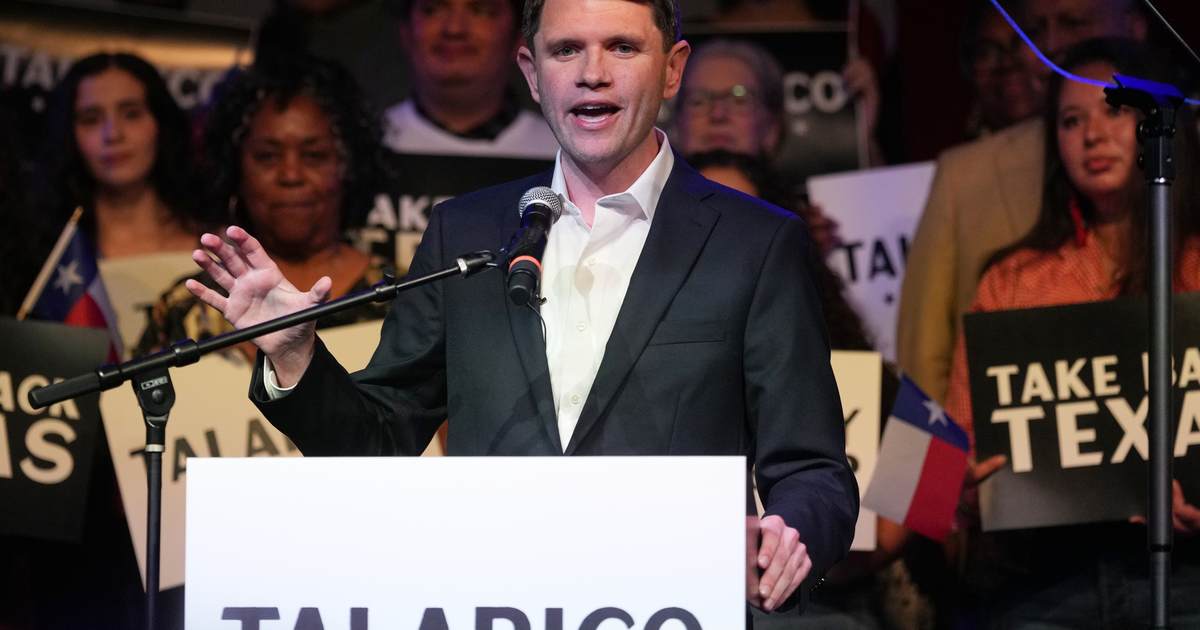
James Talarico claims a faith-shaped identity while his longtime pastor’s public remarks and history raise sharp questions about the tone and judgment being modeled for Texas voters.
James Talarico positions himself as a Christian running as the Democratic nominee for U.S. Senate in Texas, and he points to a longtime pastor as a spiritual guide. That pastor, Dr. Jim Rigby of St. Andrew’s Presbyterian Church in Austin, is central to Talarico’s faith story and appears frequently in his public praise. Voters deserve to know how that mentorship informs a candidate’s judgment and rhetoric.
Talarico has described Rigby as a formative figure: “Our pastor, Dr. Jim Rigby, who I’ve known since I was two years old. He married my parents, he baptized me, he is still my pastor today. And he showed me what it means to act with courage from the pulpit,” Talarico said. “He, in the 1990s, made the decision to ordain gay and lesbian clergy, to bless same-sex marriages. He risked his own ordination. He was put on trial by the National Presbyterian Denomination for those actions. In the 2000s, Dr. Jim made the decision to allow an atheist to join our congregation, again setting off a firestorm within the church.”
That backstory matters because Rigby’s recent public comments after a failed assassination attempt against President Trump went beyond sermonizing and landed as a punchline for some in his congregation. After the attack, Rigby framed the response in moral terms and then used a tone many would call callous when he suggested disappointment among people that the president had not been killed. That reaction has alarmed conservatives and independents who expect pastors to avoid inflaming partisan tensions.
Rigby also used colorful language to describe Republicans and the MAGA movement, saying, “You may know if you check the news at all, there was an assassination attempt,” Rigby said. “And I know a lot of people have mixed feelings. But it’s really, really important if we are going to be healing agents of the world to realize that violence is not going to get rid of the problem that we have.”
He went further in the same remarks, arguing that violent solutions had failed historically and tying modern conservatives to the Confederacy: “I said last week, if violence could have gotten rid of racism, the Civil War would have worked,” Rigby continued. “But if you look at the Bible Belt, and the heart of the MAGA movement, it is the Confederacy, the America they want to get back to, is the Confederate States of America. Not the United States of America.”
James Talarico's pastor:
"Last night there was an assassination attempt. I know a lot of people have mixed feelings < congregation laughs >"
continues to say violence is not the answer and its important to not do to this fascist movement what they are doing to rest of world pic.twitter.com/kb8eXXLhZs
— ATX data (@data_atx) April 27, 2026
Rigby added, “It’s very important that even as we fight for justice, even as we protect each other from this fascistic movement, that we not do to them what they’re doing to the rest.” Those words explicitly describe political opponents as a fascistic threat and urge strong moral opposition, language that critics say escalates division rather than calming it.
Across several years, Rigby’s positions on social issues have been unmistakable. He led opposition to a Texas law limiting gender-transition surgeries for minors in 2023 and publicly rejected rhetoric he labeled hateful. His congregation has employed inclusive language about God’s gender and has welcomed nonbinary clergy, choices that place St. Andrew’s clearly in the progressive religious camp.
Rigby has also criticized pro-life measures, once calling a requirement to bury or cremate fetal remains a “ghoulish assault on Texas women” and insisting the law was a Trojan horse to restrict reproductive care. His church received a designation from a progressive advocacy group for proclaiming reproductive freedom as a moral good, a label many conservative voters will find troubling in a mentor to a Senate candidate.
Earlier public statements reveal a pattern of provocative language. In 2015 Rigby posted a critique of orthodox salvation language on social media, writing, “We don’t have to be loving or kind like Jesus to be saved from God’s wrath. In fact we don’t have to do a single thing Jesus commanded us to do. All that matters is that we admit that we are worthless trash, but that Jesus likes us anyway. Oh, and we have to LITERALLY believe Jesus’ corpse got up. If you believe all the above you will get to be with God in heaven. Let’s just hope God has a handle on that anger problem by now.” That post stirred controversy among traditional Christians.
Rigby’s past activism also included preaching at a pro-Palestinian rally in 2009, where he framed activism as a spiritual struggle, saying, “If there is to be hope for humankind, then we must all realize that the true jihad is the struggle for peace and justice.” Critics say that rhetoric blurs lines and can alienate voters who expect clear moral leadership from spiritual mentors.
Texas remains a predominantly Christian state, and many voters want to scrutinize who shapes a candidate’s moral and civic outlook. Talarico’s reliance on Rigby as a spiritual mentor raises questions about whether those views align with mainstream Texas values and whether such rhetoric inflames partisan hostility rather than healing it.
“Absolutely disgusting stuff from James Talarico’s self-proclaimed mentor, but it is nothing new. Democrats have fanned the flames of radical left-wing violence for years and gleefully put targets on the back of President Trump, Charlie Kirk, and conservatives across America. To Talarico and Democrats, murder is simply the cost of doing business in their conquest for power,” said RNC spokesman Zach Kraft.