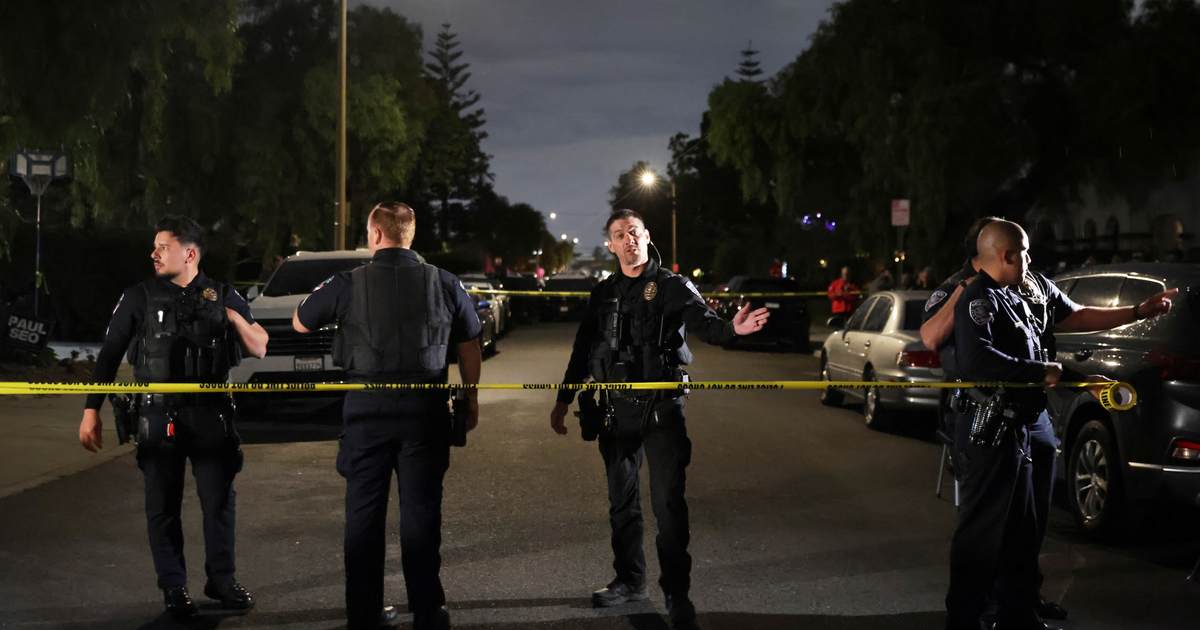
The Secret Service agent struck at the White House Correspondents’ Association dinner survived because his vest did its job, but the incident has raised big questions about how the shooter got so close and whether friendly fire played a role amid reports of a gag order and internal turmoil.
The agent who was shot walked away because his bulletproof vest stopped the round, and President Trump called to check on him, which everyone says lifted spirits. That’s the good news, but the obvious question remains: how did the attacker, identified as Cole Allen, get inside the Washington Hilton corridor near the event at all? The scene now looks less like a single lapse and more like a cascade of missed steps in hotel and event security.
Witnesses and attendees described security that was robust around the ballroom perimeter but sparse inside the hotel itself, where guests and staff moved freely. Allen was a registered hotel guest who reportedly traveled cross-country to carry out the attack, and he was stopped before reaching the ballroom. Still, several people noted that luggage and guest screening were minimal, which should never be the case for an event of this profile.
The Justice Department gave few details at a press conference and stressed the investigation is ongoing, which is standard but frustrating for those who want answers quickly. Agents exchanged gunfire with the suspect, but Allen was not hit before federal officers took him into custody. RealClearPolitics’ Susan Crabtree pushed for clarity and, according to reporting, ran into a gag order that limited what personnel could say about who shot whom.
One particularly odd detail is that Allen was stopped only after tripping, which makes the whole thing feel alarmingly close to disaster by accident rather than by design. If a single stumble kept an attacker out of a ballroom full of high-profile guests, that’s a security breakdown worth fixing immediately. The timeline and proximity matter because they tell us whether procedures failed or people simply made mistakes under pressure.
❓❓❓Was the Secret Service Uniformed Division officer shot last night in a case of friendly fire?
I just asked the @SecretService about the possibility that the UD officer was hit by another Secret Service officer or agent based on the analysis of the video below.
I'm told… https://t.co/oSjIIdWRvC
— Susan Crabtree (@susancrabtree) April 26, 2026
Evidence from video analysis has been circulated within the Secret Service community and it has prompted serious friendly fire concerns from people with inside experience. Sources shared a joint review that suggests one of the uniformed officers may have fired at the attacker as he ran through the checkpoint, and another officer in a suit could have been hit by that return fire. Those same sources say multiple agents then fired at the suspect from behind as he fled, yet none of those shots struck him.
I just asked the Secret Service about the possibility that the UD officer was hit by another Secret Service officer or agent based on the analysis of the video below.
I’m told there’s a gag order on the entire Secret Service over what exactly occurred last night in terms of who shot whom.
Sources in the Secret Service community are raising friendly fire questions based on a joint analysis of the below video, which they shared with me:
Analysis:
Video shows officer in suit (upper right) looking in opposite direction (allegedly distracted by a female walking by). There are 2 UD officers in uniform deeply engrossed in conversation (lower left). All three USSS are totally oblivious to gunman running towards them at the checkpoint with weapon in hand. A UD officer in uniform (lower left) pivots while stepping back with handgun drawn and fires at the gunman running through the checkpoint (in direct line of fire of the male UD in suit). UD in suit gets hit by shot fired at gunman by UD in uniform, and he hunches over but still remains standing while stepping back and pulling his handgun to also fire at perp running through the checkpoint. Then u see 3-4 USSS firing at the gunman from behind as gunman is running away. Yet no one shot hits the gunman.
Friendly fire is a known tragedy in chaotic confrontations, and the possibility here is painful because it points to training or coordination problems at a senior level. What worries me even more, beyond the ballistic analysis, is the chatter about internal drama inside the Secret Service that could be undermining clear command and quick action. When rank-and-file agents are publicly praised while leadership struggles behind closed doors, accountability and reforms tend to get delayed.
The agents who ran toward gunfire deserve credit for containing what could have been a massacre, but credit does not replace accountability for how the attacker reached a critical checkpoint with minimal friction. This is not about second-guessing heroism under fire so much as demanding that procedures match the risk level of protecting national leaders and high-profile events. Lawmakers and agency heads should be pushing for a transparent, rapid inquiry that sorts technical errors from systemic breakdowns and helps restore public confidence.