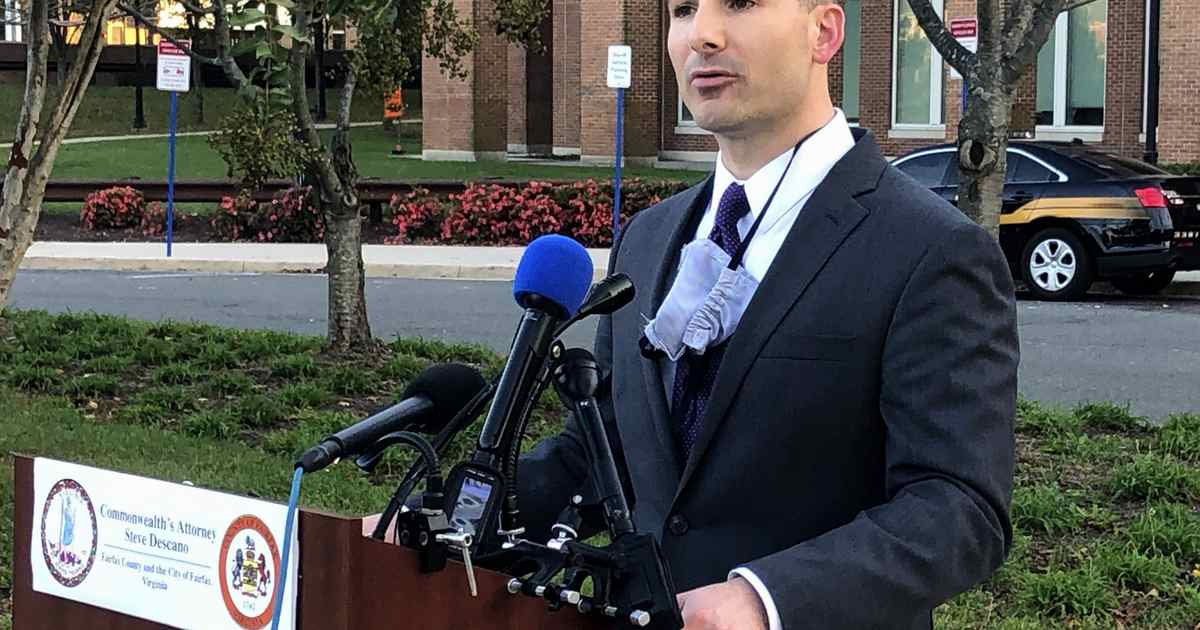
The Justice Department has opened a federal civil rights probe into the Fairfax County Commonwealth’s Attorney’s office, examining plea deals, charging choices, and sentencing practices amid allegations of preferential treatment for illegal alien defendants that may have endangered the community.
The Department of Justice has notified Fairfax County Commonwealth’s Attorney Steve Descano that the Civil Rights Division is examining the office’s handling of plea bargaining, charging decisions, and sentencing policy. The move puts a federal spotlight on local prosecutorial choices and how they intersect with public safety concerns. This investigation follows public outcry over several high-profile cases and internal communications that critics say show a pattern of leniency.
Officials from the Civil Rights Division will probe whether policies or practices resulted in discrimination against United States citizens by providing better outcomes to noncitizen defendants. That allegation goes to the heart of equality before the law: if true, citizens may have been placed at greater risk because of who the accused were. The review will look for patterns, not just one-off mistakes.
“Under my leadership, the Civil Rights Division will not allow local prosecutors to pick and choose winners based on their immigration status,” said Assistant Attorney General Harmeet K. Dhillon of the Justice Department’s Civil Rights Division. “This investigation will uncover whether this prosecutor is putting the community at risk in offering sweetheart deals to illegal immigrants charged with serious crimes.” That statement frames the inquiry as a test of whether local discretion crossed a constitutional line.
The probe was prompted in part by reporting that the Descano office showed what critics call leniency toward Abdul Jalloh, an illegal alien defendant who has since been accused of fatally stabbing Stephanie Minter at a Fairfax County bus stop. That tragic outcome has become the concrete example opponents use to argue the prosecutor’s policies had real-world consequences. Community members and victims’ families have demanded answers about how charging decisions were made.
Local news and internal emails indicate that prosecutors dropped or reduced charges against Jalloh even as police raised alarms about his danger to the public. Those internal communications, obtained by media outlets, allegedly show tension between law enforcement warnings and prosecutorial choices. If the emails reflect a pattern of declining to pursue serious charges against certain defendants, that will be central to the DOJ’s review.
The Department notes it has not reached any conclusions about the allegations and will investigate under various statutes, including Title VI of the Civil Rights Act of 1964, the Safe Streets Act, and law enforcement misconduct statute 34 U.S.C. § 12601. These legal authorities give the Civil Rights Division tools to examine whether prosecutorial conduct unlawfully discriminated against citizens. The inquiry will consider both policy documents and individual charging decisions.
Justice Department Notifies Fairfax County, Virginia Commonwealth’s Attorney of Investigation into His Plea Bargaining, Charging Decisions, and Sentencing Policy
“Under my leadership, the Civil Rights Division will not allow local prosecutors to pick and choose winners based on… pic.twitter.com/QFG1kbuhjE
— DOJ Civil Rights Division (@CivilRights) May 6, 2026
Past Civil Rights Division investigations into local prosecutors and police practices have led to negotiated settlements and reforms when violations were found. Those agreements often require changes to policies, training, and oversight to prevent future violations and restore public trust. Supporters of the DOJ action say federal oversight can correct systemic issues that local politics might let slide.
Officials urge anyone with information relevant to the investigation to contact the Civil Rights Division through the department’s reporting channels. The Division typically relies on witnesses, documents, and internal records to build an understanding of whether discrimination occurred. Additional public materials about the Civil Rights Division and its procedures are available on the Justice Department’s website.
This development has renewed debate over local prosecutorial discretion and accountability, especially in jurisdictions wrestling with crime and immigration pressures. Republicans calling for tougher enforcement and clearer standards say federal scrutiny is overdue if prosecutors are putting ideology before public safety. The investigation will test the balance between local autonomy and federal responsibility to protect citizens’ civil rights.