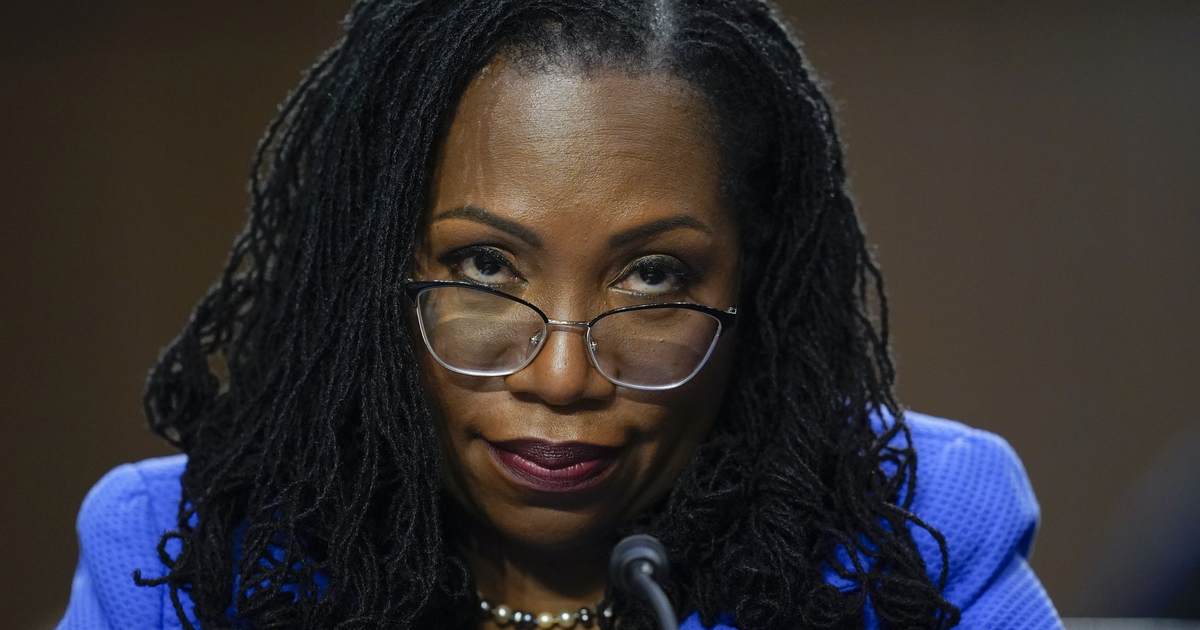
Supreme Court drama played out this week over Louisiana v. Callais, with Justice Ketanji Brown Jackson issuing a sharp dissent, Justice Samuel Alito blasting that dissent as “utterly irresponsible,” and the Court ultimately refusing to recall the judgment that affects upcoming elections.
Justice Ketanji Brown Jackson made clear she was unhappy with the Callais decision and filed a dissenting opinion aimed at stopping the ruling from taking immediate effect. She argued the matter required urgent attention because the timing tied directly to approaching elections. Her tone and approach drew attention on the bench and beyond.
Justice Samuel Alito responded forcefully and publicly, and his critique landed hard on Jackson’s reasoning and tone. The coverage noted Alito’s academic rebuke and even suggested that some of Jackson’s colleagues avoid lending their names to her work. That level of intra-court friction is rare and telling about how this Court is managing internal disagreements.
Alito labeled Jackson’s dissent “utterly irresponsible.” After that back-and-forth and the public sparring, Jackson denied a motion to recall the Callais judgment and no justices joined any dissent to that denial. The Court’s final posture left the challenged map change in place for the upcoming election cycle.
The Supreme Court has denied this motion. No justice noted a dissent. https://t.co/dlMLv4VHyh pic.twitter.com/ajQ6cDYgb2
— SCOTUS Wire (@scotus_wire) May 6, 2026
The underlying dispute centered on a Louisiana map that created a majority-black congressional district after an earlier map was invalidated under the Voting Rights Act. The Court struck down the new map as unconstitutional and narrowed its reading of Section II of the Voting Rights Act. That narrowing signals limits on drawing districts primarily by race and pushes back against racially based apportionment practices.
From a conservative perspective, the decision reinforces the principle that race should not be the dominant factor when drawing political boundaries. Courts have long struggled to balance protecting minority voting power with preventing racial classifications that override traditional districting criteria. This ruling edges the Court toward treating race-based districting with more skepticism and toward equal application of constitutional protections.
Jackson’s dissent and the subsequent rebuke raise questions about judicial tone and collegiality. When colleagues publicly distance themselves from opinions, it creates an unusual court dynamic and can undermine confidence in the institution. Observers on the right see this moment as evidence that judicial restraint and careful legal reasoning still matter on the Supreme Court.
The case also had immediate political consequences because the Court applied its ruling with an eye to pending elections, a move the dissent tried to block. With the denial to recall the judgment, candidates and voters in Louisiana will face the map the Court upheld, and election officials must move forward under that framework. The lack of dissent on the denial suggests the majority wanted clarity and stability ahead of ballots being cast.
Looking beyond Louisiana, the Court’s handling of Section II could reshape redistricting fights nationwide by narrowing when and how race can justify district lines. That matters for both parties, but conservatives see it as a corrective to decades of litigation that sometimes prioritized racial considerations over traditional districting principles. For now, the decision stands and the immediate dispute is resolved, but the ripple effects on future maps and litigation are just beginning to play out.