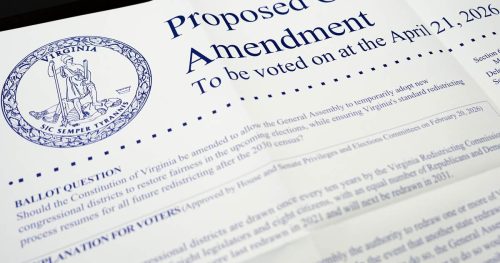
The Virginia Supreme Court’s rejection of a heavily tilted Democratic map has set off a loud reaction, exposing broader trends about shifting population, redistricting fights, and the dangers Democrats face as the 2030 census redraws political power.
The recent decision in Virginia didn’t just block a single map, it highlighted a growing vulnerability for one party as population shifts favor other regions. Voters and state courts are increasingly checking extreme partisan plans that try to lock in outcomes. That pushback matters because the electoral geography is changing fast.
Democrats once counted on a coast-and-city coalition that could win national contests, but that coalition is shrinking in raw clout. The census is moving electoral power toward states that tend to vote Republican, and that shift will matter in presidential and congressional maps. Parties that ignore reality risk long stretches out of power.
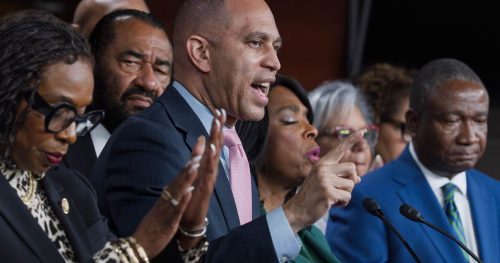
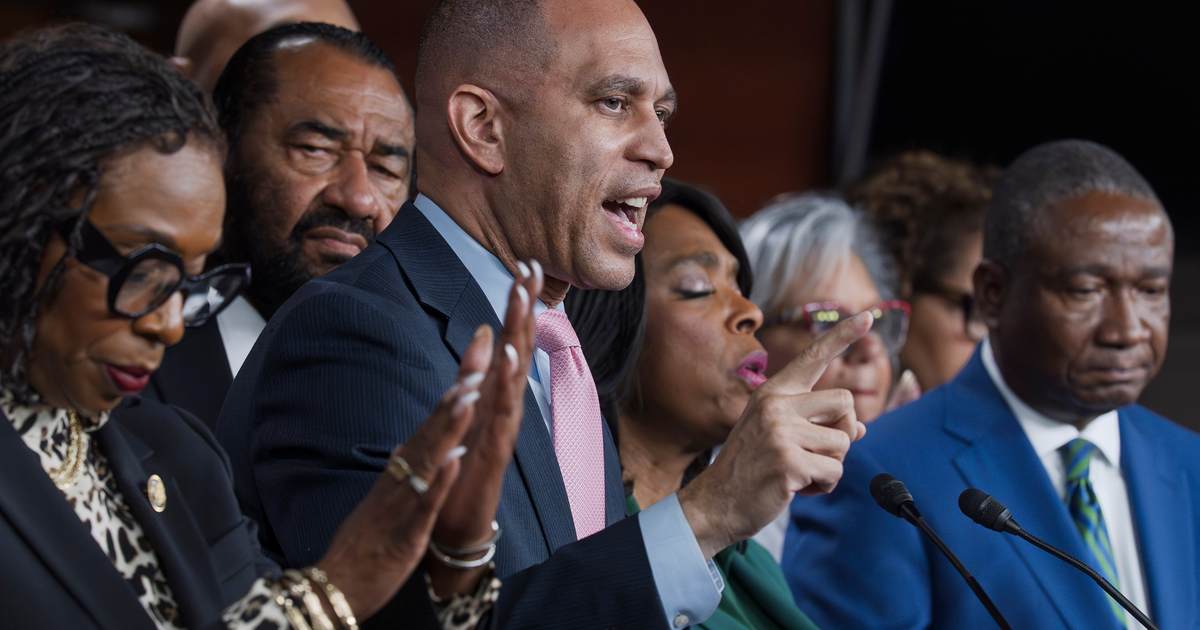
Virginia’s 10-1 map, designed to deliver a lopsided advantage, was tossed on procedural constitutional grounds and the reaction from the Left was immediate and emotional. People on the losing side made a spectacle of frustration and panic, but the court’s action shows institutions still play a role in reining in excess. That matters for the rule of law and fair play.
Some Democrats have spent heavily trying to redraw districts to their liking, and failures like the $70 million Virginia effort are a cautionary tale. Massive spending doesn’t guarantee durable wins when courts and voters push back. Those losses can blunt appetite for future battles and drain organizing energy.
Gerrymandering has cut both ways, with blue states once accused of drawing maps that squeezed opposition voters and conservative states responding in kind. The result is a political arms race over lines, and those fights will intensify through 2030. Each state fight has consequences for the national balance of power.
Ended? Ended you say? Patriot Forney, not ended. The veil of neutrality has fallen. Begun, the Redistricting War has.
Between now and 2028, Democrats are going to try to target a host of additional states, including ones they’ve already worked to gerrymander, both successfully… https://t.co/X6U3WxPlKG pic.twitter.com/Z72NM6lIEy
— Christian Heiens 🏛 (@ChristianHeiens) May 9, 2026
First, from Christian Heiens:
Between now and 2028, Democrats are going to try to target a host of additional states, including ones they’ve already worked to gerrymander, both successfully (California) and unsuccessfully (Virginia).
Not all of these efforts will succeed (for example, Colorado will be difficult to abolish the commission due to the 55% constitutional amendment threshold and Illinois/California Dems may have to leave at least one GOP vote sink each) but Republicans must be prepared to double down and do the necessary work to preempt the Dems because it is essentially inevitable that they WILL redraw more maps somewhere.
That means flipping back the Utah seat, redrawing Nebraska, flipping the governorship and the courts in Kansas and Kentucky, redrawing Indiana, finishing the job in the South, eliminating the two swing districts in Iowa, redrawing Texas again, and most importantly BLOCKING anticipated Dem efforts in states like Pennsylvania, Virginia, Minnesota, and Maine.
Dems have more theoretical targets (however difficult they may be) than we do between now and 2030 because they’ve accomplished so little and we’ve accomplished so much. We are now ahead. We need to maintain that lead and run the clock out on them before the 2030 census crushes them.
Republicans looking at that playbook see the practical steps needed: protect state institutions, win governorships, and elect state legislators who respect fair maps. That is how you stop one party from entrenching advantage. The road is political, strategic, and long.
Will this be the last gasp of leftism?
I don’t think people understand just how much of an existential crisis Democrats are in. If they don’t gain control of the House, Senate, Presidency, pack the Supreme Court, re-mandate racial gerrymandering, and give illegals mass amnesty by 2032, they will all but die as a nationally competitive political party.
With the VRA being overturned we will net at least 15 seats and the census will give us like a dozen more, as well as forcing democrats to redraw their seats being bolstered by illegals, making them more republican. This will make the house all but impossible to win for Dems.
Then the senate will become increasingly hard for them to win as states like Nevada keep shifting red and republicans slowly keep picking better candidates.
And the nail in the coffin? The census will make it all but impossible for dems to win the presidency unless they win the popular vote by at least 6 points.
We’re witnessing the last gasps of the satanic ideology known as leftism. We will win.
Those words are raw and unapologetic, and they capture both the fear and the confidence running through the debate. Some of the predictions are bold and rest on many variables, but the underlying point is clear: demographics and legal rulings are reshaping competitive maps. Campaigns must adapt to that mix of law and population.
Observers should remember that court decisions and census outcomes can both be reversed by future politics, so victory is never permanent. Yet every institutional loss or win stacks up, and the next redistricting cycle looms large for both parties. That pending change will be decisive for control of Congress and the Electoral College.
For Republicans, the strategic play is to hold the line in key states, win back contested seats, and push for transparent redistricting processes where courts and voters can intervene. For Democrats, the impulse to redraw aggressively risks legal blowback and voter alienation if plans look unfair. The public mood favors fairness over manipulation.
The Virginia episode is a reminder that power depends on more than money and anger; it depends on rules, timing, and the distribution of people. Parties that ignore those facts do so at their peril. The next several years will test who can convert energy into durable, lawful advantage.
Expect more political theater as both sides jockey for control of statehouses and courts. The stakes are high because maps shape who represents Americans and how national debates are decided. Those who want lasting influence must play the long game, not just the loud one.