Democrats in Virginia considered a bold workaround to salvage a gerrymandered map after the state Supreme Court tossed it, then backed off when reality and the rule of law caught up.
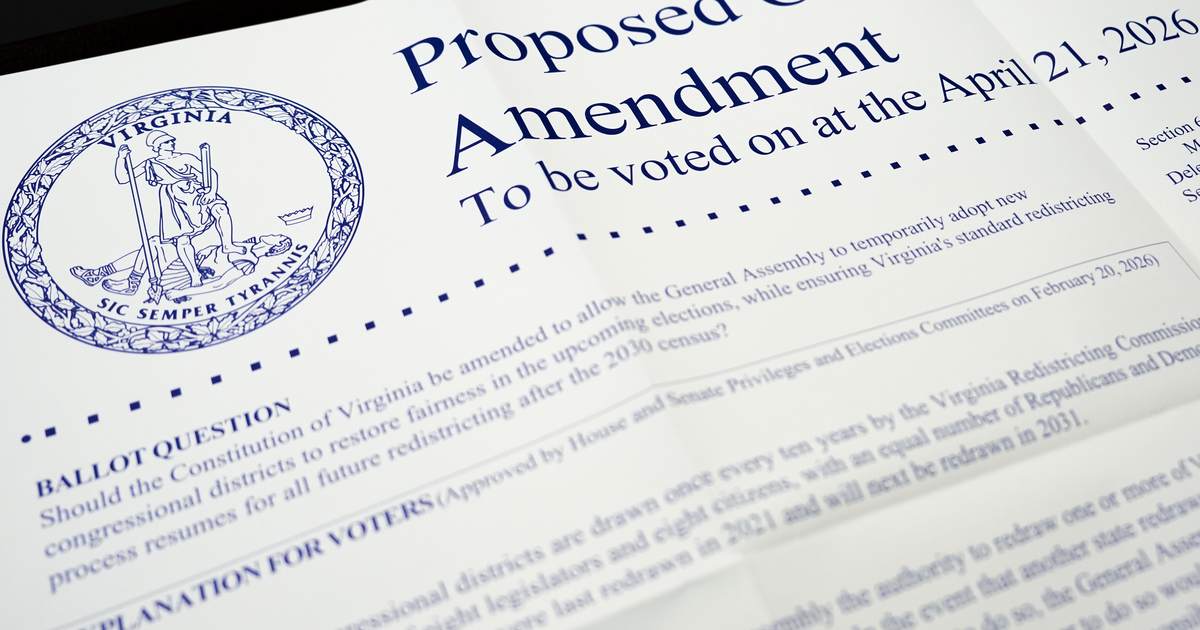
The Virginia Supreme Court struck down a congressional map that handed Democrats a 10-1 edge, citing clear violations of the state constitution’s election rules. That decision was squarely a state constitutional matter, not a federal one, and the court’s action reflected a check on blatant partisan overreach. Angry reactions followed, but furious threats to drag the fight to federal courts ignored the simple fact that this was a state-law issue.
When the map failed in court, some in the Democratic camp floated a plan to change the structure of the state Supreme Court itself by lowering the retirement age for justices. The idea was to erase the independent redistricting amendment by tinkering with the court roster and then ram through a new, partisan map. That kind of end-run around the will of voters and the text of the constitution is a raw power play, and it landed exactly where it should have: under scrutiny and criticism.
Dems response after this embarrassing Virginia setback has been:
-Play dumb about the law (“why didn’t they rule before the vote?” -because you asked them not to!)
-Blame institutions for their own failures (MAGA judges! [nominated by Mark Warner?]) pic.twitter.com/336NDlrYbw
— Matt Whitlock (@MattWhitlock) May 9, 2026
Gov. Abigail Spanberger is tied to a party that just spent $70 million chasing a map that a court found unconstitutional, and the fallout is political and practical. Virginia Senate Majority Leader Scott Surovell publicly dismissed the rumors about any retirement-age caper, which helped put the scheme on ice. Even if the idea had traction, the timing and logistics made it a long shot; courts move, and elections have deadlines that don’t bend to partisan fantasy.
The core legal reality here is simple: state constitutions govern state election procedures, and state supreme courts have the final say on those matters unless a genuine federal question is presented. There was no federal hook in this fight, only a straightforward application of Virginia law to an attempt at heavy-handed gerrymandering. Democrats threatening a Supreme Court appeal to the U.S. Supreme Court were running a political theater that ignored that jurisdictional line.
This episode exposes a pattern: when the rules don’t produce the partisan outcome some want, the response is to try to rewrite the rules or the bodies that interpret them. That’s not governing; it’s political desperation. Voters who asked for independent redistricting and constitutional guardrails did so to keep exactly this kind of manipulation out of state politics.
There’s also an accountability angle. Parties and operatives who bank on map advantage and then complain when courts do their job shouldn’t get a free pass. The $70 million that chased an unconstitutional result is taxpayer pain and campaign excess, not a legitimate cost of defending democracy. Responsible leaders need to stop treating institutions like playthings and start defending the framework that keeps elections fair.
Republicans should point out the contrast: respect for legal process, adherence to constitutional text, and acceptance of court rulings—those are not partisan luxuries, they are the backbone of stable government. The Virginia ruling reinforced that principle and denied a shortcut that would have rewarded raw power grabs. That’s a win for the rule of law and for voters who expect their state constitution to mean something.
“We win, you lose, Democrats. What a turnaround for Republicans.” This blunt line captures the political payoff, but the bigger takeaway is institutional. Courts are meant to act as a restraint on partisan excess, and when they do, the consequence is not a conspiracy—it’s the system working. The partisan tantrum that followed a lawful decision only underlines why strong, independent judicial review matters in state government.