President Trump says the planned uprising inside Iran during Operation Epic Fury faltered not because Iranians lacked will, but because a key partner— the Iraqi Kurds—kept the weapons the U.S. expected them to forward, leaving the operation short of the tools needed to topple the regime and complicating ceasefire talks now on shaky ground.
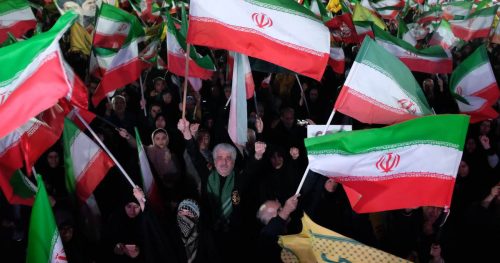
President Trump laid out his version of events in blunt terms, arguing that the failure to spark a mass uprising inside Iran was about more than fear or repression. He told reporters that a U.S. plan to arm and support anti-regime forces depended on reliable ground partners, and that those partners did not deliver as promised. That gap, he insists, turned a tactical opening into a missed opportunity.
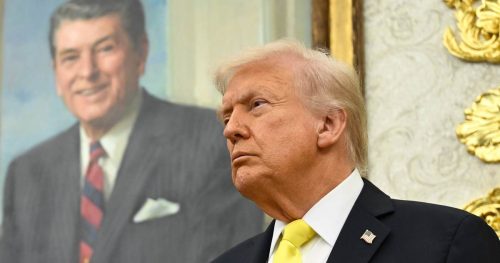
“No weapons, they have no guns. We thought the Kurds were gonna give us weapons, but the Kurds disappointed us,” President Trump revealed in the Oval Office.
“The Kurds take, take, take. They have a great reputation in Congress. Congress says, oh, they fight so hard. No, they fight hard when they get paid.”
🚨 JUST IN: President Trump reveals the Kurds REFUSED to hand over American arms to the Iranian people
"The Kurds disappointed us. The Kurds TAKE, TAKE, TAKE."
"We sent some guns with ammunition. They were supposed to be delivered, but they KEPT IT. I said they're gonna keep… pic.twitter.com/rBwd7SDYOd
— Eric Daugherty (@EricLDaugh) May 11, 2026
Trump pushed the point hard, making it clear he saw the Kurdish behavior as decisive. He said Kurdish units kept arms and ammunition that had been routed through partners on the ground, starving nascent resistance groups of the tools they needed. That, in his telling, is what stopped a larger uprising from happening when the window was open.
He doubled down later, criticizing not just the decision but the broader judgment that elevated certain allies in Washington’s eyes. “So I’m very disappointed in the Kurds, but they were given, I said it wasn’t gonna work, by the way,” he added.
“I just have to say it. I disagreed with what they did, they gave it. I said, they’ll never get there. And I was right, I like to be right.”
The president also acknowledged that some U.S. shipments did make it into the theater — “we sent some guns with ammunition” — but he claimed those supplies were supposed to reach insurgent cells and instead were withheld. That logistical snag, according to his account, meant uprisings that might have built momentum never had the chance to escalate. For Republicans who favor decisive action, the argument is simple: leadership needs partners that actually act.
Negotiations over a ceasefire with Tehran have faltered at the same time, drawing skepticism from the White House. Trump described regime negotiators as offering proposals he considered unserious and repeatedly backtracking on promises. That mixed messaging, paired with stalled on-the-ground plans, has reduced the chance of a durable settlement in the near term.
Reports are now emerging that U.S. and Israeli forces are on high alert amid the possibility of renewed strikes on Iran.
The operational fallout matters for American policy. If partners take advantage of U.S. materiel or act in ways that undercut missions, commanders face hard choices about where to commit forces and when to act. Trump framed his disappointment as a practical assessment: if you’re going to back an operation publicly, you cannot have your on-the-ground partners quietly compromise it.
That critique also reaches into Congress and public perception, where some lawmakers have praised Kurdish units for battlefield bravery. The president pushed back on that narrative, arguing that reputation and reliability are not the same thing. His remarks put a spotlight on the gap between rhetoric and results.
What happens next will depend on whether Washington can rebuild trust with local allies or choose different partners for future operations. For now, the story is one of an opportunity lost at a key moment and a president publicly calling out the reason in plain language. The claim raises questions about how much faith to place in regional actors when national strategy is on the line.