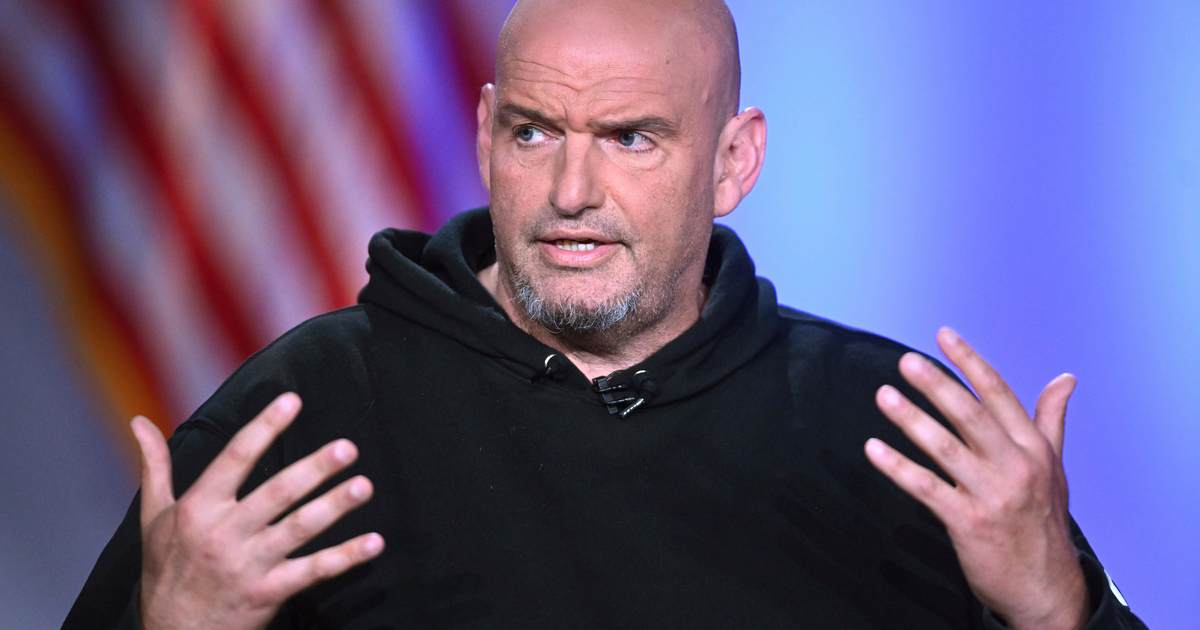
Sen. John Fetterman has drifted into conflict with his own party, criticizing parts of the Democratic base and facing political trouble at home as he weighs how to navigate Washington and his reelection prospects.
Sen. John Fetterman (D-PA) is increasingly seen as a pariah inside his own party. Voters in Pennsylvania have soured on him, and there likely aren’t enough Republicans and independents to offset that dissatisfaction. He has rejected the idea of switching parties, partly because he disagrees with Republicans on core issues and partly because a GOP primary would not hand him a clear path forward.
He’s admitted he wouldn’t align with the GOP on several major items, and Pennsylvania Republicans wouldn’t simply hand him a Senate slot without a fight. That means Fetterman’s options are limited: stay in the Democratic fold and try to make the Senate work for him, or face electoral defeat at home. The comparison to Joe Manchin lands because both men sit awkwardly between their party’s activists and a wider, more moderate electorate.
Fetterman has rubbed his party the wrong way on a string of controversies, from Operation Epic Fury to border security and even a public ballroom incident. Those specific flashpoints feed into a broader complaint he has about the party’s direction. Now he is raising a stark critique: he believes elements of the Democratic base are becoming “increasingly anti-American.”
Sen. John Fetterman (D-Pa.) on Wednesday accused the Democratic base of becoming “increasingly anti-American” amid calls against U.S. military intervention in Venezuela, Iran and Cuba.
Reason magazine’s Nick Gillespie, asked Fetterman on the “Reason Interview” podcast about what the senator thinks of his politics now, having backed Sen. Bernie Sanders (I-Vt.), a democratic socialist, in 2016.
“Well, I mean, you know, in 2016, it was much more about the minimum wage and some other very basic kinds of thing,” Fetterman said. “And now that’s, that’s just turned into much more standing with like Cuba, standing with Venezuela, standing with the Iranian regime and, and turn that into much more becoming more increasingly anti-American for me. So, my views really haven’t changed that much.”
Fetterman said he has not seen a change in his political views, citing his support for marriage equality as an example.
“What’s really changed is the party,” he continued. “And in 2024, I was campaigning for Kamala Harris there as a Democrat. It was very clear we were going to lose. And a lot of the excesses that we’ve had in 2020 came back to revisit … the excess of the party back then summoned the second term of the Trump administration.”
That quoted exchange underscores a split between old-school retail politics and a newer activist energy that prizes ideological purity over broad appeal. Fetterman’s critique focuses on foreign policy stances—opposition to intervention in Venezuela, Iran and Cuba—that he sees as symptomatic of a larger anti-American streak among some activists. For Republicans watching this unfold, it reads like confirmation that the Democratic brand is shifting away from mainstream voters.
The pushback against traditional foreign policy and national commitments has become louder in some academic and activist circles, and Fetterman points to that as part of the problem. When a party’s base begins to celebrate positions that oppose longstanding American interests, it creates tension for elected officials who face a general electorate. Fetterman’s frankness about the divide shows how isolated senators can feel when their party moves left in high-profile ways.
Politically, his situation is messy. He can try to thread the needle in Washington by working with colleagues across the aisle on issues where there’s common ground, or he can double down and attempt to placate the more vocal elements within his party. Neither route promises an easy path back to broad support in Pennsylvania, and his critics on the left are unlikely to forget his public complaints.
What’s clear is that intra-party fights have consequences at the ballot box. When activists prioritize purity and gestures over practical wins that matter to everyday voters, senators like Fetterman get squeezed. His candid assessment of his party’s direction makes for an uneasy dynamic: he still identifies as a Democrat, but he’s increasingly at odds with powerful forces inside that coalition.