American law schools steeped in DEI are graduating a generation of judges who will likely carry the Democratic Party’s ideological agenda into the courts, and recent prosecutorial and judicial decisions show how that playbook is already reshaping outcomes.
The Left has methodically moved into our universities and institutions, and that shift matters because law schools train tomorrow’s judges and prosecutors. Conservatives gave ground on education and culture for too long, and that absence of pushback has allowed progressive ideas to become default training for legal careers.
When political strategy meets long-term institutional control, the result is predictable: those who run the courts decide which rights survive and which do not. Democrats openly flirt with structural changes — they promise to expand and pack the U.S. Supreme Court, and Hakeem Jeffries has vowed ‘judicial reform’ at the federal and state levels — a plan to replace neutral jurists with reliable political allies.
The practical effects are brutal to imagine: basic liberties like the First and Second Amendments could be hollowed out, the Electoral College could be brushed aside, and the ordinary checks on power eroded, the Constitution be damned. Law schools across the country are teaching future attorneys and judges that America is a systemically racist nation and that they must “dismantle systems that racialize, subordinate, and oppress.”
The courtroom consequences are not hypothetical. In New York City, prosecutor Dafna Yoran reduced a homicide charge to manslaughter and imposed a ten-year term for a Black man who murdered an Asian college professor, invoking restorative justice. Yoran was also the prosecutor who sought to prosecute Daniel Penny for defending subway riders, illustrating a prosecutorial philosophy that treats some defendants more leniently and some defenders more harshly.
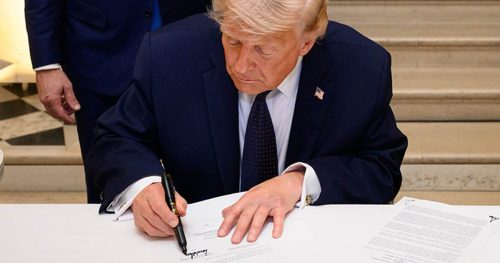
We’ve seen political prosecutions as well. Manhattan prosecutors levied dozens of questionable felony counts against a former president in an apparent attempt to create a criminal label before an election. That kind of selective legal warfare undermines faith in neutral justice and treats the legal system as a partisan tool to remove opponents from the ballot.
NEW: In a mandatory anti-racism class, Penn State told 1L law students they must "acknowledge the reality of systemic racism" and "dismantle systems that racialize, subordinate, and oppress."
One student withdrew from the law school over the class. We obtained shocking audio.🧵 pic.twitter.com/zPxbqVY0K8
— Aaron Sibarium (@aaronsibarium) May 14, 2026
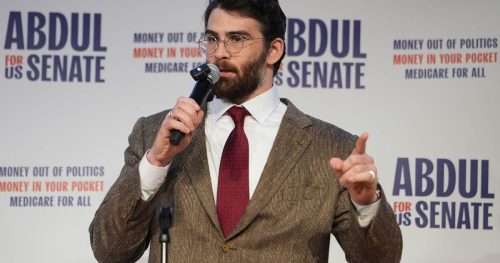
Local elected prosecutors have amplified the problem. Fairfax County’s Steve Descano developed a pattern of downgrading charges and dismissing serious cases, even after law enforcement warned of danger. One tragic example is Abdul Jalloh, whose case was repeatedly softened until he stabbed Stephanie Minter to death at a bus stop; she was 41 years old.
Judges, too, are reflecting this cultural shift. In Cambridge, Judge Janet Sanders admitted she was “taking a risk” when she imposed a light sentence on Tyler Brown in 2020 after he attempted to kill two Boston police officers. Brown later opened fire on a Massachusetts highway and critically wounded two people, a harsh illustration of the stakes when leniency replaces accountability.
Courts sometimes factor in identity in ways that change punishment. Nicholas Roske, who tried to assassinate Justice Brett Kavanaugh, received only eight years in part because of his claimed trans identity; the sentencing judge, Biden-appointee Deborah Boardman, cited a policy of housing prisoners according to their real gender rather than their “trans identity.” Boardman admitted so in court, and critics argue that such reasoning privileges identity over public safety.
The pattern is clear: when ideological criteria and identity politics shape charging decisions and sentencing, equal justice gives way to selective mercy. Criminals who fit certain demographic or ideological checkboxes can receive lighter penalties, while ordinary Americans face a system weaponized by partisan prosecutors and judges.
Meanwhile, a Democrat-run Department of Justice that treats political opponents differently or contemplates punishing religious opponents would further twist law enforcement into a political instrument. Prosecutorial discretion and judicial philosophy matter every bit as much as statutes, and the current trajectory privileges interpretation driven by ideology rather than by objective law.
This is not an abstract debate about theory; it is a realignment of how legal power is taught, exercised, and preserved. Those who value a neutral judiciary and predictable law should pay attention to who sits in classrooms and on benches, because the consequences will ripple far beyond any single case.