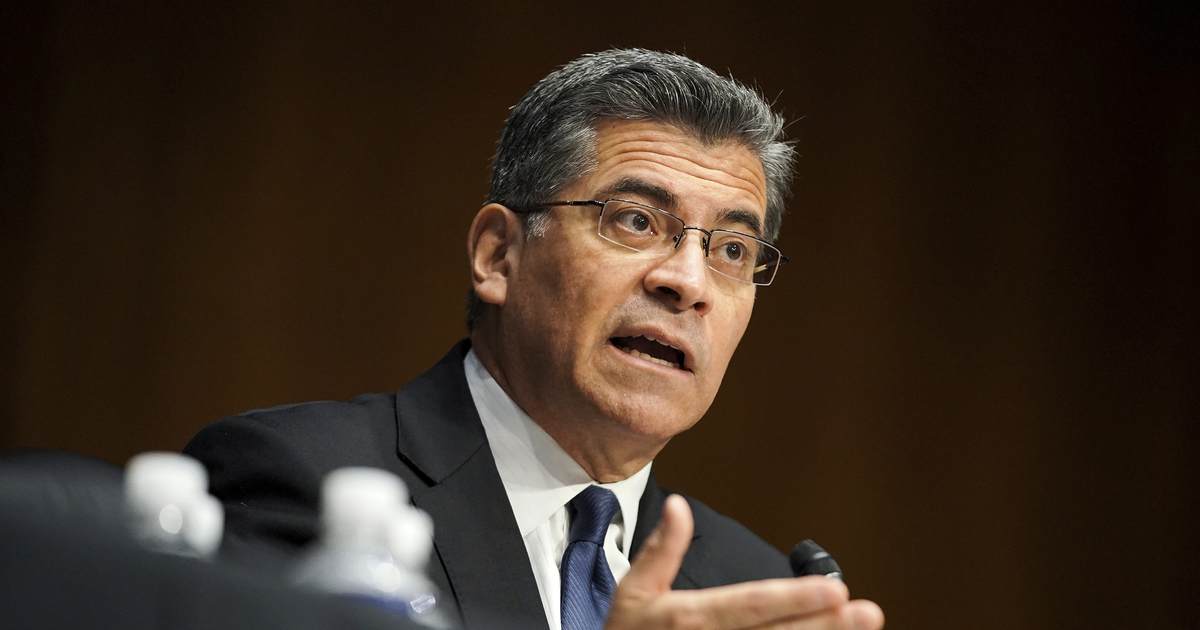
A resurfaced controversy ties the leading California Democratic gubernatorial candidate to the Church of Scientology, with long-standing connections and public moments from the 1990s and 2000s now drawing renewed scrutiny as voters head toward the June 2 primary.
The story landed back in the spotlight after a Democratic political influencer highlighted Xavier Becerra’s past interactions with Scientology and its leadership, prompting fresh questions about judgment and loyalties. The claims include private references to church figures and a record of actions taken while Becerra served in federal office that critics say appeared protective of the organization. For many voters, those former ties feel relevant again given the stakes of the upcoming race.
“Xavier Becerra, the man who protected Scientology for years?” Yashar Ali, a Democratic political influencer wrote on X. “The man who was so trusted by David Miscavige that he would reference him in private conversations as someone to reach out to when the organization needed something? That guy?”
The posts and discussion point directly to Becerra’s connections with David Miscavige, the leader of the Church of Scientology, a figure long accused of a wide range of abuses. Those allegations against Miscavige have included human trafficking and forced labor to physical abuse of subordinates and child abuse, and they have been central to critics’ calls for accountability. For opponents and skeptical voters, such ties raise red flags about influence and access.
Xavier Becerra, the man who protected Scientology for years?
The man who was so trusted by David Miscavige that he would reference him in private conversations as someone to reach out to when the organization needed something?
That guy? https://t.co/2DsRl2WpGX
— Yashar Ali 🐘 (@yashar) April 11, 2026
Records show Becerra taking public positions that favored members of Scientology in the 1990s, and critics note those stands alongside more social interactions with the organization. In 1997, while a member of Congress, he urged fellow representatives to support a resolution defending German Scientologists and argued that “Many of my constituents are members of religious minority groups like the Church of Scientology,” and they “deserve this protection.” That line has become a touchstone for critics who say he prioritized institutional favor over scrutiny.
His public remarks and appearances continued into the next decade, drawing attention from both allies and opponents. In 2000, Becerra was a speaker at the grand opening of a headquarters for ABLE, a Scientology-related group, and he said, “You revive Hollywood… you kindle the spirit and determination of those of us who… have an opportunity to work with ABLE to make life better.” Critics say comments like that read as praise and partnership rather than neutral engagement.
By 2003, his presence at events connected to Scientology was well documented, including attendance at a gala at the Scientology Celebrity Centre in Hollywood while he still served in Congress. That appearance often gets cited by opponents who argue it shows more than casual acquaintance and reflects pattern rather than one-off association. For voters who worry about special-interest influence, the pattern matters.
When questioned, Becerra’s campaign pushed back and framed past decisions as products of an earlier era, arguing that the full truth about the organization was not public record at the time. “The Church of Scientology is facing the reckoning it deserves for decades of deception, abuse, and coercion,” Jonathan Underland, Becerra’s campaign spokesperson, told the San Francisco Standard. “It is dishonest to apply what we know today to decisions made in the 1990s and early 2000s, before the truth was public record. In the years since, public figures and elected officials like Becerra have rightly chosen to disengage. And when it comes to this particular organization, Becerra will do what he has always done: go after powerful institutions that prey on Californians.”
Even with the campaign’s response, the matter is political ammunition as the primary approaches and opponents sharpen their message. Polling models cited in the public debate give Becerra a strong chance of making the general election, with a 77 percent probability quoted for advancing, while Republican Steve Hilton shows nearly an 80 percent chance in similar tallies. Those numbers only underline why both sides are digging into histories and public records now.
The resurfacing of these ties gives Republican strategists and conservative commentators a clear line of attack heading into early June, and it forces independents and undecided voters to weigh past associations. Questions about judgment, influence, and institutional sympathy are the core of the criticism, and they will likely be folded into campaign messaging from here on out. As the primary date nears, that scrutiny is set to intensify rather than fade.