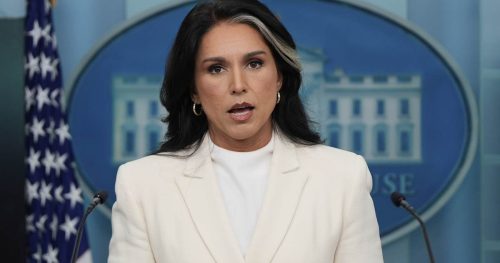
Tulsi Gabbard announced she will resign as Director of National Intelligence effective June 30, citing her husband’s rare bone cancer, and a scathing post from Sen. Adam Schiff drew widespread backlash for its tone about her departure.
Director of National Intelligence Tulsi Gabbard confirmed she will step down on June 30, a move she says is driven by her husband’s diagnosis with a rare form of bone cancer. Her tenure included the release of declassified documents that many conservatives say exposed the Deep State’s plotting against Donald Trump and highlighted the Russian collusion hoax. Those moves made Gabbard a lightning rod in Washington and a target for partisan attacks from the left.
Sen. Adam Schiff (D-CA) chose to make a public statement about her resignation that struck many as cruel and out of touch with basic decency. Instead of expressing support for a family facing a serious health crisis, his words focused on criticizing her record at the intelligence agencies. That reaction tells you more about the politics in D.C. than it does about Gabbard’s service.
My thoughts go out to Tulsi Gabbard and her family, as her husband battles this serious health problem. I hope and pray that he makes a speedy and full recovery.
While the circumstances around her departure are deserving of our sympathy, let’s be clear: Tulsi Gabbard’s only…
— Adam Schiff (@SenAdamSchiff) May 22, 2026
My thoughts go out to Tulsi Gabbard and her family, as her husband battles this serious health problem. I hope and pray that he makes a speedy and full recovery.
While the circumstances around her departure are deserving of our sympathy, let’s be clear: Tulsi Gabbard’s only positive contribution to our nation’s national security is her resignation.
She politicized intelligence. She dismantled critical agencies keeping Americans safe. She weaponized the IC to pursue baseless election fraud claims. And more.
We must ensure that her tenure — marked by a devotion to the person of the president and not to the security of the country — represents a terrible exception at DNI and not the new normal.
Reading that, some people will focus on the policy claims and others will focus on tone. Both matter. It’s entirely appropriate to debate whether past actions were wise, but it’s another thing to couch a partisan critique in the middle of a family crisis. Conservatives watching this called it classless; independents and undecideds likely saw it as poor timing and poor taste.
Gabbard’s defenders point to her push to declassify material that revealed procedures and maneuvers inside the intelligence community that, to many Americans, looked like political targeting. Those disclosures fed a narrative that the intelligence apparatus had been used to influence political outcomes, particularly around the Russian collusion allegations. Whether you agree with her methods or not, she forced uncomfortable questions into the light.
Critics say she overstepped and politicized the office. That’s a valid debate to have in public, and one that should be handled soberly. What Schiff’s post failed to do was separate policy critique from personal compassion, and that failure widened the partisan gap instead of narrowing it.
Political life does not require cruelty, even when you believe an opponent did wrong. Pointing out perceived failures at the DNI can be done without rubbing a family’s pain in the public’s face. Respect for process and respect for people shouldn’t be mutually exclusive, and too often the left forgets that distinction when it’s convenient.
Gabbard departs amid high drama in national security conversations, including discussion of Operation Epic Fury and lingering disputes about intelligence handling during recent election cycles. Her resignation will leave a gap and a record that will be debated for years, but right now the immediate concern should be her husband’s health and the privacy of their family. Politics can wait while a family deals with suffering.
Across the political spectrum, this episode is a reminder that public life can harden people’s instincts and make even elected officials sound petty at moments that call for basic humanity. If the goal is to win hearts and minds, alienating people with personal barbs is a bad strategy. If the goal is to hold officials accountable, do it with facts and timing that don’t smack of opportunism.