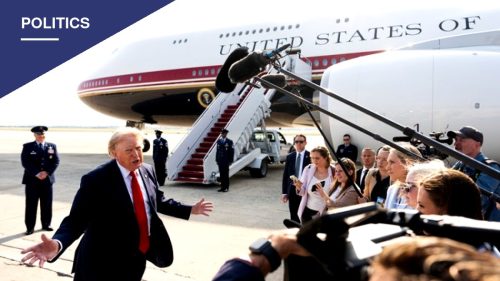
President Trump will hold a Cabinet meeting at Camp David as talks with Iran move forward, mixing foreign-policy focus with domestic wins and signaling a deliberate, high-stakes effort to lock down regional agreements and security terms.
A White House official confirmed to Townhall on background that President Donald Trump will convene the Cabinet at Camp David on Wednesday as the administration pushes for a peace deal with Iran. The setting is deliberate, rare and meant to underline seriousness as negotiations continue. Officials plan to combine policy briefings with a roster of domestic accomplishments.
The White House pointed to comments from an official in the New York Post saying that the meeting will tout the “recent successes of the administration, including economy and small business wins, Task Force to Eliminate Fraud highlights, and foreign policy updates.” That list frames the agenda: show solid results at home while negotiating tough terms abroad. Expect messaging that ties economic strength to U.S. leverage on the world stage.
Camp David is an intentional, symbolic choice; the president has visited the retreat only 16 times before, making this gathering notable. The location recalls major diplomatic milestones — the retreat was the site of the Carter administration’s Camp David Accords talks between Israel and Egypt in 1978. Choosing Camp David sends a clear signal that leadership wants to elevate the talks beyond routine Washington churn.
Trump has been blunt in public about the negotiations and the stakes involved, using his platform to press for firm outcomes. He posted to Truth Social on Monday that conversations are “proceeding nicely!” He added: “It will only be a Great Deal for all or, no Deal at all — Back to the Battlefront and shooting, but bigger and stronger than ever before — And nobody wants that!”
He posted those updates on Truth Social, including a brief message captured below. The platform remains his principal public channel for setting expectations and signaling red lines to both allies and adversaries.
The president stressed that he wants other countries to join the Abraham Accords, including Qatar, Saudi Arabia, Turkey, Pakistan, Egypt, and Jordan, to secure long-term peace in the region. “It should start with the immediate signing by Saudi Arabia and Qatar, and everybody else should follow suit,” he wrote. “If they don’t, they should not be part of this Deal in that it shows bad intention.”
On the technical side of nuclear controls, Trump called out a specific path for handling Iran’s materials, writing that “enriched uranium” needs to “either be immediately turned over to the United States to be brought home and destroyed or, preferably, in conjunction and coordination with the Islamic Republic of Iran, destroyed in place or, at another acceptable location, with the Atomic Energy Commission, or its equivalent, being witness to this process and event.” That language is exacting and aimed at tight verification.
The president and team are expected to walk through enforcement and verification mechanisms, not just political cover. That inclusion underlines how the administration is blending public pressure and diplomatic channels with technical oversight demands.
Beyond Iran, the Cabinet meeting will spotlight domestic initiatives the administration wants credited, like the Task Force to Eliminate Fraud. The White House touted recent anti-fraud wins, including federal audits of Medicare Fraud Control Units nationwide, which were reported on May 13 by The Wall Street Journal. Presenting those audits alongside foreign-policy moves helps sell a narrative of competence and accountability.
Using Camp David lets the administration avoid the usual Washington noise and shape a compact, disciplined briefing for senior officials. It gives the president a contained environment to coordinate interagency plans, set precise talking points and force decisions when needed. For a Republican view, that kind of focused leadership is the right way to pursue both peace and accountability.
This session is as much about optics as it is about policy: it tells partners and rivals that the U.S. is serious, that terms will be strict and verifiable, and that domestic strength backs diplomatic leverage. Expect the administration to emphasize that any deal must show tangible security improvements and clear verification, or it will walk away.