Zohran Mamdani’s public barbs at conservative icons and his own lofty promises are colliding with a reality that depends heavily on outside money, and that tension is now a central issue in New York City’s fiscal drama.
Zohran Mamdani has repeatedly used speeches to take shots at high-profile critics of socialism, naming figures like Ronald Reagan and Margaret Thatcher to make political points. He quoted Thatcher’s line, “The problem with socialism is that you eventually run out of other people’s money,” as a way to frame the debate about public resources and priorities. That rhetorical move was meant to sharpen a contrast, but it also set up expectations about fiscal discipline that many now say his administration has not met.
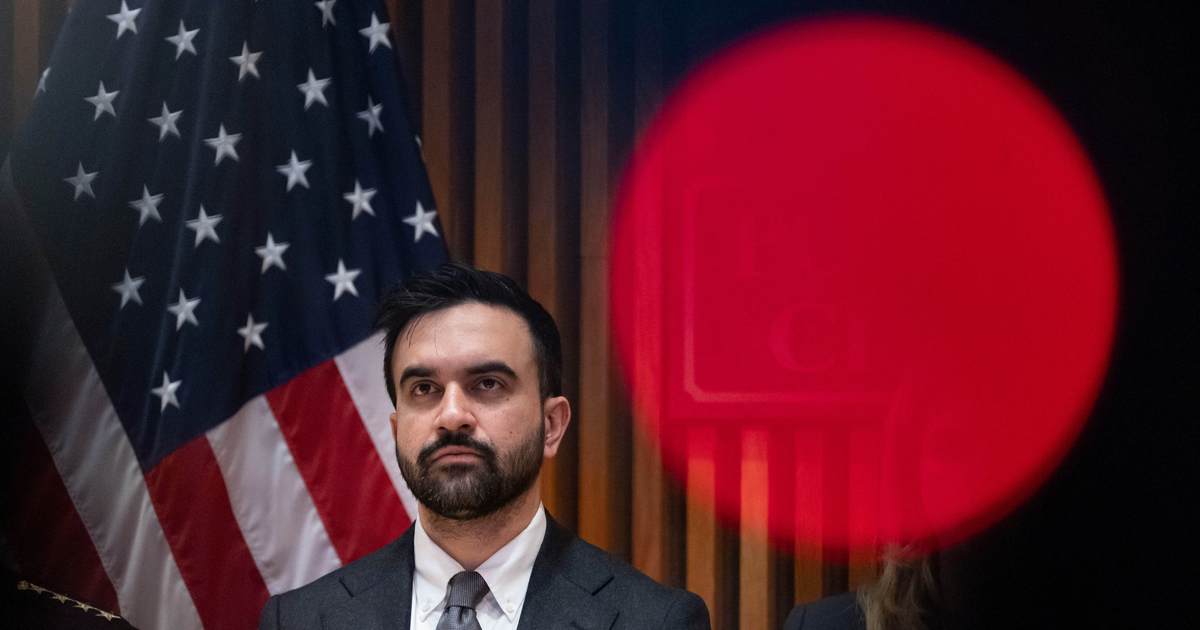
At a recent press conference Mamdani leaned into the label he wears and offered a longer defense, saying, “If anything, my friends, it seems that you eventually need a socialist to clean up the mess. On January 1st, I told New Yorkers that City Hall would hold a singular purpose, to make this city belong to more of its people than it did the day before. For 102 days, we have endeavored to do exactly that.” Those lines went viral and helped define his first months in office as explicitly ideological. Supporters heard a promise of redistribution and expanded services; critics heard a warning that fiscal realities might be pushed aside for political experiments.
Now the criticism centers on how Mamdani plans to pay for those promises. What was framed as ideological clarity is increasingly described by opponents as dependency on “other people’s money,” with state intervention and billions in taxpayer aid becoming the practical lifeline for his agenda. The governor’s bailout of the city has become a focal point for conservatives who argue that local policy choices should not be shifted onto statewide taxpayers.
Voices on the right have been blunt. “He got ‘bailed out by Governor Hochul,'” Daniel Di Martino, a fellow at the Manhattan Institute and economist, wrote on X. “Don’t worry, wait until he runs out of the bailout money next year, he will go begging for more.” He added, “Unfortunately (or fortunately?), America has a lot of resources, so like Venezuela, the fall takes longer and the amount robbed greater.” Those comments capture a Republican line of attack: that policy missteps get amplified when they are subsidized by outside money instead of corrected at the ballot box or through restraint.
Mamdani: "Of the Margret Thatcher quote, the problem with socialism is that you eventually run out of other people's money. If anything my friends, it seems you eventually need a socialist to clean up the mess." pic.twitter.com/TQgaPIyQpZ
— Winter (@LeftyWinter) May 24, 2026
The city’s budget shortfall is a mix of structural issues and new spending choices. Auditors and analysts point to poor record-keeping from the previous administration and to ambitious new programs that will require ongoing revenue. Mamdani’s stated remedies have emphasized higher taxes on wealthy New Yorkers and repeated appeals to the state for assistance, an approach critics say turns local policy failures into statewide obligations.
Mamdani has also targeted a famous conservative warning about government, reciting the exchange around Ronald Reagan’s quip that “I’m from the government, and I’m here to help.” He countered that the more alarming words are, “I worked all day and still can’t feed my family.” That line underscores his political framing, but opponents argue it sidesteps a tough question: when government action repeatedly fails to improve people’s finances, more programs are not guaranteed to fix the root problems.
This kind of policy logic is familiar in American history and reaches back through various Democratic administrations, including the era of Franklin Delano Roosevelt. Republicans point out that decades of expanding government programs have not produced the promised utopia, and they warn that doubling down on the same prescriptions will only deepen fiscal strains. For critics, Mamdani’s mix of rhetoric and reality offers a cautionary snapshot of that dynamic.
Editor’s Note: New York City is now facing the consequences of Mayor Zohran Mamdani’s socialist takeover. That shift in priorities has turned municipal finances into a broader political issue, and it is forcing voters and elected officials across the state to reckon with the fiscal tradeoffs of big promises and outside bailouts.