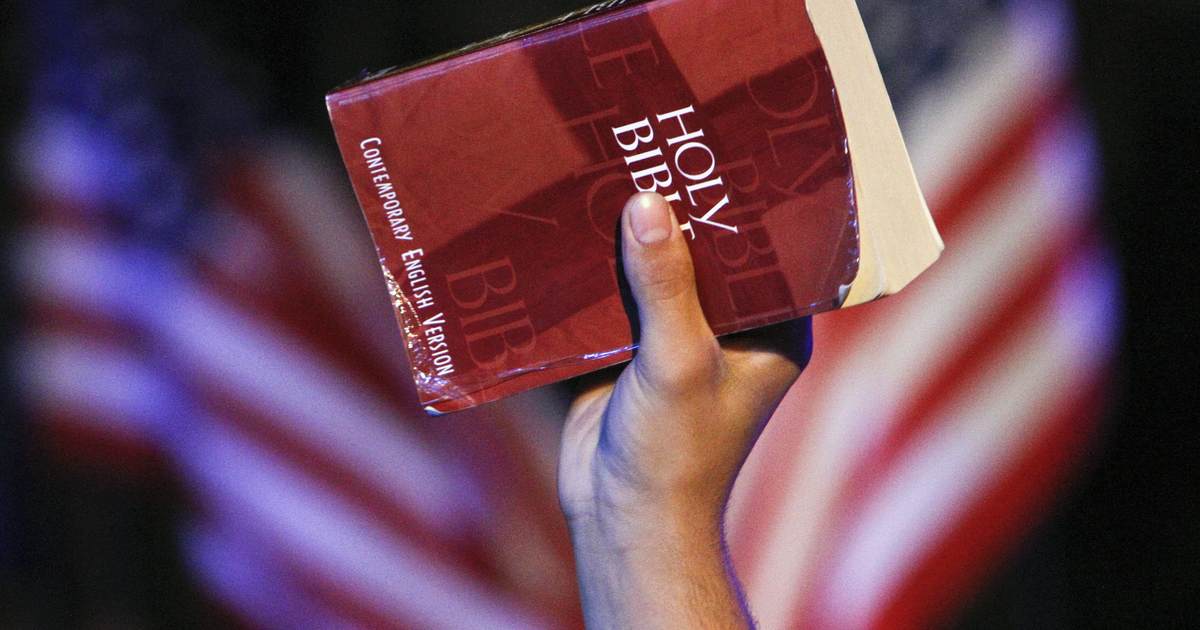
This piece looks at how critics on the Left label traditional Christian symbols and beliefs while often reshaping faith to fit modern progressive narratives.
When President Trump nominated Pete Hegseth to a cabinet-level post, opponents zeroed in on his tattoos, especially a Jerusalem cross, and called them signs of “white supremacy” and “Christian nationalism.” That reaction set the tone: any visible expression of faith can be cast as dangerous if it comes from the wrong person. The uproar felt performative, aimed more at scoring cultural points than engaging with genuine concerns.
I keep a wooden Jerusalem cross above my back door, so that controversy felt oddly personal and overblown. To me it’s an ancient Christian emblem—nothing more exotic than that—one even associated with historic services and programs. The way symbols are weaponized now shows how quickly nuance disappears.
“Christian nationalism” has become a bogey term on the Left, used to frighten people away from a public life shaped by Judeo-Christian morals. The accusation serves as a shorthand: disagree with progressive social policies and you must be plotting oppression. That framing lets critics dismiss a wide range of believers without engaging their arguments.
Meanwhile, Democrats often reinterpret faith to match their politics, embracing a selective spirituality when it suits them. Consider James Talarico, who treats parts of scripture as malleable yet finds traditional displays like the Ten Commandments problematic, and who refers to women as “neighbors with a uterus.” That kind of linguistic gymnastics lets policy preferences masquerade as theology.
“You want to know where Jesus would be today? He’d be with the gay kids that are being demonized. He’d be with the trans kid who is being vilified,” Booker said. “Look around, who society condemns. He’d be in prisons with the condemned. That’s where I think Jesus would stand and would be calling on all of us, ‘Cast the first stone.’ Would be calling all of us, ‘Show me your mercy and your love.'”
Fine, Jesus met and ate with sinners, but that presence had a purpose: correction and salvation, not bland approval of every choice. The New Testament presents Him as someone who calls people to repentance while offering mercy. Reducing that to a feel-good slogan misses the moral seriousness at the heart of Christian teaching.
https://x.com/DefiantLs/status/2060163078558560653
The modern political Left often treats its preferred version of religion like a brand to be marketed, highlighting amiable sounds bites while ignoring deeper doctrines. They imagine Jesus as a sentimental social-justice figure rather than the Son of God who taught about sin, redemption, and objective moral standards. That reimagining comforts many, but it departs from long-standing theological claims about who Christ is and why He came.
So the debate isn’t just about who sits in office or what symbols someone wears; it’s about how faith is understood and applied in public life. Progressives tend to flatten theological distinctions when it’s useful, then claim the moral high ground. Conservatives, by contrast, argue for a public order grounded in enduring moral principles rather than transient cultural trends.
This clash plays out in language, policy, and public rituals, and it shapes how Americans see one another across civic life. When one side gets to redefine what counts as authentic faith, the political field tilts and ordinary religious citizens get labeled or marginalized. The tension between tradition and reinterpretation is real, and it will keep surfacing as religion and politics continue to intersect.
At the end of the day, questions about symbols, scripture, and public witness are more than culture-war ammunition; they are about what kind of moral framework will guide a free society. Expect both sides to keep sharpening their arguments, and expect ordinary believers to find themselves squeezed between political agendas that claim to speak for faith. The conversation shows no signs of cooling down.