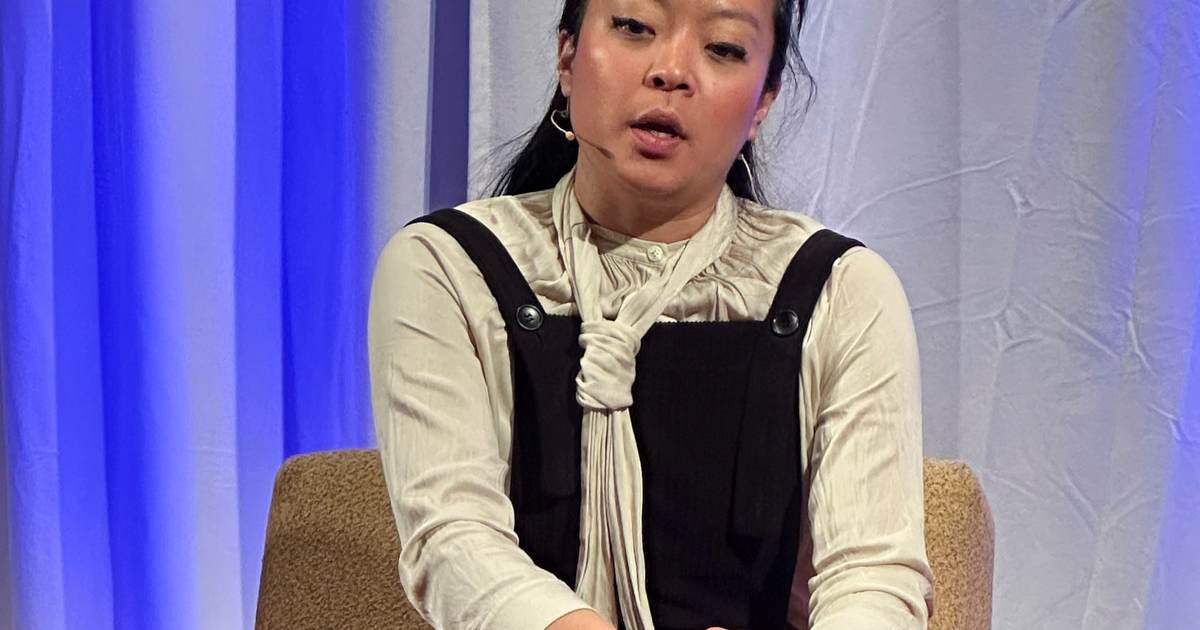
Francesca Hong, a progressive state representative, has drawn sharp criticism for saying she envisions a long-term world without police and prisons, and critics warn her positions could endanger public safety and invite chaos if she wins the Wisconsin governorship.
Democrats tried to plant a narrative with friendly media, but that storyline backfired when Francesca Hong’s comments about law enforcement and immigration grabbed attention across the state. She even said she would “use the National Guard to arrest ICE agents” operating in Wisconsin, a line that shocked many voters across party lines. That contradiction—calling for defunding police while invoking military powers—has sharpened the debate over her candidacy.
Now Hong is drawing headlines for saying she envisions a world without prisons someday, language that alarms people who want firm consequences for violent offenders. The idea of eliminating incarceration as a long-term goal raises immediate questions about how serious crimes would be handled in the meantime. Voters who value order and safety are watching closely as the rhetoric meets reality.
Her campaign keeps circling back to the phrase “public safety,” which sounds reassuring until you unpack what she means. For Hong, public safety seems to rely heavily on expanded social spending and reduced reliance on traditional law enforcement. That approach appeals to some on the left, but it worries many families and small-business owners who want predictable enforcement of laws.
https://x.com/AJBayatpour/status/2060519616334422044
A frontrunner in the race to determine who will be the Democratic candidate for governor stood by comments she previously made about having a vision where, one day, police and prisons no longer exist.
State Rep. Francesca Hong (D-Madison) spoke to CBS 58 virtually Friday night while campaigning in Vilas County.
Hong has received criticism, even from some within her own party, over comments she made at a campaign event earlier this month. According to audio obtained and first reported by the Milwaukee Journal Sentinel, Hong said her “perfect world would be a world without prisons.”
In an interview Friday, Hong emphasized she was referring to a long-term vision when discussing scenarios where police and prisons are no longer around.
Hong’s pitch leans heavily on the idea that massive government spending on social programs will erase crime, a claim that many conservatives regard as wishful thinking. History and current data show social programs can help but do not replace the deterrent effect of strong, consistent law enforcement. Critics argue that promising to dismantle prisons without a clear, realistic plan for replacement invites chaos.
Policy experiments that abandon incarceration without effective alternatives have had mixed results, and critics point to neighborhoods where repeat violent offenders were not effectively stopped. Voters remember the basic function of prisons: to protect law-abiding people by removing dangerous individuals from the streets. Promoting an abolitionist blueprint without a workable transition plan strikes many as irresponsible.
No one is truly safe when violent criminals can act without predictable consequences, which is why many Wisconsinites are wary of rhetoric that sounds soft on crime. Public safety is not an abstract concept; it is the texture of everyday life for families, students, and seniors. Eroding that protection risks real human harm.
Hong has signaled she is serious about shrinking or abolishing the prison system, and that stance has energized a segment of the left. That position would mean releasing or diverting many people currently serving sentences, a scenario opponents call dangerous for communities that already feel vulnerable. The consequences of such sweeping changes are rarely limited to theory; they unfold in neighborhoods, schools, and businesses.
Her campaign also highlights endorsements from prominent socialists and activists who back prison abolition as a central plank of criminal justice change. Those endorsements make clear the ideological coalition mobilizing behind Hong’s long-term vision. For voters who prioritize law and order, those alliances are a red flag.
Many Wisconsinites view this agenda as out of step with the state’s recent national vote patterns, pointing out that Wisconsin supported President Trump in 2016 and again in 2024. The state’s balance of urban progressive pockets and rural conservative communities creates a high bar for radical proposals. Candidates who promise dramatic institutional upheaval face an uphill climb in that environment.
That gap between rhetoric and voter comfort explains why critics say this kind of politics cannot be tolerated. They warn that without secure institutions, innocent people will pay the price. Opponents paint such outcomes as an inevitable feature of a socialist agenda that prioritizes ideology over practical public safety.
Those concerns are no abstraction for voters who worry about rising violent crime and border-related pressures in nearby states. Critics argue that electing someone committed to dismantling prisons and loosening enforcement creates perverse incentives for criminals and those who would illegally cross state lines. The bottom line for many is simple: leadership must put the safety of law-abiding residents first.
Francesca Hong, in this view, should not be entrusted with Wisconsin’s governor’s office while these questions remain unanswered and these risks loom large. Voters assessing candidates in a general election will weigh whether bold visions are matched by credible plans to keep people safe each day. Editor’s Note: The American people overwhelmingly support President Trump’s law and order agenda.