U.S. forces disabled a tanker moving toward Iran during a wider series of strikes and maritime enforcement actions in the Gulf, and officials have released footage and statements detailing the operation.
Last night Iran launched numerous airstrikes against U.S. bases across the region, including attacks in Erbil, Iraq, Bahrain, and Kuwait. The Iranian Revolutionary Guard issued a statement calling the moves retaliation for what it called the “arrogance and blatant aggression committed by the terrorist American forces” after the U.S. carried out self-defense strikes against Iranian radar and drone capabilities on the island of Qeshm.
Separately, CENTCOM reported it disabled a “non-compliant” vessel in the Arabian Gulf as part of an ongoing maritime blockade tied to the conflict around Iran. The action occurred while the ship, flagged in Botswana, was attempting to transit international waters toward Kharg Island.
U.S. forces disabled an unladen oil tanker that was attempting to sail toward an Iranian port on the Arabian gulf, June 2.
https://x.com/CENTCOM/status/2061913458396844123
U.S. Central Command (CENTCOM) enforced blockade measures against Botswana-flagged M/T Lexie as it transited international waters toward Kharg Island. The ship’s crew ignored repeated warnings, failing to comply with directions from U.S. forces multiple times over a 24-hour period.
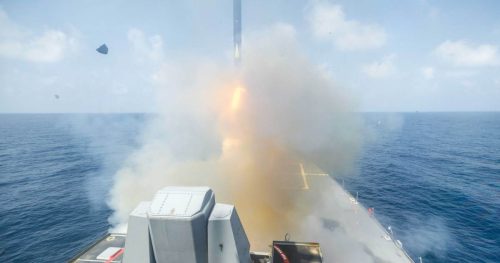
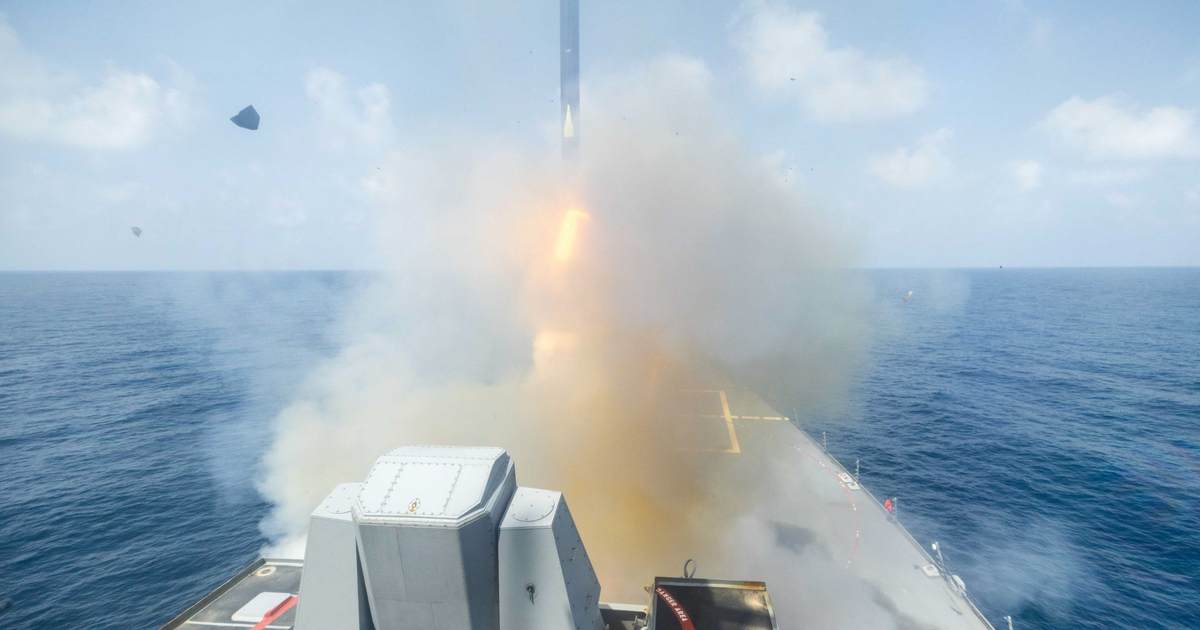
A U.S. aircraft ultimately disabled the vessel by firing a Hellfire missile into the ship’s engine roo, preventing the tanker from reaching Iran.
CENTCOM began implementing the blockade of all maritime traffic entering and exiting Iranian ports on April 13. U.S. forces have disabled six commercial vessels and redirected 122 as the ceasefire with Iran continues.
Secretary of War Pete Hegseth also shared footage of the strike and commentary intended to show how the operation unfolded and why force was used in response to noncompliance. The released video is being circulated to provide transparency about the rules of engagement and the decision to strike a vessel that ignored repeated orders.
The tanker was reportedly sanctioned by the U.S. in March of last year, which factored into the decision to treat the vessel as a security risk during the blockade. Officials say sanctions history and the ship’s destination toward Iranian facilities made it a legitimate enforcement target under the current naval rules being applied.
The vessel’s record suggested a pattern of sanctions evasion and compliance problems, which military planners cited when justifying interdiction as a necessary step to uphold the blockade. That operational record, combined with recent behavior at sea, shaped the response authorities executed.
That was during the Biden administration, so that tracks. From a national security perspective, the Biden years left unresolved issues with Iranian proxies and sanction enforcement that present leadership has moved to address more directly.
The blockade itself began on April 13 and is being enforced in international waters, not inside Iran’s territorial sea, according to CENTCOM’s account inside the blockquote above. The operation has already involved multiple interdictions, with six vessels disabled and 122 redirected, signaling a sustained campaign to prevent sanctioned or suspicious cargo from reaching Iranian ports.
Iran’s public framing of its airstrikes as retaliation underscores the risk of escalation, but it also reveals an actor that seeks to justify aggression by pointing to U.S. defensive moves. The IRGC’s phrase “arrogance and blatant aggression committed by the terrorist American forces” was part of that statement and is being treated by U.S. officials as part of Tehran’s propaganda effort to rationalize attacks on U.S. positions in the region.
Flagging practices and ships of convenience are central to how sanctioned cargo moves. Botswana’s appearance on the paperwork is notable because Botswana is landlocked, which highlights the use of opaque registries and third-party flags to mask ownership and routing. That tactic has complicated enforcement and is one reason naval interdictions have expanded into a broader maritime campaign.
Military officials and policymakers argue that decisive maritime enforcement reduces the avenues Iran and its proxies use to replenish capabilities and move sanctioned goods. The action to disable M/T Lexie fits that approach: making compliant behavior the safer, faster option for commercial mariners and denying sanctioned shipments access to Iranian infrastructure. U.S. forces say they will continue to act where vessels ignore lawful orders and where sanction evasion threatens regional security.