Former South Carolina state representative Adam Morgan publicly criticized the Supreme Court’s recent decision allowing Alabama to use its 2023 congressional map while also pointing fingers at South Carolina Republicans for failing to deliver a clean, court-proof 7-0 map of their own. The ruling shifts momentum toward GOP-drawn maps in several redistricting fights and reveals how internal party moves, legislative timing, and procedural gambits shaped outcomes. Morgan says South Carolina had an opportunity to lock in a favorable map but that delays and votes by fellow Republicans derailed it. The dispute ties state-level frustration to a national pattern of courtroom victories that have reshaped congressional maps.
Adam Morgan made clear his frustration with the Supreme Court decision, but his anger landed on how his own state handled redistricting rather than the court itself. He argued South Carolina could have produced an unassailable 7-0 map if not for internal obstruction and procedural slow-walking. Morgan’s tone mixed disappointment with a pinpointed critique of GOP lawmakers who, in his view, prioritized politicking over results.
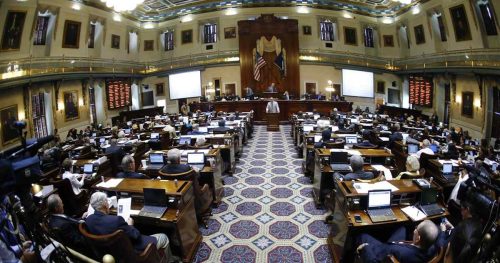
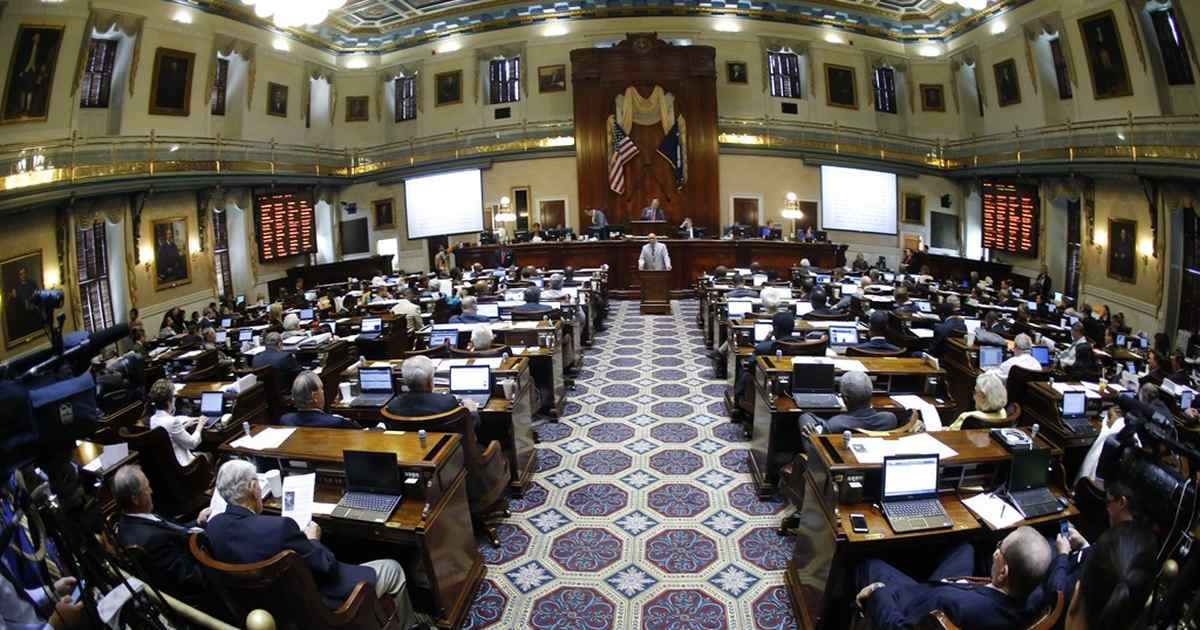
At the center of Morgan’s complaint is how South Carolina lawmakers handled the reading and cloture process for the new maps. Senate Republicans delayed readings, failed to clear cloture on the first try, then adjourned so the clock would run out before the vote could be completed. When another cloture vote came, three readings were required and about a dozen Republicans joined Democrats to kill the motion, citing early voting and legal risks.
https://x.com/RepAdamMorgan/status/2061995157419880813
That parliamentary tango forced a second round of effort after Governor Henry McMaster called a special session to get the maps back on track. The measure moved quickly through the State House and the Senate Judiciary Committee, but resistance remained in the upper chamber. State Senate Majority Leader Shane Massey opposed the renewed push, and the plan will now be taken up in the next session, turning a missed opportunity into a lingering failure.
First, the ruling, which Joe covered last night:
Alabama’s map would grant Republicans an additional seat for the upcoming midterm elections. The move to redistrict came after the Supreme Court struck down portions of the Voting Rights Act that allowed for racial gerrymanders that had long benefited Democrats in deep-red southern states.
The case was decided by a 6-3 make-up along ideological lines. The liberal wing of justices stated that the conservative majority’s decision to reject an unconstitutional racial gerrymander “disregards both democratic values and the rule of law.”
In the massive mid-decade battle for redistricting, Republicans have come out clearly ahead through numerous court victories that have struck down Democrat-drawn maps and maintained Republican-drawn ones.
After concluding that the 2021 map likely violated Section 2, the lower court barred Alabama from using the map. Alabama appealed to the Supreme Court, which in 2023 upheld the lower court’s decision.
Alabama then drew a new map, which voters and civil rights groups again challenged as a violation of Section 2. A lower court agreed with them and blocked Alabama from using that map, as well. The lower court instructed Alabama to use a map created by a court-appointed special master instead.
Alabama returned to the Supreme Court, which last month, in a one-paragraph order, sent the case back to the lower court for it to reconsider its ruling in light of the Supreme Court’s decision in Callais. Sotomayor dissented from the court’s order, in an opinion joined by Kagan and Jackson. Sotomayor argued that the lower court did not need to take another look at the dispute because it had also ruled that “Alabama violated the Fourteenth Amendment by intentionally diluting the votes of Black voters in Alabama” – a finding that “is independent of, and unaffected by, any of the legal issues discussed in Callais.”
Just over two weeks later, on May 26, the lower court – which included one Clinton appointee and two Trump appointees – again barred Alabama from using the 2023 map, directing it to use the map created by the special master instead. The court emphasized that “we cannot see our way clear to requiring Alabamians to cast their votes in the 2026 elections under a districting plan tainted by intentional race-based discrimination.”
On May 27, Alabama came back to the Supreme Court, asking the justices to pause the lower court’s ruling and allow it to use the 2023 map in the 2026 elections. Alabama Solicitor General A. Barrett Bowdre argued that the court’s decision in “Callais vindicates Alabama’s position on the lawfulness of the 2023 Plan, yet the district court decided in one week that Callais changed nothing.” The district court, Bowdre stressed, did not require the challengers to offer alternative maps that would achieve Alabama’s goals while still maintaining two majority-Black districts, as the Supreme Court suggested it should have, and “[i]t did not matter to the district court that drawing an additional race-based district came at the cost of sacrificing communities of interest” – specifically, predominantly white communities along the state’s Gulf Coast – “and pairing incumbents.”
The challengers countered that it was too late for the Supreme Court to intervene. They pointed to testimony by a senior election official indicating that if the state wanted to implement the 2023 map, it would have to finish reassigning voters in its voter registration database by June 2. Indeed, they emphasized, “the evidence in the record shows that Alabama cannot administer” a special primary election in August, under a law passed by the state’s legislature in May to account for the possibility that the Supreme Court’s decision in Callais would allow Alabama to use its 2023 map, even if the Supreme Court had granted Alabama’s request on June 1. Moreover, they added, the Supreme Court’s decision in Callais should make no difference to the lower court’s ruling in their case, because of the lower court’s conclusion that Alabama violated the Constitution by intentionally discriminating against Black voters.
On Tuesday, the Supreme Court stated that the district court “failed to follow our instruction in Callais that the mere fact that voters of different races vote for different parties is not relevant to proving racially polarized voting patterns.” It further held that the district court’s decision, not Alabama’s request for relief, had come too late. “We have repeatedly cautioned that lower federal courts should not ‘alter the election rules on the eve of an election,’” the court said. “Here, the District Court interposed itself into Alabama’s ongoing efforts to conduct its imminent 2026 congressional elections under maps that its elected representatives selected. Its view that conducting the elections under court-imposed maps would be more convenient for the State was not a valid justification for that intervention.”
Morgan added that South Carolina’s 7-0 map also would have been upheld in court. We’ll never know. What we do know is that during the reading process for the maps, South Carolina Senate Republicans slow-walked the motion, didn’t clear a cloture vote, then did so, but later adjourned so the clock would run out. When another cloture vote was called, there had to be three readings. About a dozen Republicans joined Democrats to kill the motion, citing the start of early voting and looming legal concerns.
This map push was restarted after Gov. Henry McMaster, who had taken a noncommittal stance, called for a special session. It sailed through the SC State House and SC Senate Judiciary Committee, but State Senate Majority Leader Shane Massey wasn’t for this new redistricting push. It will now be brought up in the next session, a total failure.
Morgan’s criticism lands on the tactical choices Republicans made, not the high court’s legal ruling. He pointed to procedural gamesmanship and missed deadlines that transformed a doable victory into a stalled fight. That internal breakdown, he argues, handed away leverage that might otherwise have been used to lock in favorable districts now and into the next cycle.
Outside the political theater, the Supreme Court’s action in Alabama feeds a wider narrative about how redistricting fights get resolved. Recent years have seen judges, special masters, and the high court itself playing decisive roles in whether plans stay or are tossed. For state politicians, that dynamic creates pressure to move faster, be more cohesive, and anticipate legal challenges before courts intervene.
We won’t forget. Can’t wait until 2028 to wipe out the traitors.
Meanwhile, Mr. Morgan has been selected to serve as Ralph Norman’s running mate in the upcoming gubernatorial election. That pick raises the stakes for how these intra-party fractures play out on a larger electoral stage.