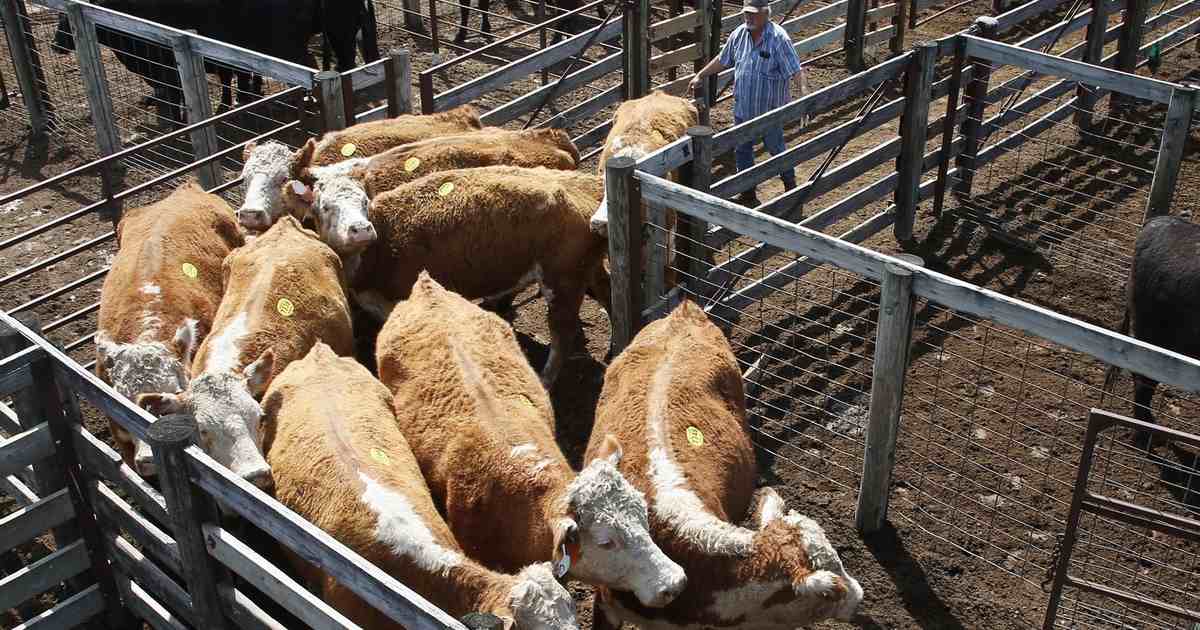
The New World Screwworm has reappeared in Texas, threatening livestock health and prompting urgent state and federal responses.
The U.S. Department of Agriculture has confirmed the New World Screwworm is back in Texas for the first time since the 1960s, a development that could ripple through the livestock sector. Officials say two cases were found in young calves near the southern border, triggering immediate containment measures and a state disaster declaration. This is a high-stakes public‑animal health issue with economic consequences for ranchers and rural communities.
The New World Screwworm is a parasitic fly whose larvae burrow into living tissue of livestock, pets, wildlife, and in rare cases humans and birds, causing severe wounds and secondary infections. Gov. Greg Abbott, working with the Trump administration, has declared a disaster in the affected areas to speed resources and containment. Local veterinarians and state animal health teams are now coordinating quarantine and treatment plans to protect herds and prevent wider spread.
https://x.com/Polymarket/status/2063063449039405082
Authorities have set up quarantine zones around the confirmed cases and are deploying well-established control tactics, including weekly releases of millions of sterile flies to curb reproduction. The sterile insect technique has a proven track record in suppressing screwworm populations, but it requires rapid, sustained effort and cooperation across jurisdictions. Ranchers have been told to inspect animals closely and report suspicious wounds to veterinary officials without delay.
Some models anticipated the pest would cross into the U.S. earlier, but the USDA credits the prior federal response with delaying the outbreak, saying the Trump administration had managed to “buy time for this moment.” Confirmed detections were recorded on June 1 at a location roughly one mile from the Texas border, a stark reminder of how quickly pests can move. That proximity has pushed state and federal teams to accelerate surveillance and containment operations along the border corridor.
Federal officials emphasize the U.S. food supply remains safe because the screwworm targets living tissue rather than processed meat, but the economic stakes are real if infections spread through cattle herds. A widespread outbreak could cripple regional production, drive up costs for ranchers, and strain slaughter and processing chains. In response to the confirmed cases, Canadian authorities temporarily barred imports of Texas cattle for three weeks as a precautionary trade measure.
The United States eradicated the New World Screwworm in 1966 through coordinated suppression programs, and similar campaigns eliminated it across Mexico and Central America, though the pest persisted near the Panama-Colombian border until the recent resurgence. That history shows eradication is possible with decisive, well-funded action and cross-border coordination. The current effort leans on lessons learned from those past campaigns, including rapid detection, movement controls, and the sterile insect releases that helped finish the job decades ago.
Fast, transparent communication between state officials, the USDA, and livestock producers is critical right now, and the response to date reflects that priority. Republican-led leadership at the state level has emphasized action over delay, deploying resources and working with federal partners to shield farmers and ranchers. Industry groups and animal health labs are increasing testing and tracing to keep the situation contained and to protect market access where possible.
Ranchers and veterinarians across the region are on heightened alert, tightening biosecurity and monitoring animals more frequently for early signs of infestation. The coming weeks will determine whether containment holds or whether expanded measures become necessary, and those outcomes will hinge on sustained intervention and cooperation. For now, officials remain focused on the immediate task: stop the screwworm from gaining a foothold and protect American livestock livelihoods.