President Trump and Iranian leaders have digitally signed a Memorandum of Understanding that lays out steps toward ending active hostilities, sets nuclear restrictions, and schedules the removal of a U.S. naval blockade within a fixed timeframe.
The White House confirmed that a Memorandum of Understanding between the United States and Iran has been executed, marking a formal, preliminary step toward stopping the fighting. This move is being presented as part of a deliberate, measured process rather than an immediate end to all diplomatic work. Administration officials stressed this is a phase in a wider strategy focused on stability and enforcement.
One senior U.S. official read the memorandum to reporters and emphasized that implementation will involve international oversight and rigorous verification. The MOU “reaffirms that [Iran] shall not procure or develop nuclear weapons,” language meant to address long-standing worries about nuclear ambitions. Republicans and national security hawks will rightly insist that verification is concrete, not just aspirational.
Officials made clear the United States will “work very closely with the International Atomic Energy Agency [IAEA]” to ensure Iran follows nuclear terms, a line that signals reliance on international institutions for monitoring. Skeptics will push the administration to secure robust access and snap inspection authority. It’s an important test: enforcement mechanisms will decide if this stays a real restriction or becomes window dressing.
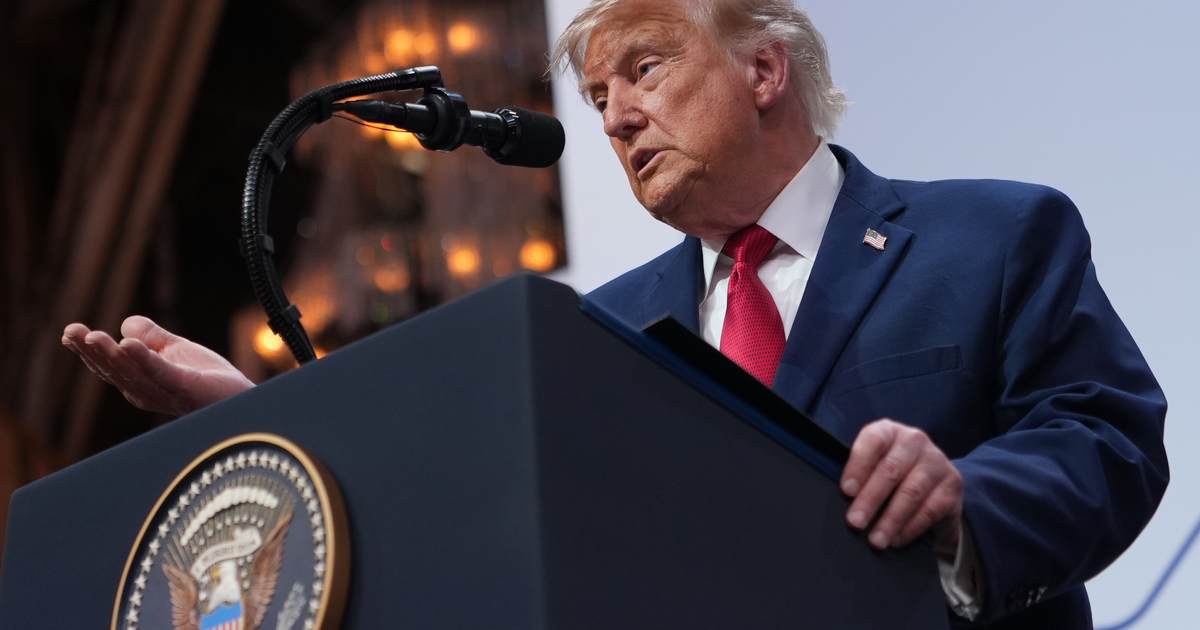
On process, a U.S. official explained: “On Sunday, the MOU was signed digitally by Vice President Vance and Speaker Ghalibaf and witnessed by President Trump. Now, it has been signed by President Trump and President Pezeshkian,” the official said on background on Wednesday evening. That exact chain of digital signatures underlines the high-level backing from both sides.
The document also addresses naval operations, directing that the United States will begin “the removal of its naval blockade and any disturbances or impediments against the Islamic Republic of Iran, and will fully end the Naval blockade within 30 days.” That specific 30-day clock is concrete and measurable, and it shifts the conversation from open-ended negotiations to deadlines. Conservatives will be watching how that rollback affects regional deterrence and maritime security.
The MOU contains a sweeping cessation clause: “The United States of America, and Islamic Republic of Iran, and their allies in the current war, by signing this MOU, declare the immediate and permanent termination of military operations on all fronts, including in Lebanon, and undertake from now on not to initiate any war or any military operation against each other, and to refrain from the threat or use of force against each other, and ensuring the territorial integrity and sovereignty of Lebanon,” the MOU states. Those are strong words on paper, but the credibility of such language depends on verification and enforcement. Republican policymakers will press for mechanisms that make these assurances binding and monitorable.
Administration spokespeople framed the MOU as a step toward a broader regional settlement, one that could open the door to additional agreements across the Middle East. President Trump said earlier that he hopes the peace agreement will expand into a larger settlement across the region. That optimism fits a conservative preference for decisive diplomatic moves backed by leverage rather than endless, toothless talks.
The deal does not remove U.S. leverage overnight; it sets timelines and monitoring responsibilities that can be enforced. Republicans will argue the administration must retain strong options to respond if Iran breaches terms, including sanctions snapbacks and military posturing if necessary. The balance between diplomatic openings and maintained pressure will determine whether this MOU produces lasting peace.
https://x.com/WhiteHouse/status/2067285421428515129
Domestic politics will shape the reception of the agreement, with the GOP emphasizing American security and the need for accountability. Conservative leaders will likely support any durable reduction in hostilities that is tied to enforceable verification, while remaining skeptical of goodwill alone. The promise of ending kinetic operations will be tested by follow-through.
The administration has signaled it will coordinate closely with allies and international bodies to monitor compliance, aiming to avoid a repeat of past agreements that lacked strong inspection regimes. Republican lawmakers will demand transparency about IAEA access and concrete inspection timelines. If oversight is rigorous and immediate, it can build bipartisan confidence; if not, criticism will be swift.
Vice President JD Vance is expected to attend a signing ceremony for the agreement on Friday in Switzerland. His presence gives the event a high-profile, bipartisan-seeming face, and it underscores the administration’s commitment to the document’s public formalization. The ceremony will be watched closely for both optics and any clarifying statements about enforcement.
Critics will press practical questions: how inspections will work, how the naval rollback will affect shipping lanes, and what counts as noncompliance. The administration will need to translate this MOU into durable steps that reduce threats without surrendering leverage. For Republicans, the priority will be American security first, then diplomacy that stands on enforceable guarantees.
The coming days will reveal whether this MOU is the framework for lasting peace or just a temporary pause. The proof will be in action—fast inspections, verifiable limits on nuclear work, and clear consequences if Iran fails to live up to its commitments. In the meantime, conservative voices will demand that the United States keep its hand strong and its options ready.