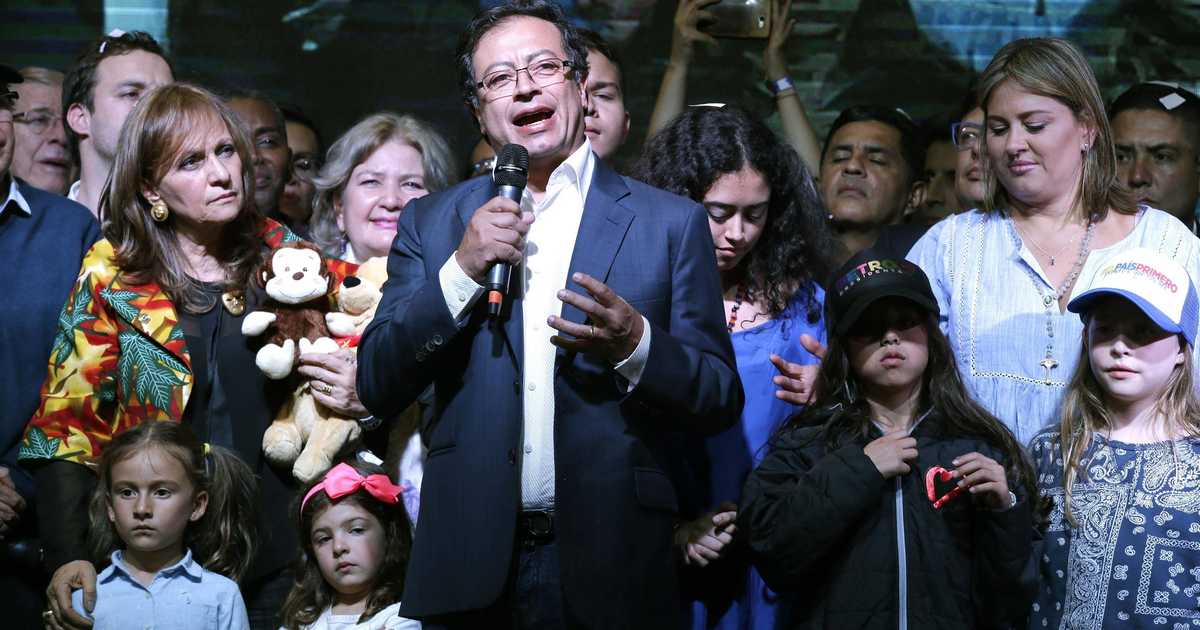
Colombia’s recent presidential contest produced a narrow win for Abelardo de la Espriella over the leftist hand-picked successor of President Gustavo Petro, setting off accusations, regional congratulations, and a clear shift to the right in South American politics.
The race ended with right-wing, Trump-backed Abelardo de la Espriella narrowly defeating Iván Cepeda, who had the backing of President Gustavo Petro and his Historic Pact allies. The margin was tight and the result immediately became a flashpoint for political rhetoric and legal challenges. This election will shape Colombia’s direction as de la Espriella prepares to take office on August 7 unless blocked by legal action.
Petro reacted by flagging supposed “irregularities” and suggesting outside actors played a role, even pointing fingers at “foreign interference” from Israel for the loss, and arguing that “neither [candidate] can be proclaimed president.” His swift refusal to accept the result illustrates how fragile trust in institutions can be when contested leaders refuse to concede. That stance has only hardened the resolve of opponents who see Petro’s allies as unwilling to accept democratic outcomes.
https://x.com/BRICSinfo/status/2068827911025467619
For conservatives watching the region, de la Espriella’s victory is part of a broader trend: voters across South America are moving away from radical left experiments and toward leaders promising law, order, and economic common sense. His campaign leaned on concerns about security, economic mismanagement, and corruption—issues that resonate with pragmatic voters tired of ideological solutions that underdeliver. The win reinforces the idea that voters reward candidates who promise practical fixes rather than sweeping ideological projects.
Regional leaders wasted little time congratulating de la Espriella, with several calling his triumph the start of a “new stage of freedom begins for Colombia.” Those messages signal a readiness among neighboring governments to work with a right-leaning Bogotá and to recalibrate regional alliances accordingly. Diplomacy and trade ties will be watched closely as the new administration outlines priorities and foreign policy stances.
The immediate task for de la Espriella is to turn a narrow electoral win into a workable mandate while navigating a polarized political landscape. Governing from a tight margin demands coalition-building, clear policy choices, and an ability to deliver visible improvements on security and the economy. The reality is pragmatic: voters often give new leaders a narrow window to show results before impatience sets in.
Petro’s reaction also raises questions about the stability of democratic norms when outgoing or current leaders reject results. Legal channels exist for disputes and should be used, but dragging out contestation risks institutional erosion and economic uncertainty. A functioning democracy depends on every side respecting the process while pursuing grievances through courts and election authorities.
For conservatives, the significance of a Trump-backed candidate winning in Colombia is twofold: it shows that center-right messaging can win in diverse contexts, and it offers a model for rebuilding security and economic confidence without reverting to leftist experiments. That appeal has become clearer across Latin America, where voters have repeatedly punished administrations that failed to improve everyday lives. The message to leaders is simple: deliver security, opportunity, and respect for the rule of law.
Looking ahead, the transition period will be tense but decisive. Unless Petro and his allies are able to produce compelling evidence of fraud that holds up in Colombia’s legal system, de la Espriella is set to assume the presidency on August 7 and begin implementing his agenda. His success will ultimately depend on translating campaign promises into policy wins that stabilize the country and restore confidence among businesses and citizens.