New York’s primary night pits Democratic incumbents and establishment figures against an energized progressive wing, with several competitive races and an open seat in the 12th District creating high stakes across the state and beyond.
It’s Election Day in New York and the mood is raw. The Democratic Party faces an internal contest as well as external threats, and the progressive surge is testing the establishment’s hold in multiple districts. With big-name figures and fresh challengers on the ballot, tonight’s results will signal where the party is heading before the general election season ramps up.
Mayor Mamdani’s backing has become shorthand for being in the progressive camp, and that alignment carries clear policy signals on Israel, immigration enforcement, and deportations. Those positions are defining primary choices for many voters who see ideological clarity as a priority. The left’s momentum could translate into significant wins in crowded primaries, but the tradeoffs are already visible.
One of the most consequential openings is New York’s 12th District, where Rep. Jerry Nadler (D-NY) chose not to run for re-election and left a wide-open race. Open seats invite long lists of contenders, and crowded fields create chaos and opportunity at the same time. In some bluer districts that benefits Democrats, while in swing areas it can introduce real risk.
Democrats are bullish about this midterm cycle and that has contributed to an already growing trend of crowded primaries. The enthusiasm has translated into multiple candidates running in primaries not only in open, strongly Democratic seats like New York’s 12th, but also against incumbent Democrats, in competitive swing seats, and even in longer-shot Republican-held districts. The upside is that many voters have more choice than ever in deciding who ends up on the ballot, and who ultimately represents them. But there are potential downsides for the party as well: requiring candidates to spend money on the fight-before-the-fight, forcing incumbents to fend off challengers, and possibly even leading to weaker candidates in the general.
Could these complications hurt Democrats’ chances to win back the U.S. House in November? Piecing apart some of New York’s busy June 23 primaries can give us a clue. To be sure, the number of candidates probably won’t make a difference one way or the other in a seat as blue as New York’s 12th (it went for Harris by 65 points). But in more competitive districts, a longer ballot in the primary can feel riskier.
Consider New York’s 17th District. Currently held by Republican Rep. Mike Lawler, the seat’s a mix of suburbs, exurbs, and rural areas that stretches from Westchester County up into the Hudson Valley. However, this area has been purple for a while and even voted (narrowly) in favor of Harris in 2024, so Democrats see it as a ripe opportunity for a flip.
In practical terms, crowded primaries force candidates to spend early and hard, burning cash and attention before the general. That can leave winners bruised and with depleted war chests, especially against well-funded opposition in competitive districts. Party strategists worry that intra-party fights could hand advantages to Republican challengers in November.
Across state lines, South Carolina’s contest has its own drama. Lt. Gov. Pamela Evette won an early endorsement from former President Trump for governor, but the picture shifted when he later co-endorsed South Carolina Attorney General Alan Wilson, who became her runoff opponent. That split in presidential backing makes her path considerably tougher and has injected fresh uncertainty into the race.
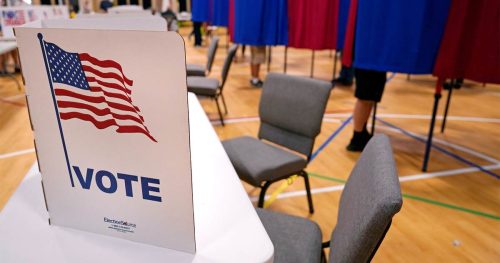
Timing matters too: polls close at 7 PM in South Carolina and 9 PM in New York, and those deadlines will deliver a rapid series of results that campaign teams are watching closely. Early returns could shape narratives about where ideological control rests inside the Democratic Party and how vulnerable incumbents might be heading into November. Expect quick takes and immediate reactions as precincts report.
For Republicans, these primaries are a study in political consequences: a progressive sweep tonight could strengthen Democratic left-wing influence but also deepen vulnerabilities in swing districts. Conversely, establishment wins might blunt the left’s momentum while exposing internal fractures that voters notice. Either outcome gives both sides data to use as they prepare for the fall fight.
Voters should pay attention to turnout patterns as much as winners, because who shows up in primaries often predicts who will show up in November. Lower turnout favorites can pull off surprises, especially when fields are crowded and name recognition plays an outsized role. Campaigns that conserve resources and hold unified coalitions will be better positioned for the general election.
These primaries are not the finish line; they are tests. Candidates who survive tonight face months of messaging and fundraising before any general election center stage, and the party calculus will shift based on tonight’s winners. Expect aggressive post-primary repositioning as candidates and parties scramble to consolidate support.
The results will tell us more about electoral energy, fundraising stamina, and which messages land with key voters. For now, the primary field in New York and the runoff dynamics in South Carolina show a political landscape that is far from settled. Stay tuned for the returns and the tactical shifts that will follow.