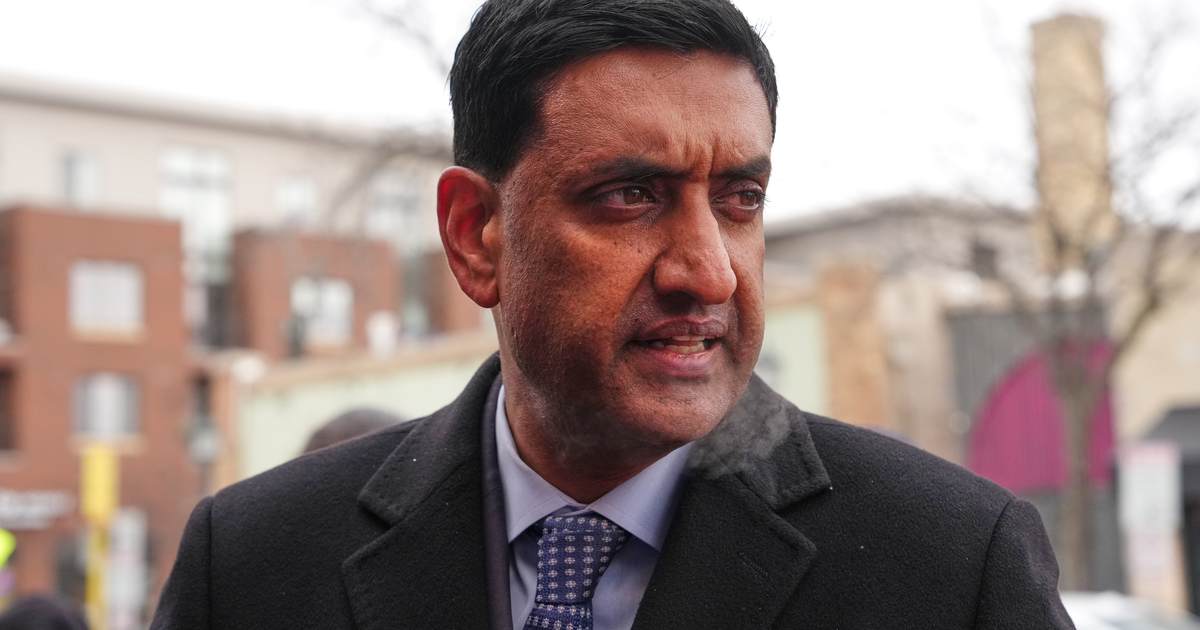
Representative Ro Khanna has publicly embraced a bold, socialist-leaning agenda and challenged wealthy opponents, but his pitch masks a basic shift: power moves from private hands into government hands, creating a new center of authority that raises serious questions about accountability and the checks that will guard it.
Ro Khanna’s recent rhetoric celebrates a revamped Democratic identity and an aggressive stance toward what he calls “oligarchs.” He frames that stance as standing up for working people and promises sweeping programs that would reshape economic influence. That message lands with voters who dislike concentrated private wealth, but the remedy Khanna offers is concentrated political power. The sharp part of the debate is who ends up wielding the leash.
Khanna talks about a “New Deal for our time” and brags about victories across cities and states, yet his solution is to move more decisions into government control. Critics argue that swapping private influence for public authority simply replaces one set of powerful actors with another. If the concentration of power is the problem, shifting it from executives to regulators does not eliminate the problem — it changes who answers to whom.
The pitch works politically because it appeals to people frustrated with real corporate excess and perceived unfairness. But the history of centralized economic control shows recurring patterns: officials with the best of intentions still face temptations, mistakes, and capture. When Washington gains the levers of markets, it also gains the ability to reward allies, punish rivals, and freeze out competition — all in ways that are harder for voters to correct quickly.
That is the core worry often missing from progressive pop rhetoric: regulation can be a transfer of power, not a cure for it. Khanna rails at monopolies and billionaires, yet the alternative he offers concentrates regulatory discretion in the halls of government. Once those tools exist, politicians and career bureaucrats hold leverage over industries and individuals in ways that private competitors cannot easily check.
https://x.com/RoKhanna/status/2069879382852735291
“I want to speak to fellow progressives today. Yesterday was the beginning of a new, bold, strong Democratic Party. Democrats are winning, not just in New York, we’re winning across this country, in New Jersey, in Michigan, in Maine,” the California representative said.
The reality is that our platform of a New Deal for our time is resonating. It’s a platform that says no to foreign wars, no to genocide, but it’s also a platform that says yes, yes to Medicare for all, yes to childcare for all, yes to unions for all, and yes to a tax on billionaires and trillionaires. It turns out that when you stand up for the working class over the Epstein class, over the billionaire class, the American people respond in huge numbers.
But we shouldn’t be naive. The oligarchs are gonna come after us.
Khanna’s rhetoric is energetic and intentionally confrontational, designed to mobilize voters who feel left behind. But the debate must move beyond slogans and toward who enforces the rules and how power is checked. A competitive market naturally limits any single private actor through rivals, consumer choice, and dynamic innovation. Those decentralized constraints are part of what keeps both wealth and influence from ossifying into untouchable power.
Competition acts like checks and balances inside the economy, and that decentralization mirrors the constitutional design intended to prevent concentrated authority. When progressives seek to replace market discipline with sweeping mandates and centralized oversight, they risk trading familiar market problems for unfamiliar political ones. The practical effect is to transform economic frictions into political contests about allocation and control.
Khanna made his comments personal at times, pointing at public figures he opposes and daring them to respond. “Yesterday, Elon Musk spent the morning saying that I should be put in jail or he was gonna sue me,” Khanna continued. “Why? Because I stood up to him. We have a simple message for these oligarchs. Channeling FDR, we should say to them, bring it on.”
That exchange underscores the central contradiction: fighting private concentration by amplifying public power invites new conflicts that are resolved by political influence, not market competition. And political influence is durable; laws, regulations, and executive actions can outlast any single CEO. Citizens who prize liberty must ask who will check regulators and elected officials when they misstep.
Insisting that the state will always act more virtuously than markets assumes a level of infallibility that history does not support. Trusting Washington with expanded economic control requires robust institutional safeguards, transparency, and recourse that are often missing from the proposals praised on the campaign trail. Without those safeguards, the promise of protecting the working class easily becomes the reality of empowering a different kind of elite.
Democratic energy and populist anger are powerful political forces, but they are not substitutes for institutional design. If the agenda is to prevent oligarchy, the answer should include stronger enforcement of existing laws, clearer accountability for regulators, and policies that restore competition — not just a transfer of authority to new gatekeepers. Voters deserve clarity about who holds the reins and how that power will be restrained.