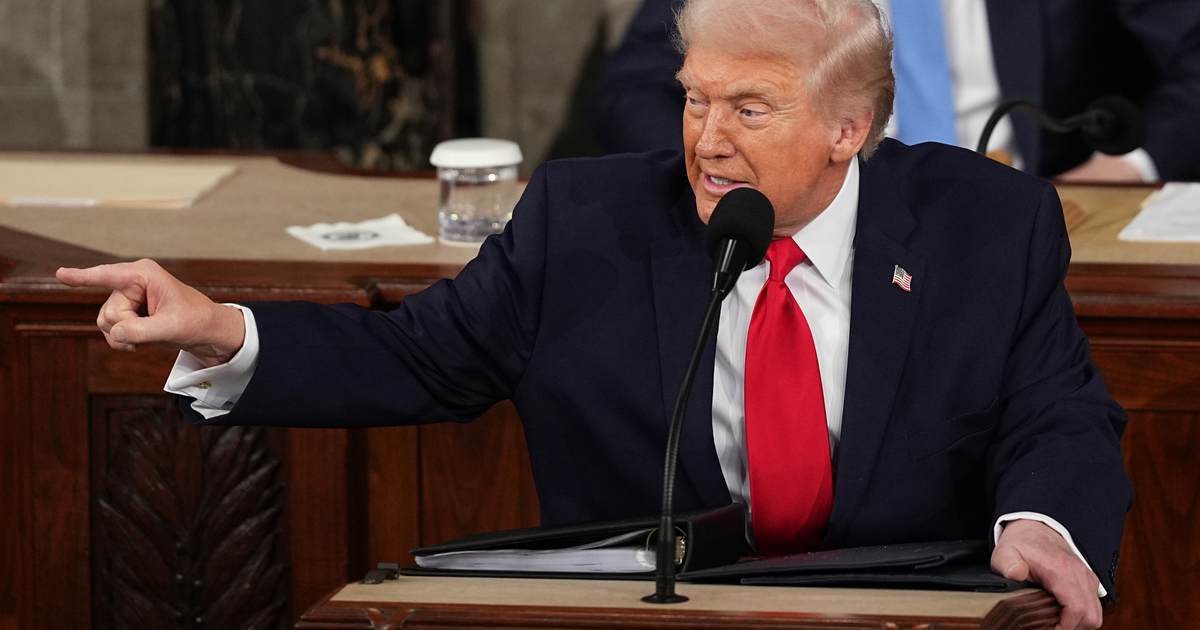
President Trump is urging House Republicans to rally behind the SAVE America Act and end procedural stand-offs, after a clash over attaching the bill to core must-pass legislation left votes postponed and intra-party tensions exposed.
Trump pushed for unity after a meeting with Speaker Mike Johnson as factions within the GOP threatened to block rules that would allow House business to move forward. That split came into focus when some members signaled they would refuse to vote on rules in protest over the Senate’s failure to advance the SAVE America Act. The dispute prompted leadership to pause planned votes and scramble for a path ahead.
The SAVE America Act remains a top priority for the president, who framed the fight as one between steady action and performative politics. He directly called for an end to procedural brinkmanship that hands control to Democrats on what reaches the floor. “House Republicans should unify, and stop voting down ‘Rules’ or, threatening to do so,” he posted to Truth Social.
His post included a blunt warning about letting the opposition dictate outcomes and a plea to focus on results rather than headlines. “Giving power to the Radical Left Dumocrats in the House to control what goes up for a Vote will make our outcomes worse, not better. No more grandstanding, please! They are the Dumocrats, and we can’t let them WIN! Thank you for your attention to this matter,” he added.
Rep. Anna Paulina Luna responded by pointing to a specific procedural vehicle that could move the bill: an amendment filed to attach the SAVE America Act to the National Defense Authorization Act. She told colleagues the amendment is “sitting in the Rules Committee,” framing that as a straightforward path to put the measure before the House. “This is how to get my vote on a rule. But I am one of MANY,” she added.
Leadership faces a calculus: yield to demands from the Freedom Caucus and others who want an immediate floor vote on the elections bill, or hold the line and try to force a broader, coordinated approach. The practical impact was immediate when planned votes were scrapped for Friday while members argued about whether to risk neutralizing future leverage. That delay underscored how internal disagreement can stall conservative priorities just as much as opposition from Democrats.
Republicans who backed the pause argued they needed leverage to push the Senate to act on legislation that already cleared the House once. Frustration is high with the upper chamber’s inaction, and some members publicly criticized senators for not finishing the job. “The Senate sucks. I’m just going to come out and say it – they suck. This is not hard!” Rep. Byron Donalds said at a news conference, illustrating the blunt tone inside the conference.
Those comments reflect a larger political dynamic: House conservatives want to convert grassroots energy and victories into concrete reforms, while other GOP lawmakers worry that scorched-earth tactics will alienate swing voters and complicate governance. Speaker Johnson met with the president to try to steady the ship and craft a legislative plan that can thread this needle. The meeting signaled leadership’s desire to avoid a public collapse of discipline while keeping pressure on senators.
Operationally, attaching the SAVE America Act to the NDAA would be a familiar congressional move — pairing a high-profile policy win with a must-pass defense bill. For those who want speed, it’s an appealing workaround; for skeptics, it risks jamming complex policy into a vehicle that must move and creating fresh floor fights. Either way, the choice points to how much Republicans are willing to use procedural levers to force action.
https://x.com/chadparkerlaw/status/2070188201537376472?ref_src=twsrc%5Etfw
The intra-party argument also has optics for the midterms and for messaging about election integrity, a topic that resonates with core GOP voters. Leaders must balance the political advantage of appearing determined with the legislative need to secure votes across different GOP factions. That balancing act will shape how and when the conference brings measures up for a vote, and whether unity can be restored in time to pass consequential bills.
Beyond immediate tactics, the episode highlights a broader problem for conservative governance: divergent views on how to leverage power when one party controls the House but not the Senate. Some members prioritize principled pressure campaigns that spotlight inaction, while others want to keep the majority functioning to deliver wins. How Republicans resolve that debate will determine whether they can translate campaign promises into real policy outcomes over the next sessions.
For now, the fight centers on procedure, timing, and whether a filed amendment can be the vehicle to carry a signature priority across the finish line. The president’s public insistence on unity puts political weight behind efforts to avoid paralyzing showdowns and to force movement on the bill. With votes delayed and emotions running high, the conference faces a tough choice between immediate confrontation and coordinated strategy to achieve its goals.