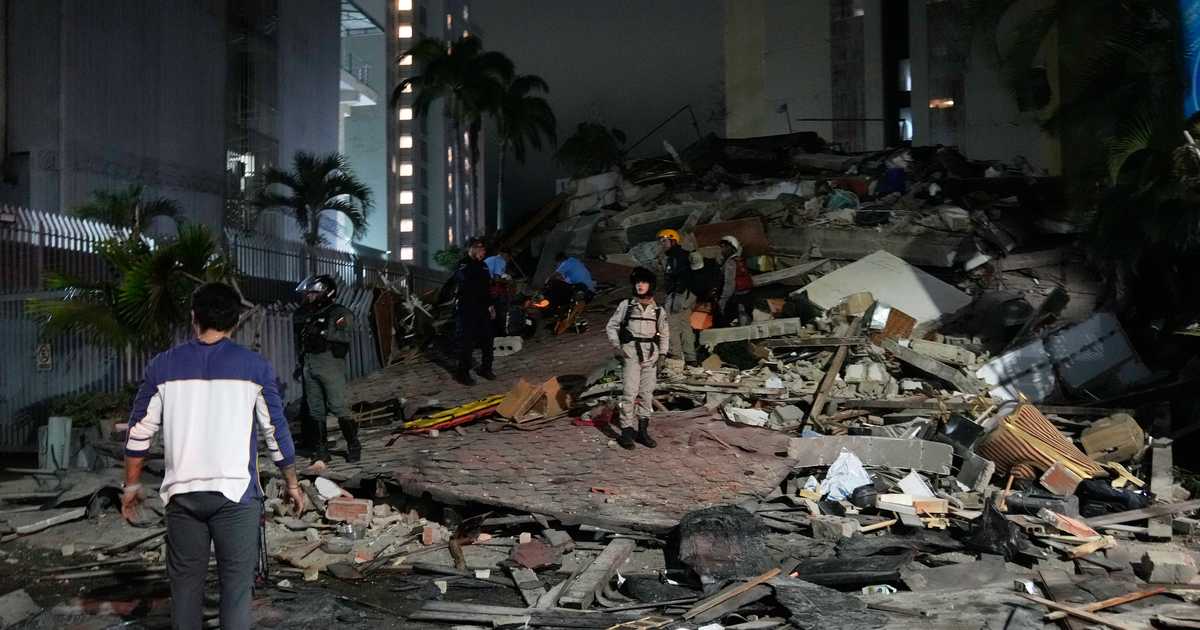
Two powerful earthquakes struck northern Venezuela late Wednesday, leaving vast destruction across Caracas and surrounding states, with rescue teams racing against time as officials, locals, and foreign aid scramble to reach the wounded and account for tens of thousands of people reported missing.
The earthquakes hit without warning late on Wednesday and shattered neighborhoods across the north, including the capital, Caracas. Emergency crews and volunteers have been digging through rubble, while international teams, including units from the United States, mobilize to assist. The scale of damage and disruption has made every step of the response harder.
Early seismic analysis from the U.S. Geological Survey suggested the disaster could produce staggering casualties, estimating between 10,000 and 100,000 potential deaths in the worst-case scenarios. Official counts so far list 589 dead and 2,980 injured, but authorities and aid groups warn those figures are likely to climb as rescues continue. Separate tallies have placed roughly 50,000 people on missing lists compiled by relatives and volunteers trying to reconnect families.
Many Venezuelans and outside observers have criticized the speed and coordination of the government’s recovery efforts, pointing to long delays, limited heavy equipment, and broken supply chains. Social media and community networks have stepped in to fill gaps, organizing search parties and moving survivors to makeshift shelters. The lack of a robust, visible emergency response has exacerbated public frustration.
https://x.com/Breaking911/status/2070545582033129843
Survivors heaved mountains of bricks and cement with their bare hands across Venezuela’s earthquake-shattered north on Friday, hushing each other to listen for whispers of life and praying for help in reaching people still trapped under the ruins.
At a small hospital in La Guaira, the worst-hit state, Juan David Arsia, 17, said he had spent 21 hours under rubble. “I was there with my mom and I could hear her screaming,” he said. “I would yell to her, ‘Don’t give up, mom, have faith — don’t give up!’”
From under the wreckage, his tibia and fibula fractured, he could hear neighbors calling for help, he said, until the sounds stopped in the middle of the night. Hours later, he again heard people moving above the rubble and began shouting, leading neighbors to find and pull him and his mother free.
Rescue teams from at least seven countries are racing to help Venezuela in its search and recovery efforts after the devastating twin earthquakes on Wednesday, but they face stark hurdles even getting to the disaster zone. The 7.2- and 7.5-magnitude quakes damaged the international airport where they would have landed, split open roads they would have sped down and overwhelmed Venezuela’s hollowed-out emergency services.
The country’s infrastructure had already been weakened by corruption and a decade-long economic depression. With little heavy machinery to clear rubble and few medical supplies to help the wounded, many survivors found themselves on their own.
Many lacked even a safe place to rest, with more aftershocks across the north jolting the remains of what had been apartments, offices and livelihoods. Faced with the choice of unstable building facades or sleeping in public plazas or by a highway, many residents chose to stay outside.
They also face monumental loss: President Delcy Rodríguez said on state television on Friday that the death toll had risen to 589, with some 3,000 injured. Hundreds of people are still believed to be trapped and missing.
Ms. Rodríguez announced that she would “militarize” La Guaira, the state north of the capital and the area hardest hit. The Venezuelan military were in the state to help, and workers had cleared many roads in the area, she said, but she did not specify what it would mean for the territory, or whether soldiers would patrol the streets or impose a curfew.
[…]
The quakes have disrupted telecommunications and internet connectivity in some areas, and many people are still struggling to reconnect with family members or friends. Many are searching online for those who are unaccounted for. On one site, nearly 50,000 people have been reported missing.
Teams arriving from abroad are confronting wrecked infrastructure: the main airport suffered damage, major highways split, and hospitals are stretched thin or partially out of service. That reality slows the delivery of heavy equipment and supplies that would normally speed up urban search-and-rescue operations. Coordination between foreign teams, Venezuelan authorities, and local volunteers is essential but difficult under current conditions.
Years of economic decline, service interruptions, and reported corruption have left the country with a thin margin for disaster response, and that fragility is visible now in shortages of cranes, ambulances, and trauma care capacity. Many communities have been forced to rely on neighborhood efforts, with civilians pulling people from collapsed buildings by hand. Those local actions have saved lives but also underscore systemic gaps in emergency preparedness.
The government’s announcement to place La Guaira under military control added another layer of uncertainty for survivors and aid workers, who are still waiting for clear rules about access, curfews, or checkpoints. Officials say soldiers are clearing roads and assisting rescue work, but independent observers will need to verify that humanitarian needs remain the priority. Meanwhile, communications blackouts and power outages make it harder for families to learn the status of missing loved ones.
Across the affected region, aftershocks continue to hit and people are reluctant to re-enter damaged buildings, so many remain in public spaces or improvised shelters. Relief planners warn that prolonged displacement, lack of sanitation, and scarce medical resources can drive secondary crises after the immediate rescue phase. International aid and logistics will be critical in the coming days to support search efforts and prevent further loss of life.
Just horrific.