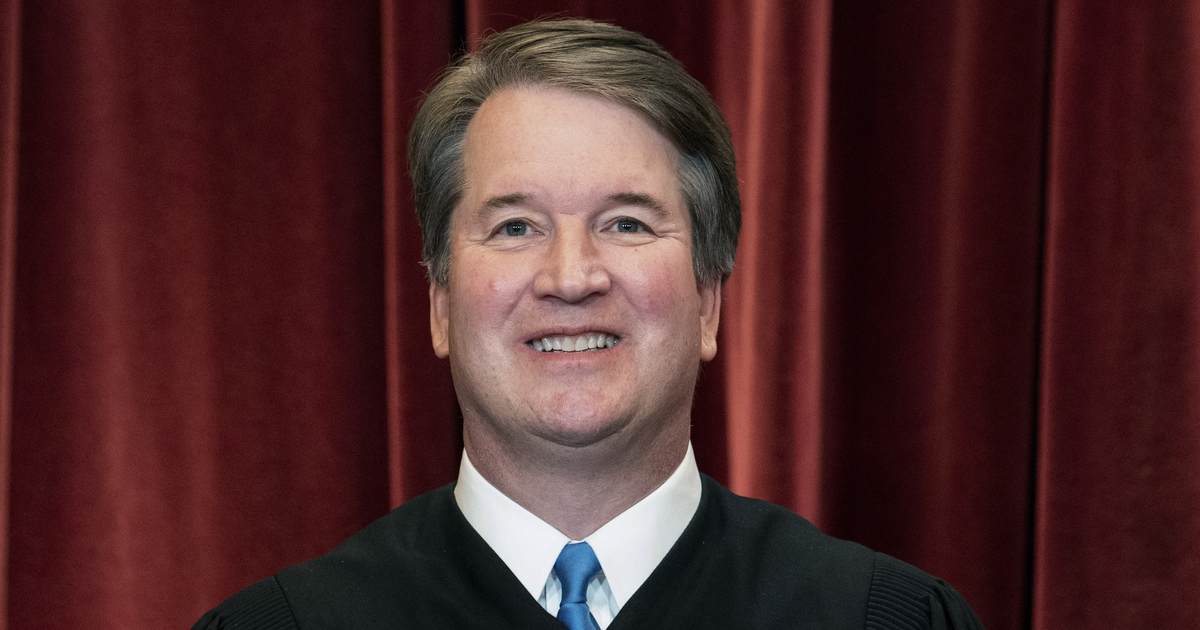
The Supreme Court struck down the administration’s executive order on birthright citizenship, but Justice Brett Kavanaugh wrote a separate opinion offering a legislative roadmap that could reshape how citizenship is applied to children born here to noncitizen parents.
The decision left conservatives frustrated, yet Kavanaugh’s opinion gave a clear signal: lasting change will likely come from Congress, not the bench. He joined the majority in the ruling against the executive order while laying out a framework lawmakers can use to target abuses like birth tourism and automatic citizenship for children of parents who broke immigration laws.
That stance matters because it separates the legal reasoning from the political urgency. The court found the executive order inconsistent with federal statute, not that the underlying citizenship rule is untouchable. Kavanaugh made a point of showing how Congress could act without erasing constitutional protections for legally present or tribal citizens.
“Significant illegal immigration into the United States is a new circumstance that was largely unknown as of 1868 and that the Framers of the Fourteenth Amendment could not have fully anticipated,” Justice Kavanaugh wrote. “And the Framers likely would not have anticipated (and presumably would not have intended) the odd result of granting a substantial birthright citizenship benefit to (i) those foreign citizens who violate U. S. immigration law and illegally enter or overstay and then have children in the United States over (ii) those foreign citizens who follow U. S. immigration law and have children in their home countries while seeking to lawfully immigrate to the United States. Nor presumably would they have wanted to grant constitutional birthright citizenship to children of foreign citizens unlawfully in the country while simultaneously denying constitutional birthright citizenship to children of tribal American Indians.”
https://x.com/BreitbartNews/status/2071973283092709866
Kavanaugh emphasized that the executive branch exceeded its authority by trying to rewrite long-standing federal law. His point was narrow: the order failed under current statutes, and the right avenue for change is legislation that carefully carves out exceptions while respecting historical limits. For conservatives who want durable policy, a statute passed by Congress beats an executive fiat every time.
“Consistent with the Fourteenth Amendment, Congress could amend §1401(a) or otherwise enact new legislation establishing exceptions to birthright citizenship for children born to foreign citizens unlawfully or temporarily in the country,” he added. “But Congress has not yet done so.”
The practical takeaway is painful but straightforward: Congress must act if the rules on citizenship are to change in any meaningful way. That’s a heavy lift politically, given divided government and the controversy surrounding immigration, but it’s also the only route that avoids repeated legal reversals and constitutional uncertainty.
Even if lawmakers tried, any new law would face immediate court challenges and a likely return to the Supreme Court. The justices who make up the current majority might not shift positions, and votes from members like Amy Coney Barrett or Chief Justice John Roberts remain unpredictable. For now, the Court’s ruling affirmed that the Citizenship Clause still covers children born here to parents in the country unlawfully or temporarily, aside from narrowly recognized historical exceptions such as children of diplomats.
Republicans who want a durable fix should focus on building a legislative majority around precise language, not emotional appeals that invite litigation. That means drafting statute that targets clear problems—such as commercialized birth tourism—while preserving long-standing constitutional protections and avoiding unintended consequences for lawful immigrants and tribal citizens.
The political reality is that passing such a law will require negotiation and compromise, including votes from holdouts who fear overbroad changes. But Kavanaugh’s opinion gives conservative lawmakers a blueprint: move the fight to Congress, craft a narrowly tailored amendment to the relevant statute, and prepare for the legal fights that will follow.
Until Congress acts, the status quo remains in place and immigrant families who give birth on U.S. soil keep automatic citizenship for their children. That outcome frustrates many conservatives who see the current rule as an incentive for exploitation, but the Court’s decision makes clear that the proper, constitutional fix must come through the legislative process rather than through unilateral executive action.