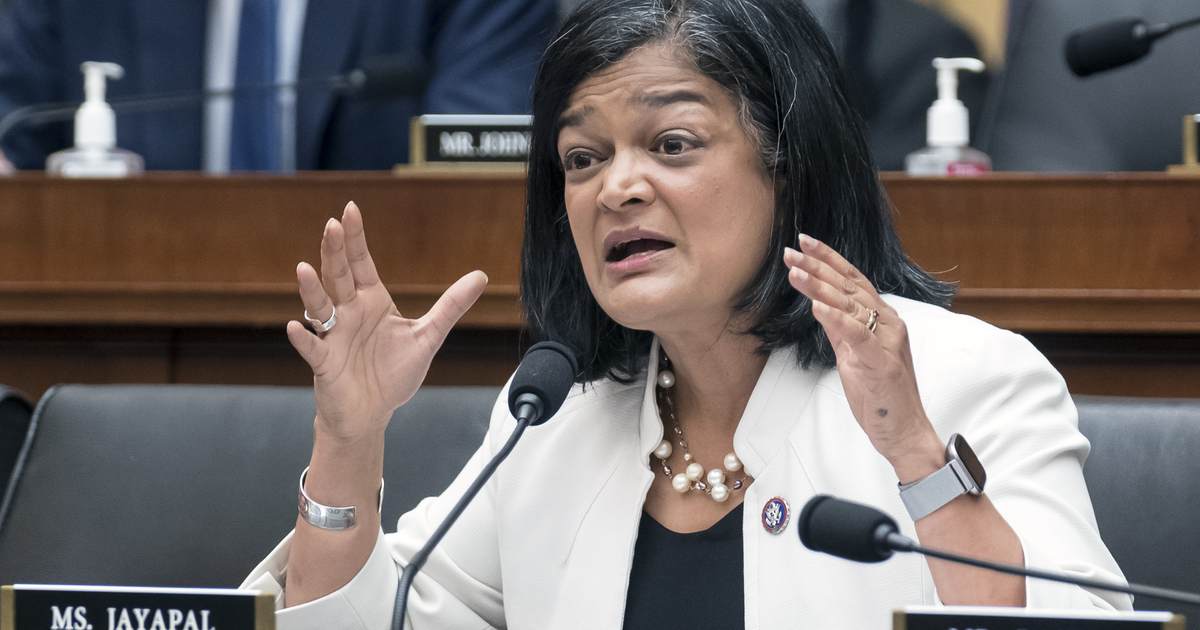
Rep. Jayapal insists socialism is popular even as working-class voters drift away, the Democratic Socialists of America openly push for communism, and a clear split is forming between political elites who embrace socialist ideas and ordinary Americans who reject them.
Representative Jayapal has insisted that socialism enjoys wide support, but that claim clashes with election results showing working-class voters peeling off from candidates tied to radical ideas. Voters without college degrees have been especially skeptical of hard-left messages, and that shift showed up where it mattered at the ballot box. The debate now centers on whether popularity among elites equals popularity with the country.
The Democratic Socialists of America are blunt about their long-term goals, and they have signaled ambitions that go well beyond familiar policy debates. Their leaders have openly framed the Democratic Party as a vehicle for more ambitious change, an approach critics argue aims to sweep aside existing institutions. That strategy helps explain why many voters feel the movement threatens basic American freedoms.
Communism killed 100 million people in the 21st century, but the Left will insist ‘real communism’ hasn’t been tried. It has, and it fails, every time. With bloody results.
Socialism concentrates power and narrows economic liberty, which is why Republicans and many independents see it as a form of control. Democrats have often downplayed the DSA’s influence as factions and youthful energy rather than a systemic risk. Now that those activists are winning nominations and influencing policy, mainstream Democrats are starting to worry about the political cost.
https://x.com/ThomasMHern/status/2071770631985594803
President Trump has warned that communism and Democratic Socialists are the biggest threat facing America; critics say those movements would dismantle long-standing American and Western institutions. That is the lens many conservatives use to interpret Jayapal’s comments about popularity. For those voters, the concern is straightforward: rhetoric matters because it leads to power.
Claims of broad support for socialism often ignore the demographics driving that support: mostly privileged politicians, coastal elites, and the college-educated. In local races, middle- and working-class voters backed establishment candidates in surprising numbers, while other contests showed non-college voters siding with more traditional choices over radical alternatives. For example, in one Senate race, Susan Collins led Graham Platner by 21 points among the non-college-educated, a gap that matters on election day.
Also, a high-ranking member of the DSA said communism is the goal. Funny how Jayapal didn’t mention that.
Power, not mere debate, seems to be the objective for many inside the DSA. They view electoral wins as the fast track to reshape government, and they are unapologetic about using party machinery to do it. That willingness to subordinate traditional party priorities to ideological aims is what alienates everyday voters.
Jayapal has been part of an environment where those tactics are normalized, and critics argue she understands the stakes. She has helped to steady a leftward drift inside parts of the Democratic caucus, often defending the ambitions of activists and candidates aligned with the DSA. Opponents say that defense amounts to approval of goals many Americans find alarming.
At one point the rhetoric in certain activist circles turned blunt and uncompromising. Yes. And denaturalize and deport whenever we can.
When pushed, the response from many on the left is predictable: “But if we try it this time, we’ll get it right!” That line of thinking still circulates among prominent progressives and their allies in the media. For conservatives, it only underscores why caution is necessary when radical ideas gain traction.
These disagreements are not just academic; they translate into policy fights over the size of government, property rights, and the nation’s cultural direction. Republicans frame the choice as one between preserving individual liberty and embracing a centralizing vision that has failed repeatedly in history. As the debate continues, voters will decide whether Jayapal’s claim of popularity reflects the country or a narrow political class.