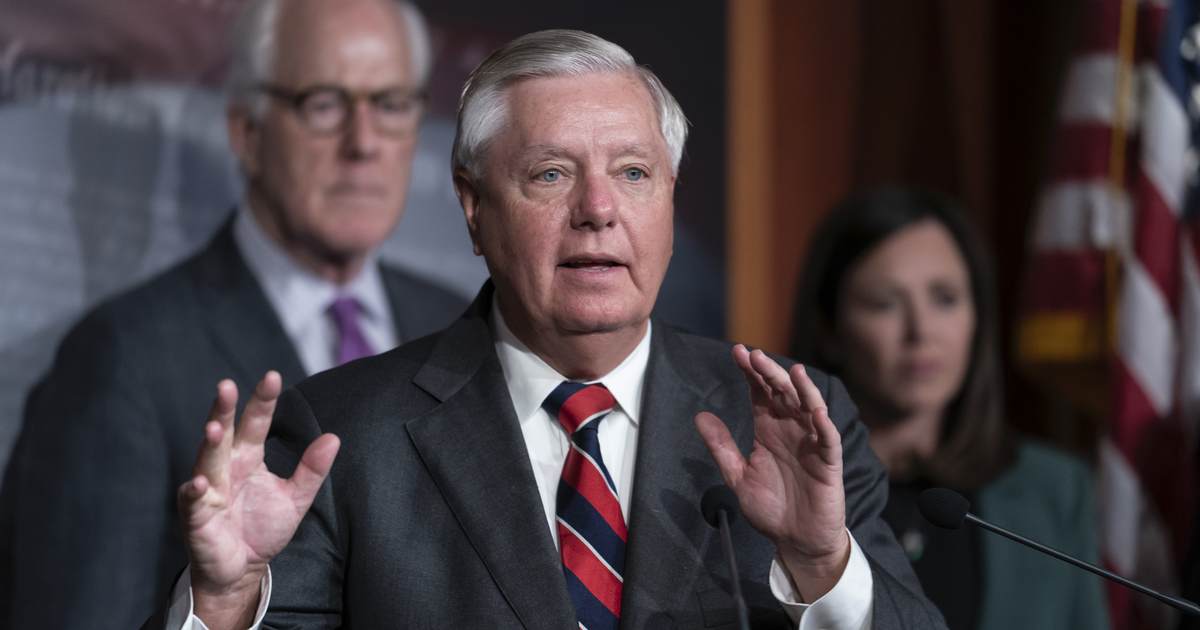
Sen. Lindsey Graham, a long-serving Republican senator from South Carolina, died suddenly on the evening of July 11, according to a statement from his office; his family has asked for privacy and prayers while South Carolina’s governor will name an interim successor as the political and policy consequences of his passing begin to settle in.
Sen. Lindsey Graham (R-SC) died suddenly, his office announced early on Sunday morning in an X post. “On the evening of Saturday, July 11, U.S. Senator Lindsey Graham passed away from a brief and sudden illness,” the statement read. The announcement stunned colleagues on both sides of the aisle and prompted immediate expressions of sorrow from conservative circles that relied on his voice in the Senate.
“Senator Graham’s family appreciates prayers at this time and asks for privacy during this incredibly difficult period,” his office continued. That request for privacy is standard in moments like this, but it also underscores how quickly a public life can shift from daily politics to funeral planning and remembrance. Families and staff will now manage both private grief and the public role that accompanies a national figure.
The 71-year-old was a close ally of President Donald Trump and chair of the powerful Senate Budget Committee, making him a key player in fiscal discussions and conservative policymaking. Graham had served in the United States Senate since 2003 and previously served in the House of Representatives, a long arc that gave him institutional knowledge and clout. His seat was on ballots this cycle, so his passing injects an immediate procedural question into the race and the broader balance of power.
https://x.com/LindseyGrahamSC/status/2076185414721847673
Graham built a reputation as a combative defender of conservative judges and a relentless advocate on national security and judicial issues, often sparring with Democrats during high-profile hearings. He was also known for switching from critic to ally of President Trump in ways that reflected a pragmatic approach to Republican governance. Many on the right saw him as a steward of conservative priorities in Washington, even when his methods rubbed opponents the wrong way.
Behind the public persona was a senator who understood the levers of power in the upper chamber and used committee assignments to advance conservative fiscal and judicial goals. As chair of the Budget Committee, he had a direct line into spending debates and appropriations process that shape every corner of government. Losing a figure who combined longevity with committee authority creates a substantive gap in institutional memory and conservative strategy.
The South Carolina governor will be able to decide who the next senator will be in the interim, a political reality that hands substantial short-term influence to state leadership. That appointment will shape who sits in the Senate for months, possibly into the next Congress depending on special election timing and state law. Conservatives in Washington and across South Carolina will be watching that choice closely, since it affects committee ratios and legislative momentum.
Graham’s death also raises immediate logistical questions for Senate operations and campaign calendars, but it has a larger symbolic impact for Republican politics. He was a visible, unapologetic conservative voice who often engaged the national media and rallied the base during judicial fights and legislative battles. For many allies, his passing is not just a vacancy to fill but the end of a distinct era of confrontational, consequential Senate politics.
As the family grieves and the state prepares for an interim appointment, Republican leaders will need to balance respect for a fallen colleague with the practical work of keeping conservative priorities on track. There will be memorials, statements, and a steady stream of recollections about his public fights and private loyalty to conservative causes. This moment is political, yes, but it is also a reminder of the human dimension behind long public service and the suddenness with which it can end.