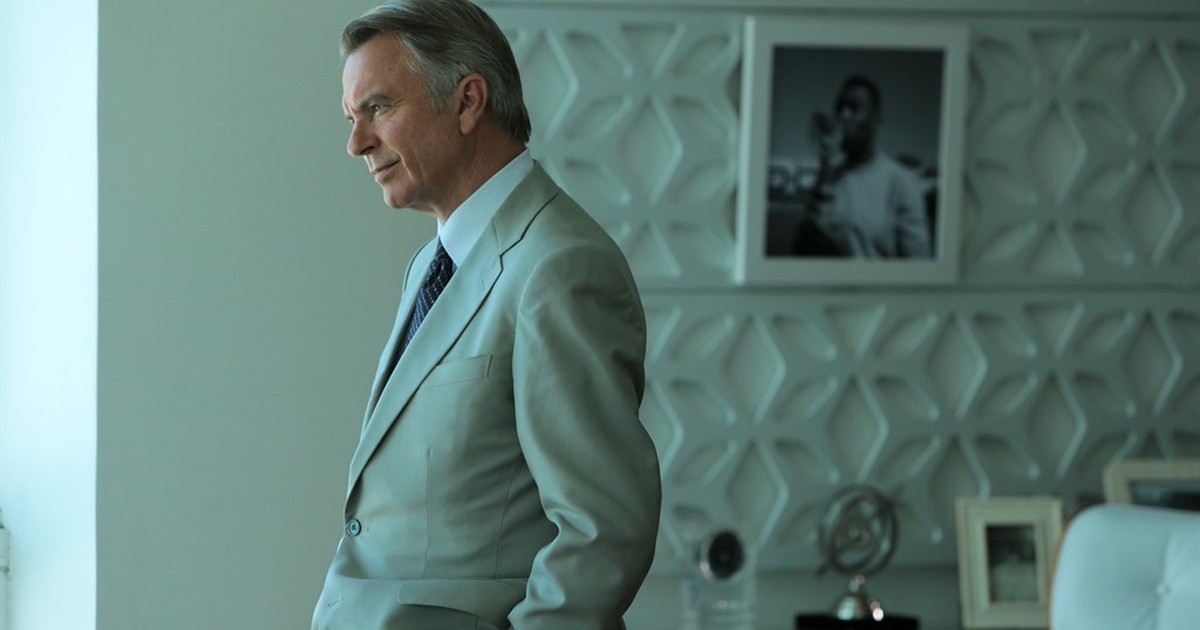
Sam Neill, the New Zealand-born actor who rose from local stage work to global fame for roles in films like Jurassic Park and The Piano, has died at 78 in Sydney; his family issued a statement about his sudden passing while noting he remained cancer free at the time.
Sam Neill, whose career stretched from small New Zealand stages to Hollywood blockbusters, died in Sydney on Monday 13th July 2026 at the age of 78. The announcement came from his family, who said he was surrounded by relatives and passed with the dignity that marked his life.
Neill’s family announced the death on Instagram in a statement that read:
https://x.com/THR/status/2076547447795732682
It is with immense sadness that the whanau of Sam Neill share the news of his passing on Monday 13th July 2026 in Sydney, Australia. Sam was surrounded by family and passed with the dignity that has characterized his whole life.
The loss was sudden and unexpected but blessed by the fact that Sam remained cancer free. The family would like to express their deepest gratitude to the staff at St. Vincent’s Private Hospital for their incredible care.
More details will be shared later, but for now, on behalf of the family, we ask that you respect their privacy as they navigate this immeasurable loss.
Nigel John Dermot Neill was born in Omagh, County Tyrone, Northern Ireland, in 1947 to Priscilla Ingham and Dermot Neill. His father was serving with the Royal Irish Fusiliers at the time and later ran a hospitality business that became part of Wilson Neill.
The family relocated to New Zealand in 1954, and Neill attended Cashmere Primary and the Medbury School, where he began going by the name Sam. He kept a low-key approach to fame, but his path toward acting began early with school and local theater productions.
Neill studied at the University of Canterbury and later transferred to Victoria University of Wellington, earning a Bachelor of Arts after dabbling in several subjects. While he flirted with law and other practical careers, the stage pulled him in and he appeared in productions such as A Midsummer Night’s Dream and Marat/Sade.
After university he joined Downstage Theatre as a professional actor, reportedly earning about $25 a week plus leftover food from audience meals. His first television roles in the early 1970s paid the bills while he honed his craft on screen and stage.
Neill’s breakout arrived with the 1977 film Sleeping Dogs, one of the first New Zealand films to receive attention overseas. From there he moved across the Tasman to Australia for more television and film work, building a resume that mixed local productions with international projects.
By 1981 Neill was taking on larger international parts, including the lead in Andrzej Zulawski’s cult film Possession and the role of Damien Thorn in Omen III: The Final Conflict. Those parts broadened his profile and set the stage for steady work through the 1980s.
He was considered by some as a contender to replace Sir Roger Moore as James Bond, a role that ultimately went to Timothy Dalton, and he continued to appear in an eclectic range of films that showcased his versatility. His credits in the late 1980s included period pieces and genre work that kept him visible to critics and audiences alike.
Across the next decade Neill’s filmography expanded with parts in historical dramas and thrillers, and he became known for bringing a calm, grounded presence to complex characters. Roles ranged from La Revolution Française to John Carpenter’s In the Mouth of Madness, demonstrating both range and risk-taking.
In 1990 he appeared in The Hunt for Red October, and a year later Neill became a household name as Dr. Alan Grant in the 1993 blockbuster Jurassic Park, a role he would revisit in sequels. He also appeared in The Piano that same year, earning praise for his supporting work opposite Holly Hunter.
Neill’s public battle with illness began in 2023, when he revealed treatment for stage three angioimmunoblastic T-cell lymphoma, a blood cancer discovered after he noticed swollen glands during publicity for Jurassic World: Dominion. At the time he said scans showed the cancer was in remission, though he faced ongoing monthly chemotherapy.
By April of 2026 he reported that traditional chemotherapy was no longer effective and that he had enrolled in an Australian clinical trial of CAR T-cell therapy. He became an advocate for wider access to such treatments in Australia and New Zealand, speaking from personal experience about the promise and limits of modern medicine.
The family emphasized that, despite the prior cancer diagnosis and treatments, Neill was cancer-free at the time of his death. Friends and colleagues noted his wit, affection for animals, and steady professionalism across decades in film and television.
On the personal side, Neill had complex family ties: he reunited with a son given up for adoption in the 1990s, had a son with actress Lisa Harrow, and married makeup artist Noriko Watanabe in 1989, with whom he had a daughter and adopted Watanabe’s child from a prior marriage. The marriage ended in 2017, and he later dated journalist Laura Tingle from 2018 to 2021.
Outside acting, Neill ran a winery called Two Paddocks near Alexandra, New Zealand, which he described as time- and money-consuming but deeply rewarding. He had a fondness for naming animals on the farm after film colleagues and enjoyed the quiet focus that winemaking offered between shoots.
Honors came over the years: Neill was appointed an Officer of the Order of the British Empire in 1991 and became a Distinguished Companion of the New Zealand Order of Merit in 2007, and he received an honorary Doctor of Letters from the University of Canterbury in 2002. Despite multiple nominations for awards like the Golden Globes, an Academy Award nomination eluded him.
He is survived by his four children and eight grandchildren, and his body of work leaves a clear imprint on film history and on the many actors and filmmakers who collaborated with him over a long, varied career.