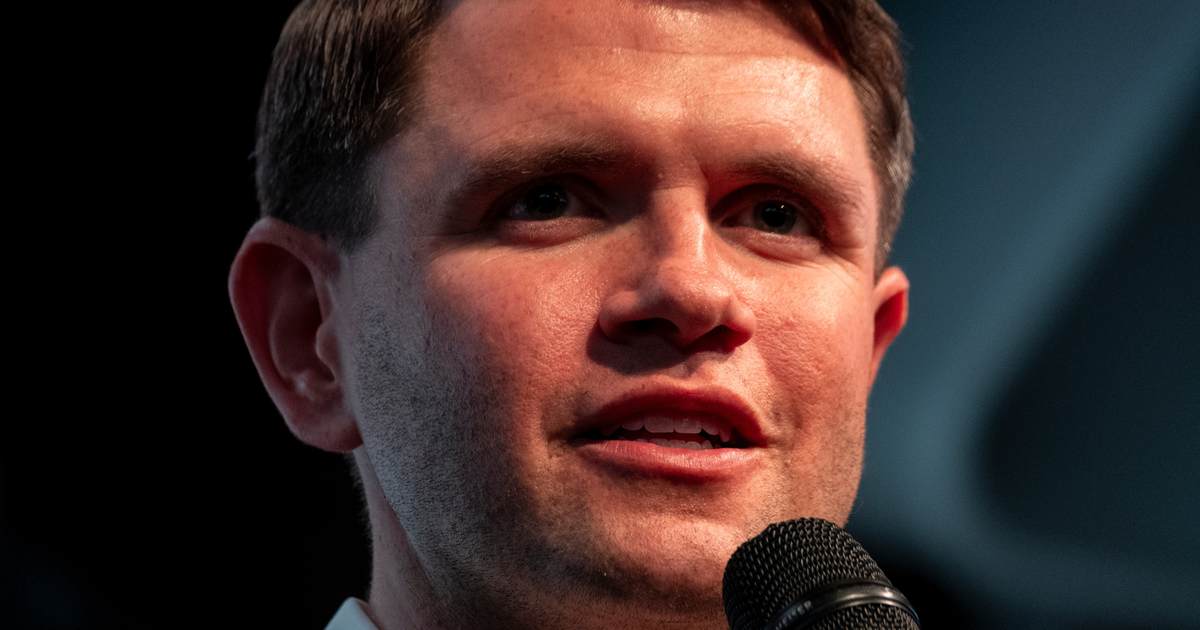
The James Talarico Senate campaign is hitting turbulence after a tense town hall exchange highlighted voter anger and raised questions about his message, staffing, and appeal to key constituencies.
The past week exposed a campaign struggling to control its optics as an audience called for answers and a candidate tried to defuse the moment. Voters who had waited through a long event demanded a direct response, and the confrontation played out on stage with sharp back-and-forths. What followed suggested deeper issues than a single awkward encounter.
At the center of the scene, an attendee warned, “You stay here, you answer our questions, or you suffer the consequences,” a line that cut straight through the scripted remarks. Talarico attempted to engage, replying, “So, I’m happy to engage,” and then sought to direct the exchange to staff when the crowd pressed. He said, “We’ll come to her in just a second,” and tried to keep the tone measured even as the woman interrupted him.
The back-and-forth included a clipped interruption from the woman: “I did it for my people, not for you,” and Talarico answered with conciliatory lines that did little to calm murmurs, including, “I appreciate you being here, and I appreciate you traveling in, and I appreciate—” before being cut off. He kept trying to steer the conversation toward civility, saying, “I think that’s wonderful,” and later, “It’s alright. This is what this conversation’s supposed to be about.” Those exact words are now replaying for anyone watching the footage.
https://x.com/FBugenhagen_/status/2078955752186695695
Beyond the viral moment, the policy positions attached to Talarico’s public persona have become liabilities in parts of Texas. Descriptions circulating about his stances—portraying him as a “woke Christian” who rejects traditional religious views, defends abortion access, champions transgender youth causes, supports veganism, and favors major shifts in the oil and gas sector—are proving hard to sell to skeptical voters. Those positions have helped define the narrative opponents are using against him and are prompting real questions about his outreach strategy.
Campaign staff also seemed out of sync during the event, struggling to manage a direct confrontation and leaving the candidate exposed to a live audience’s frustration. That kind of dysfunction looks bad on camera and worse in local communities where voters expect direct accountability. For a nominee headed into a statewide race, visible confusion and missed cues are dangerous signs.
Another line of critique is whether his message resonates with Black voters and religious communities, especially given his public comments about faith and sexuality. Critics point to a perceived overlap with national figures who have struggled to connect with those groups, and the comparison to other national Democrats has already been made in commentary. If he fails to build bridges with those constituencies, it will show up in the numbers.
The campaign’s recent history hasn’t helped. A prominent surrogate publicly accused the primary process of being “racist,” a charge that created more headlines than policy details and distracted from campaigning. That controversy, combined with the town hall clash, is feeding a narrative that the campaign is reactive rather than proactive. Voters notice when a race is defined by controversy instead of a clear, positive plan.
Now opponents are saying the consequences are arriving: “It appears those chickens are coming home to roost,” runs the criticism, and the footage is being replayed to underline the point. Messaging missteps and staffing errors compound when opponents can bottle an incident into a simple storyline. When an exchange looks like a campaign in crisis, it creates opportunities for challengers to harden their case.
Internally, observers describe Talarico as “dishonest” and point to a lack of campaign discipline that makes him seem ill-equipped to handle a tough statewide fight. That assessment combines character judgments with tactical critiques about organization and fieldwork. The combination is the kind of critique that, if uncontested, becomes the dominant frame for voters heading into the general election.
What is undeniable is that the town hall provided a raw, unfiltered look at how the campaign manages pressure and responds to angry constituents. The reactions on stage and the ripple effects in local media have already shifted the conversation away from policy details and toward competence and credibility. For a campaign that hoped to control the narrative, this episode will be a hard one to shake.