A Republican-leaning recap: a Democratic senator conceded that the border was secure and that President Trump’s approach was vindicated, while the party’s left wing and some state leaders continue to resist enforcement and push policies that undermine deportations.
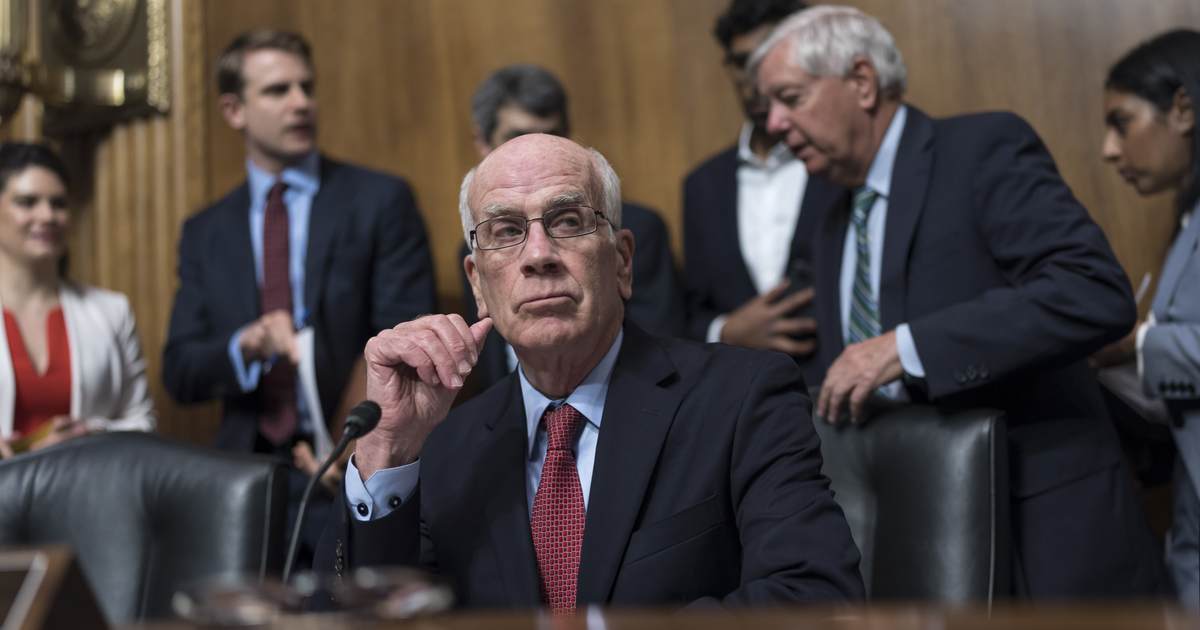
The political temperature around immigration keeps spiking, and a notable Democratic admission just shifted the needle. Senator Peter Welch publicly acknowledged that the border is secure and that President Trump was right about enforcement, a rare break from his party’s usual script. That kind of candid admission matters, because it chips away at the reflexive denial that has guided Democratic messaging for years.
“You know, I think this blame game is just pointless,” Welch said. “The fact is that we have a secure border. President Trump was right, Democrats were wrong on that. Also, we have broad bipartisan support we should deport violent criminals.”
Welch’s comment landed in a party that often treats border enforcement as a political third rail, especially among its most vocal progressive wings. For Republicans this is straightforward: acknowledging reality on the border is the first step toward building durable, enforceable policy. When members of the other side admit the obvious, it gives traction to commonsense reforms.
https://x.com/RNCResearch/status/2079307208462844000
Not every Democrat is on the same page, though. In Michigan, Gov. Gretchen Whitmer’s recent pardon of a convicted murderer to prevent deportation drew immediate criticism from those who prioritize law and order. Actions like that underline a split between Democratic officials who will enforce deportations and those who obstruct them for political or ideological reasons.
That split has real consequences for communities that expect the government to keep them safe. Democrats who call for abolishing ICE or who block enforcement measures create practical problems for law enforcement and for victims of violent crime. Republicans argue that secure borders and robust deportation of violent offenders are not partisan talking points but essential duties of government.
When a Democrat says the border is secure and suggests bipartisan support for deporting violent criminals, it undercuts the narrative that enforcement and national sovereignty are extreme positions. It also exposes a tension within the party between political theater and governing responsibilities. For conservative voters, the admission confirms what they’ve argued for years: secure borders are nonnegotiable.
There are only a handful of Democrats who would make that admission publicly, and the consequences for their standing within the party can be swift. A politician who contradicts the party line risks losing support from activists and from factional power centers that prefer softer enforcement stances. Still, such candor can earn respect from independents and law-and-order voters.
Names like John Fetterman come up as examples of Democrats who occasionally break ranks on security issues, but they remain exceptions. Most of the party’s messaging continues to tilt toward amnesty and streamlining migration, which Republicans view as abandoning rule of law. That ideological push for open borders and broad amnesty is what drives many voters to favor stricter enforcement policies.
The debate is not abstract; it plays out in pardons, in prosecution choices, and in local enforcement decisions that affect real victims. When officials refuse to cooperate with federal immigration efforts, it complicates coordination between agencies tasked with public safety. Republicans see this as a predictable result of prioritizing political optics over enforcement.
There’s growing impatience among voters who want leaders to stop playing partisan games and start delivering results that protect communities. Admissions like Senator Welch’s, even if isolated, give elected conservatives and moderates on both sides a chance to push for legislative fixes. In the current climate, proving that security measures work is more persuasive than partisan rhetoric.
At the end of the day, practical governance will have to bridge the gap between admission and action. One-off acknowledgments do not replace real policy changes, but they do open doors. If more lawmakers are willing to accept facts about border security, it becomes easier to build bipartisan solutions that actually keep people safe.