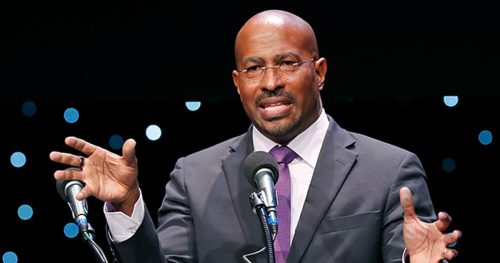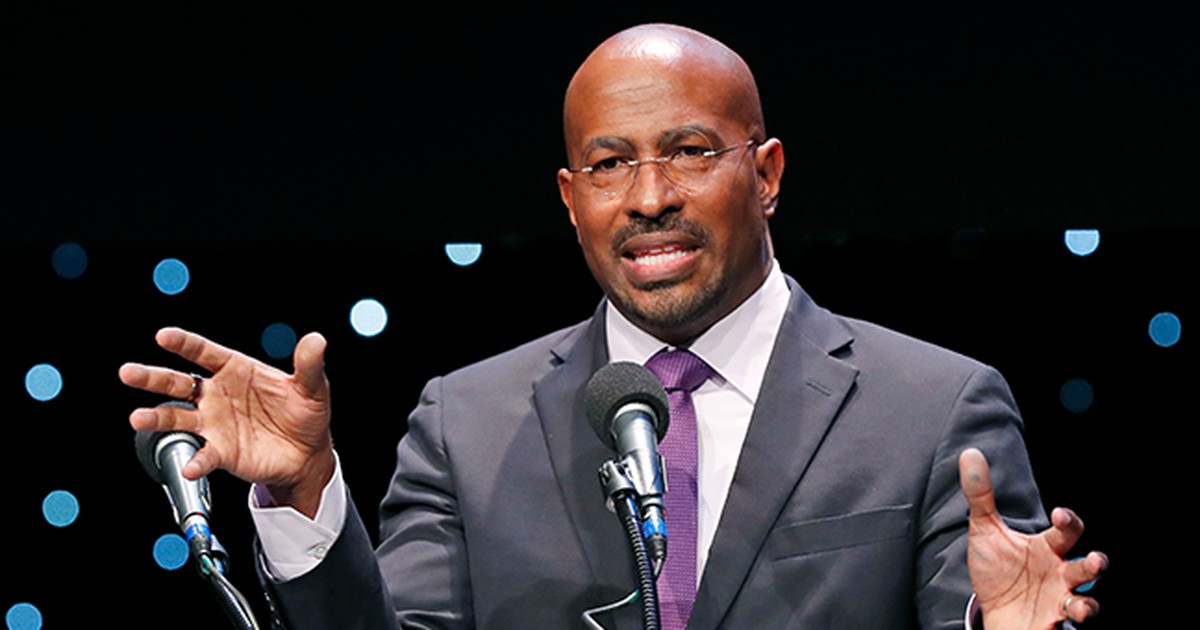
Van Jones, a progressive commentator, says establishment Democrats privately praised him after he publicly criticized the party’s socialist wing, arguing that some ideas have gone too far and warning that this internal tug-of-war will reshape political messaging and voter choices.
Van Jones is widely known as a progressive voice, but he has been outspoken about limits within his own political tribe. He told a national audience that his criticism of the party’s socialist elements drew private thanks from figures across the aisle. That reaction suggests tensions inside the party are deeper than public posturing lets on.
He described a wave of private responses from elected officials who are worried about where certain ideas lead. Those private conversations apparently contrast sharply with the public silence of many officials. This split raises questions about who speaks for the party when controversial proposals surface.
“This phone has been blowing up all day. Governors from both parties, senators from both parties, Democrats in the House calling, thanking me for saying what everybody’s been saying behind the scenes, which is that this stuff is going too far,” Jones said. “I am a progressive Democrat. You want to talk about prison reform? I’ve done it as well as anybody, Republican Democrats in the South with Trump. I’ve done prison reform. I never said have no prisons. I’ve done police reform. I never said no police. Where are you going to put the pedophiles? Who’s going to grab the pedophiles? This stuff is going too far.”
https://x.com/overton_news/status/2079387658774561147
Jones framed his stance as continuity with longstanding progressive reform goals, not a wholesale rejection of progressive policy. He emphasized practical concerns and public safety as nonnegotiable boundaries for reform. That framing aims to separate mainstream reform from what he called extreme proposals.
“And part of the thing that has to happen is we saw what happened in the Republican Party when things started going in a nutty direction and nobody stood up,” he continued “I am happy that the young people are fighting for affordability, Medicare for all, all the good things. I’ve been waiting my whole life to see a youth movement do what it’s doing. But it’s being hijacked by people who are putting in nutty ideas, supporting terrorists, nutty ideas saying that we don’t need cops in prison. We can’t we can’t deport anybody, even if they rape somebody.”
How many Democrats actually oppose the Democratic Socialists of America inside the party remains unclear, and the practical impact of Jones’ critique is uncertain. Many establishment Democrats have been criticized for avoiding direct confrontation with the party’s more radical members. That avoidance has left a narrative gap that voices like Jones are now trying to fill.
From a Republican perspective, this internal fracturing is political opportunity and risk at once. The label “socialism” carries heavy baggage for many voters, but the policy ideas tied to the label can sometimes win support when framed around everyday needs. Republicans will need to keep pointing out the political and economic trade-offs that come with expanded government control while also offering clear, attractive alternatives.
Public opinion often shows a gap between ideological labels and practical preferences, where voters say they support markets yet favor government fixes for specific problems. That contradiction gives ideological groups a chance to translate labels into policy momentum. If one wing of a party pushes loud, uncompromising positions, it can pull the rest of the coalition toward riskier stances.
Jones’ intervention is notable because it comes from someone inside the progressive world who claims to share core reform goals but objects to extreme proposals and rhetoric. His remarks expose a fault line that could influence candidate positioning and messaging in upcoming cycles. Watching how both parties respond will matter for how voters perceive the center and the fringes moving forward.