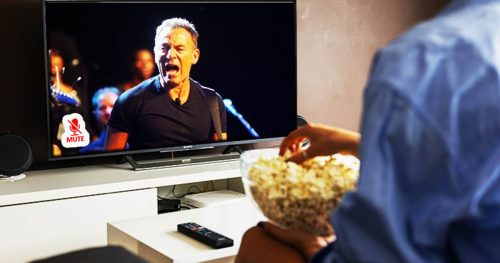
Jonathan Cain of Journey openly criticizes Bruce Springsteen for bringing politics into music, saying artists should leave political commentary off stage and keep the focus on the art.
Jonathan Cain, Journey’s keyboardist, has been blunt about mixing politics with performance and about his own views. He identifies as a “diehard conservative” and called Bruce Springsteen an “annoying, bitter old man,” arguing that outspoken entertainers should stop broadcasting political takes during shows. Cain says he prefers music to remain a space for entertainment rather than a platform for political lectures.
Cain made these comments on a podcast, where he also reflected on his personal political journey and the responsibility of the artist. He noted that he tries to separate his politics from his music and believes other performers should do the same. His stance has stirred discussion because Springsteen remains one of the most visible musicians who mixes commentary with concerts.
https://x.com/Variety/status/2079273166061424918
Here’s more:
Longtime Journey keyboardist Jonathan Cain believes rockers should keep their politics off-stage — but in interviews, he continues to be proud to trumpet his conservative beliefs. He used a podcast interview to blast a fellow 76-year-old, Bruce Springsteen, as an “annoying, bitter old man,” saying the outspoken should just “shut up.”
Cain’s problems with Springsteen aren’t just with the Boss’s recently pointed on-stage commentary about the state of the U.S. He called Springsteen’s ’80s classic “Born in the USA” a “diss” track against America.
“I used to be a Democrat back in the old days, but I couldn’t go there anymore, you know?” Cain said in an appearance on the “Complete Disaster Network” podcast. “I’m a diehard conservative … And guys like Bruce Springsteen should shut up. You know, really, honestly, shut up, Bruce, you know? Him and … who’s the other one? Robert DeNiro. I mean, who cares, guys? Do your art. I try to keep politics out of my music.”
Cain’s comments follow a pattern of veteran musicians publicly saying they prefer art to stay apart from politics, and those remarks cut both ways. When performers speak from the stage, they risk alienating fans who come for the music, not the messages. This debate taps into a larger cultural argument about whether public figures should use their platforms for advocacy or keep entertainment apolitical.
Mick Jagger recently made similar remarks about keeping politics out of music, bringing the conversation more attention and showing it’s not limited to one genre or generation. Fans have mixed reactions: some applaud the separation, others think artists have a right to speak out. Either way, the tension is real and it’s reshaping expectations for live shows and celebrity behavior.
There’s a practical side to Cain’s view: mixing politics with performance can carry career risks and logistical downsides. Historically, entertainers who took strong political stands sometimes faced boycotts, lost radio play, or fractured fan bases. The cost-benefit calculation for artists has shifted in an era of polarized audiences and social media amplification.
Many listeners simply want a break from politics when they buy concert tickets, preferring music that unites rather than divides. When a performer uses a stage to lecture, it can feel jarring and unwelcome to audience members who paid for an escape. That sense of intrusion has pushed some musicians to publicly commit to separating their creative work from political campaigning.
High-profile examples show the consequences. Some acts that took a political stance saw their commercial trajectory altered or public perception shift dramatically. The Dixie Chicks famously faced backlash that had long-term effects on their career after speaking out on political issues, making the stakes clear for anyone considering similar moves.
Fans who disagree with an artist’s politics may stop following them, and venues or promoters can react to audience pressure as well. That dynamic influences what performers decide to say in public and how strongly they express their views during events. Artists weigh the desire to be outspoken against the potential fallout and lost goodwill.
Cain’s straightforward comments reflect one end of the debate: artists can be citizens with opinions, but when on stage they ought to focus on the show. For many people, live music is a chance to connect and recharge rather than engage in political battles. Musicians who want to keep broad appeal often choose to avoid political controversy during performances.
Calling outspoken concerts “counterproductive” captures the worry that activism from the stage can backfire and distract from the music itself. Even sympathetic fans sometimes find it off-putting when a beloved act pivots into political commentary mid-set. The result is often a fractured audience and headlines that overshadow the art.
At the core, this is a debate about expectations and boundaries between public life and private beliefs. Some artists will keep using their platform for causes, and others will follow Cain’s lead and set clear limits on political expression during shows. Either approach changes how fans experience the art and what they expect when they buy a ticket.