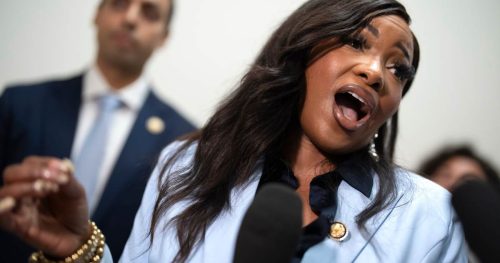
Paige Cognetti’s record in Scranton and her national political connections raise questions about the transparency she promises to voters as she campaigns for Pennsylvania’s 8th Congressional District.
Paige Cognetti serves as Mayor of Scranton and previously sat on the Scranton School Board, where she voted for a budget that cut 89 teachers, raised taxes, and still left a $4 million shortfall. She admitted in 2024 that she moved to the city for political reasons, a confession that does not sit well with residents who called her a “carpetbagger” and complained she “doesn’t reflect the region.” Elected mayor in 2019, her track record in local office is central to questions about her transparency.
Cognetti clearly views the mayor’s office as a stepping stone rather than a long-term commitment to Scranton. That ambition led her to challenge Republican Rep. Rob Bresnahan for the 8th District seat, signaling she wants to trade local politics for a national platform. Voters are watching whether her campaign rhetoric matches the choices she made while running a city.
Reports from recent months include disturbing episodes tied to her decision-making and public statements, such as calls to enforce COVID restrictions against Easter churchgoers and Fourth of July celebrants. Critics point to policies they say hurt Scranton families and to staffers who allegedly block constituent questions. An unearthed 2020 lecture for the University of Scranton captured her asserting the United States was founded on “stolen land,” a line that adds to concerns about her views on American history.
Cognetti presents herself as a political outsider and uses anti-establishment language in her campaign messaging. She said, “I’m running for Congress because people here deserve a lot better than a rich kid disrespecting our hard work and proud legacy. We can stand tall against a Washington that takes advantage of working people and make it work for us.” That pitch sounds populist, but her résumé suggests deeper ties to the Democratic establishment than she admits.
Documents and reporting show Cognetti was paid by the progressive consulting firm 270 Strategies while serving on the Scranton School Board, a detail missing from her public bios. Her LinkedIn and campaign biography omit that stint and much of the national work she did before moving to Scranton, including time at the Department of the Treasury under Obama and serving as Regional GOTV Director for the Pennsylvania Democratic Party in 2016. The omissions raise real questions about what she is choosing to hide.
Where is that transparency Cognetti promises, including in her first campaign ad of the cycle?
At the same time she received payments from 270 Strategies, that firm worked for a roster of high-profile progressive clients, among them the ACLU, Swing Left, End Citizens United, and the Democratic Congressional Campaign Committee. The consultancy was founded by former Democratic staffers, including Obama and Clinton alums, and self-describes as an outfit that “often [pushes] beyond the comfort zone of the progressive movement.” Those connections are not trivial for a candidate claiming to buck the machine.
Swing Left reportedly paid 270 Strategies more than half a million dollars in 2018 and 2019 and played a role in efforts to flip the House in 2018, while also taking money tied to George Soros’ network. The ACLU challenged immigration policies and has backed calls to defund police, and activists linked to the group supported demonstrations in 2020. End Citizens United focuses on limiting corporate money in politics, illustrating the broad ideological range of groups tied to Cognetti’s former employer.
https://x.com/PaigeGCognetti/status/2077008104395284752
While Cognetti was receiving consulting payments, 270 Strategies pushed policy positions tied to the progressive wing of the Democratic Party, including opposing mandatory minimums, backing large renewable energy projects, promoting abortion access, and rejecting gender definitions limited to “genitalia at birth” in support of the trans community. Those policy positions are important context for voters evaluating whether her priorities align with local views in northeastern Pennsylvania.
Many of the same organizations connected to 270 Strategies have shown up in Cognetti’s campaign orbit. Groups like Swing Left, End Citizens United, and the Democratic Congressional Campaign Committee are among those linked to her run, and she has picked up endorsements from Emily’s List, Giffords, and WelcomePAC. Those endorsements are signals: they tell voters which national networks see Cognetti as an ally.
Voters deserve straight answers about a candidate’s professional history and the networks she’s worked with, not polished marketing copy that skips inconvenient details. If Cognetti wants to sell herself as an outsider willing to challenge corruption and demand transparency, she should start by making her full work history and funding ties crystal clear to the people she hopes to represent. That basic accountability matters in any campaign for higher office.